1. Understanding RV Hookups
When you arrive at an RV park, one of the first tasks you'll need to handle is hooking up your RV to the park's utilities. These hookups typically include water, electricity, and sometimes sewer services. Knowing how to hook up these services properly will ensure a smooth and enjoyable stay at the park.
Water and electricity are the two most common hookups you'll deal with during your stay. Understanding how to connect these utilities and use them safely is essential for a stress-free camping experience. Let's break down each of these connections and how to handle them properly.
2. Finding the Right Hookup Spot
Before you can hook up your RV, you need to find the right spot at the RV park. Most parks offer designated sites with utility hookups, but the exact setup can vary. Here are a few things to look for when finding the right spot:
- Proximity to Water and Electricity Posts: Look for a campsite that has both water and electrical connections nearby. Most modern RV parks will have these utilities available at every site, but some older parks may have limited hookups.
- Level Ground: It's essential to park your RV on level ground to ensure that water flows properly through the plumbing and that appliances work as they should. If the ground is uneven, leveling blocks may be necessary.
- Clear Access to Hookups: Ensure that your RV can easily access the utility posts. The hoses and electrical cords need to reach, so make sure there are no obstacles blocking the way.
Once you’ve selected your spot, it's time to start hooking up your utilities.
3. Hooking Up Water
Connecting your RV to a water source is a straightforward process, but there are a few important steps to keep in mind to ensure a clean and efficient water hookup.
Here’s how to hook up water at an RV park:
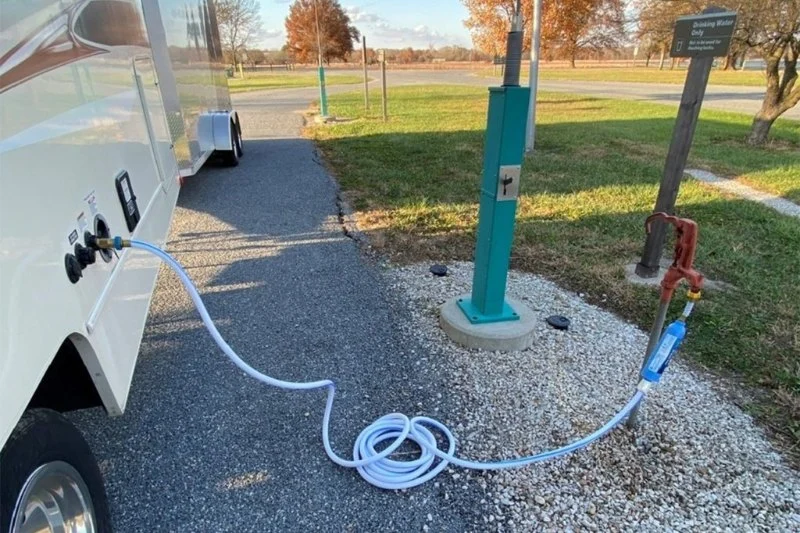
- Locate the Water Hookup: The water hookup is usually located near the electrical post at your site. It typically consists of a spigot or faucet.
- Use the Right Hose: Make sure to use a drinking-water-safe hose (often labeled as "RV water hose"). These hoses are specifically designed for potable water and are free of harmful chemicals like PVC that could affect your water quality.
- Connect the Hose: Attach one end of the hose to the spigot and the other to the water intake on your RV. Tighten the connection to avoid leaks.
- Turn on the Water: Slowly turn on the water and check for any leaks around the connections. If everything is secure, you’re ready to use the water in your RV.
It’s also a good idea to install a water pressure regulator between the spigot and your hose to avoid excessive pressure that could damage your RV’s plumbing.
4. Hooking Up Electricity
Electricity is essential for powering your RV’s appliances, lights, and electronics. Here’s how to hook up electricity safely and correctly:
- Find the Electrical Post: The electrical post at your campsite will have outlets for various voltages, typically 30-amp and 50-amp outlets. Make sure you know what type of connection your RV requires.
- Choose the Right Plug: Most RVs use a 30-amp plug, but larger rigs might require a 50-amp plug. If you have a 50-amp plug but the site only offers 30-amp, you can use an adapter, but you will be limited to a lower power output.
- Connect the Electrical Cord: Plug the power cord from your RV into the appropriate outlet. Be sure the connection is tight and secure to prevent any risk of a short circuit or electrical issues.
- Turn on the Power: After connecting, check that your RV’s electrical system is working properly by turning on some lights and appliances. If there are any issues, inspect the connection and make sure there are no loose wires or faulty plugs.
Don’t forget to turn off the power before unplugging your RV from the electrical post, as this will prevent any electrical surges when disconnecting.
5. Safety Tips for RV Hookups
Proper safety practices are crucial when hooking up water and electricity at an RV park. Here are some important tips to keep in mind:
- Always Turn Off Utilities Before Disconnecting: When you’re ready to disconnect your RV from the utilities, always turn off the water and power first to prevent any electrical surges or water leaks.
- Check for Leaks: Before you leave the park, make sure to check that all your connections are secure. Leaking water or electricity could cause damage to your RV and the park’s infrastructure.
- Use Ground Fault Circuit Interrupters (GFCIs): If your RV has electrical outlets outdoors, always use GFCIs to prevent electrical shock, especially in wet environments.
- Be Mindful of the Environment: Don’t leave hoses or cords in the way of traffic or other campers. Make sure they are safely out of the path of vehicles and foot traffic to avoid accidents.
By following these safety precautions and taking the time to hook up your water and electricity properly, you’ll have a much more enjoyable and safe RV experience at the park. If you need any RV-related gear or tips, visit Camping With Kayla for the best products and services to make your camping trip a success.