- Why-Cleaning-Dishes-Matters-During-Camping-Trips
- Challenges-of-Washing-Dishes-Without-Running-Water
- Essential-Gear-for-Camping-Dish-Cleaning
- Step-by-Step-Method-to-Clean-Dishes-While-Camping
- Eco-Friendly-Camping-Cleaning-Practices
- Real-Camping-Stories-and-Lessons-Learned
- Where-to-Find-Practical-Camping-Tips-and-Gear
Why Cleaning Dishes Matters During Camping Trips
Camping allows people to reconnect with nature, enjoy fresh air, and escape the routines of everyday life. However, even in the wilderness, certain responsibilities remain important. One of those responsibilities is cleaning cooking equipment and dishes after meals. Many campers quickly discover that learning how to clean dishes while camping without running water becomes an essential outdoor skill.
Leftover food scraps and dirty cookware can attract wildlife, create unpleasant odors, and make the entire campsite feel messy. In national parks and remote campgrounds across the United States, proper food and dish management also helps protect local ecosystems.
1. Keeping wildlife away from campsites
Animals such as raccoons, squirrels, and even bears can be drawn to food residue. Proper dish cleaning reduces the risk of unwanted wildlife encounters.
2. Maintaining a comfortable camp kitchen
Cooking outdoors is much more enjoyable when the campsite stays organized and clean. A simple dish-cleaning routine helps campers stay comfortable during longer trips.
Challenges of Washing Dishes Without Running Water
Unlike kitchens at home, campsites rarely provide sinks, dishwashers, or unlimited water supplies. Campers must rely on limited water reserves, portable containers, or nearby natural water sources.
1. Limited water availability
Many campers carry only a few gallons of water for drinking and cooking. Using too much for washing dishes can quickly drain supplies.
2. Environmental considerations
In many national parks and backcountry areas, campers are encouraged to minimize environmental impact. Dumping food waste or soapy water near lakes and streams can harm wildlife and water quality.
3. Managing grease and food residue
Outdoor cooking often involves grills, cast iron pans, or portable stoves. These tools can accumulate grease that requires careful cleaning even without a traditional sink.
Essential Gear for Camping Dish Cleaning
Experienced campers know that preparation makes all the difference. Having a few simple tools can make cleaning dishes in the wilderness much easier.
1. Portable wash basins
Collapsible basins are lightweight and easy to pack. They allow campers to create a small washing station anywhere.
Why basins are helpful
1. They help separate washing and rinsing water
2. They keep the campsite organized
3. They reduce water waste
2. Biodegradable camping soap
Eco-friendly soap is designed to break down naturally and minimize environmental impact when used responsibly.
3. Scrubbers and reusable cloths
Compact scrubbers, sponges, or microfiber cloths help remove stubborn food residue from plates and cookware.
Step-by-Step Method to Clean Dishes While Camping
Learning how to clean dishes while camping without running water becomes much easier when following a structured process used by experienced campers.
1. Scrape food waste first
Before using any water, remove leftover food scraps from plates and cookware. Food waste should be disposed of according to campsite guidelines.
Why scraping matters
1. Reduces grease and debris in wash water
2. Keeps cleaning water usable for longer
3. Helps minimize environmental impact
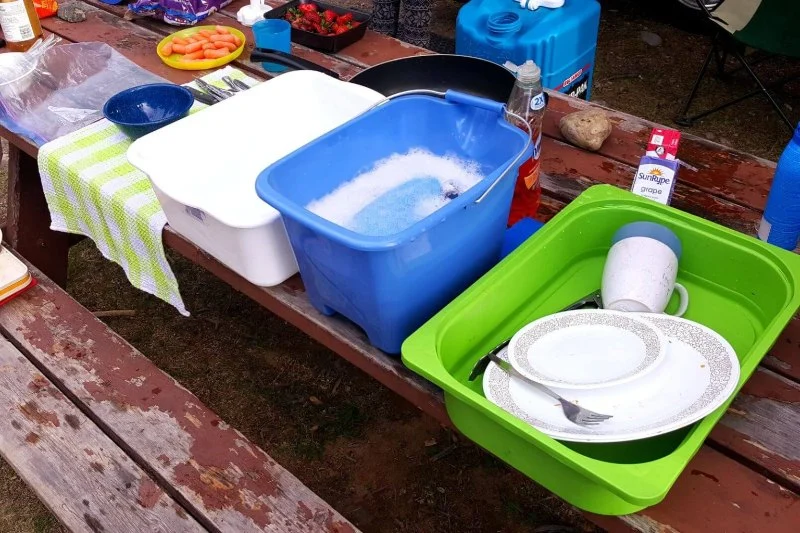
2. Set up a simple two-basin system
Many campers use a two-basin method for washing dishes outdoors.
Typical washing process
1. One basin for warm soapy water
2. One basin for rinsing with clean water
This simple system allows dishes to be cleaned effectively while conserving water.
3. Air-dry dishes naturally
Instead of using towels that may collect bacteria, many campers allow dishes to air dry on a portable drying rack or clean surface.
Eco-Friendly Camping Cleaning Practices
Responsible campers follow outdoor ethics that protect natural environments. Proper dish-cleaning habits are part of these principles.
1. Dispose of wastewater properly
Wastewater should be scattered at least 200 feet away from lakes, rivers, or campsites. This prevents contamination and protects wildlife habitats.
2. Use minimal soap when possible
In many cases, hot water and scrubbing alone can clean dishes effectively without excessive soap.
3. Choose reusable camping cookware
Durable cookware such as stainless steel or cast iron tends to be easier to clean and produces less waste compared to disposable options.
Real Camping Stories and Lessons Learned
Many outdoor enthusiasts have shared memorable experiences learning the importance of campsite cleanliness.
1. A mountain campsite lesson
A group of hikers camping in the Rocky Mountains once left unwashed cookware overnight. By morning, curious raccoons had visited the campsite and scattered food scraps around the area. The hikers quickly realized that cleaning dishes immediately after dinner would have prevented the problem.
2. A desert camping discovery
Another camper described how learning efficient dish-cleaning techniques helped conserve water during a multi-day trip in the Utah desert. Using the two-basin method allowed the group to clean dishes while using far less water than expected.
Stories like these highlight how small habits can make a significant difference during outdoor adventures.
Where to Find Practical Camping Tips and Gear
Whether planning a weekend camping trip or a long backcountry adventure, preparation helps ensure a smooth experience. Learning practical outdoor skills such as how to clean dishes while camping without running water can make life in the wilderness far more enjoyable.
Outdoor enthusiasts often explore communities like Camping With Kayla for ideas about camp kitchen setups, gear recommendations, and practical tips for making camping easier and more comfortable.
With the right approach, even simple campsite tasks like washing dishes can become part of the rewarding rhythm of outdoor life. Clean cookware, organized campsites, and thoughtful environmental practices allow campers to fully enjoy their time surrounded by nature.