
Camp Stove Setup: Fuel, Ventilation, Clearance, and Shutdown
Set up a camp stove by checking rules, matching fuel, cooking outdoors, choosing a stable clear area, supervising use, cooling, and storing safely.
Camp Stove Setup: Fuel, Ventilation, Clearance, and Shutdown
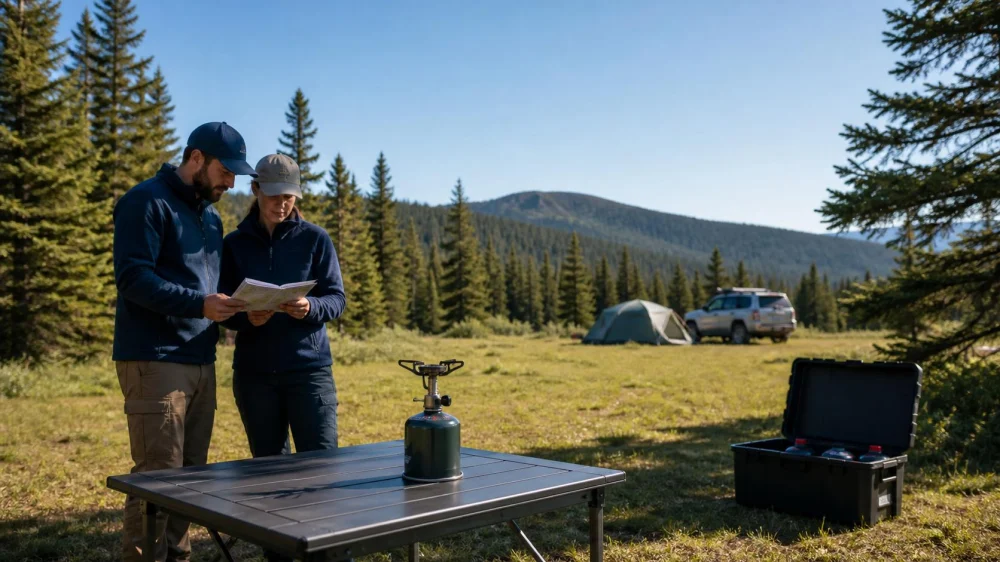
Use a camp stove only where current land rules and the manufacturer permit it. Match the exact fuel and connector, inspect components before the trip, and cook outdoors in a stable, level, well-ventilated area clear of tents, vehicles, dry vegetation, and traffic. Never use a fuel-burning stove inside a tent or enclosed space; carbon monoxide can build without warning. Control children and pets, keep emergency options ready, supervise the flame continuously, and let the stove cool fully before disconnecting or storing it.
In this guide
Check Fire and Stove Rules
Contact the land manager for current fire restrictions, stove definitions, permits, fuel rules, seasonal bans, and required extinguishing equipment. A device allowed during one restriction may be prohibited during another. Rules can change during the trip.
Check campground quiet hours and designated cooking areas. Never move a stove into a tent, vehicle, toilet building, enclosed shelter, or other unsafe location because of rain or wind. If outdoor operation is not safe and permitted, use food that does not require cooking.
Match Fuel and Equipment
Use only the fuel, canister, bottle, regulator, hose, adapter, and connection specified by the stove manufacturer. Similar-looking threads and improvised adapters can leak or damage equipment. Do not refill a disposable container or transfer fuel into an unapproved bottle.
Carry fuel upright and protected from heat, impact, ignition, and occupied sleeping space according to product and transport rules. Keep labels intact. Calculate enough fuel for the plan plus a reasonable reserve without stockpiling excess.
Choose an Outdoor Cooking Site
Select firm, level, noncombustible ground or a stable table approved for stove use. Follow the manufacturer's clearance in every direction. Move dry grass, leaves, paper, spare fuel, packs, and hanging fabric away without damaging protected vegetation.
Keep cooking outside and away from tent openings and vehicle tailgates. Windshields must be manufacturer-approved and placed without trapping heat around fuel containers. In strong or shifting wind, turn the stove off rather than constructing an enclosure.
Inspect Before Lighting
With the stove off and cool, check the body, supports, hose, seals, connector, valve, burner, and fuel container for damage, dirt, corrosion, or missing parts. Follow the manual's leak-check method. Never test for leaks with a flame.
If you smell fuel, hear an unexplained hiss, see damage, or cannot make a proper connection, do not light the stove. Move people away, eliminate ignition sources, ventilate the outdoor area, and follow manufacturer or emergency guidance.
Light and Cook Deliberately
Set cookware and utensils within reach before ignition while keeping handles positioned to avoid bumps. Follow the specified ignition sequence. Keep face, hair, sleeves, and hands away from the burner and do not lean over it.
Use cookware within the stove's size and weight limits. A large pot can destabilise the unit or reflect heat toward the fuel. Stay beside the operating stove. If it must be left, turn it off according to instructions and verify the flame is out.
Protect People, Pets, and Wildlife
Create a clear cooking zone that children and pets do not enter. Assign one adult to stove control; multiple people reaching across the burner increases spills and burns. Keep paths, chairs, and guy lines away.
Store food, rubbish, grease, and scented items under local wildlife rules. Never leave a cooling pan or stove where an animal can investigate. Do not pour grease, food water, or fuel on the ground.
Respond to Leaks, Fire, or Symptoms
Keep the land manager's required fire equipment and a communication plan ready. For a small controllable problem, use the stove's emergency shutdown only if you can do so without approaching flame or leaking fuel. Move away and call emergency services for a spreading fire, cylinder involvement, injury, or immediate danger.
Headache, dizziness, nausea, confusion, weakness, or collapse around fuel-burning equipment can signal carbon monoxide exposure or another emergency. Get everyone to fresh air, call emergency services, and do not reenter an enclosed area. Carbon monoxide has no reliable smell.
Shut Down, Cool, and Store
Follow the manufacturer's shutdown order, verify the flame is out, and keep the stove in place until completely cool. A burner, grate, pot, and windshield can remain hot after the flame disappears. Prevent anyone from touching or packing them.
Disconnect fuel only when and where instructions permit. Replace caps, inspect for leakage, and store fuel away from heat and sleeping areas under applicable rules. Clean food residue after cooling and pack equipment dry. Report an unsafe or recalled product and retire damaged components.
- Current land-manager permission and restrictions checked
- Exact approved stove, fuel, and connectors matched
- Outdoor level site and manufacturer clearances established
- Components and leak-check procedure completed cold
- Spare fuel and combustibles separated
- One adult supervises the lit stove continuously
- Children, pets, paths, and wildlife kept clear
- Emergency plan and required fire equipment ready
- Stove fully shut down and cooled before packing
Frequently Asked Questions
Can I use a camp stove in a tent vestibule?
No. Treat the vestibule as part of the tent. Fire and carbon monoxide risks require outdoor use with the specified clearance and ventilation.
Is a stove safe inside a vehicle with windows open?
No. Do not operate fuel-burning cooking equipment in a vehicle. Use it outdoors as directed.
Can I use a windscreen around the fuel canister?
Only the manufacturer-approved setup. Trapped heat can raise fuel-container pressure. Stop cooking when wind prevents safe use.
What if the igniter does not spark?
Turn the fuel off and follow the manual. Let dispersed fuel clear before any approved alternate lighting method; do not repeatedly release fuel.
Can the stove stay connected overnight?
Follow the specific manual and campground rules. Generally shut down, cool, disconnect when directed, cap, and store fuel safely away from sleeping areas.
A camp stove is safe only as a complete system: current permission, correct fuel, outdoor ventilation, stable clearance, close supervision, and cold storage. Devices and rules vary, so carry the manual and follow manufacturer, land-manager, fire-authority, and emergency instructions for the actual trip.
More
How to Choose the Right Tent Size for Your Group
Jul 15, 2026Learn how to choose the right tent size for your group with practical camping tips covering capacity, comfort, weather conditions, gear storage, and group camping needs.
How to Camp Comfortably in a Small Car Without Feeling Cramped or Disorganized
Jul 05, 2026Learn how to camp comfortably in a small car without feeling cramped or disorganized, with smart space-saving tips, gear strategies, real camping stories, and practical setup advice.
18 Camping Tips to Pack Light and Travel More Efficiently
Jul 02, 2026Discover 18 camping tips that help you pack light and travel more efficiently, with real camping stories, gear strategies, and practical outdoor packing advice.

25 Best Campgrounds in the US for Every Outdoor Experience
Jun 29, 2026Discover 25 Best Campgrounds in the US That Offer the Perfect Outdoor Experience for All Levels, from beginner-friendly sites to advanced wilderness escapes, with tips, stories, and planning advice for unforgettable camping trips.
How to Camp Comfortably Without Electricity: Practical Off-Grid Guide
Jun 27, 2026Learn how to camp comfortably without electricity using practical off-grid strategies, gear choices, and real camping experiences. Discover how Camping With Kayla helps you enjoy modern comfort in nature.
22 Camping Hacks That Will Change Your Outdoor Experience
Jun 24, 2026Discover 22 camping hacks that will completely change your outdoor experience with practical tips, real-life camping stories, and expert advice for comfort, safety, and efficiency.