
Campfire Extinguishing Checklist: Drown, Stir, Feel, and Leave It Cold
Use a practical campfire shutdown routine: check restrictions, keep water ready, soak and stir every coal, test for hidden heat, and leave only when cold.
Campfire Extinguishing Checklist: Drown, Stir, Feel, and Leave It Cold
Table of contents
Quick answer
Check the current campground or land-manager rules before lighting anything. If fires are permitted, keep the fire small, attended, and supplied with water and a shovel. To put it out, soak every coal and stick, stir the wet material, add more water, and repeat until no heat remains. If it is too hot to touch safely, it is too hot to leave. Never assume that the absence of flames means the fire is out.
Decide before lighting
A safe shutdown starts before the match. Confirm fire restrictions for the exact campground and day; rules can change with weather and staffing. Use an existing fire ring when required, clear nearby combustibles as local rules direct, and keep enough water on hand to extinguish the entire fire. A small fire is easier to control and cool than a large bed of coals.
Assign one sober adult to attend the fire continuously. Do not rely on a late-night rush to put it out. Stop adding wood well before sleep or departure so the fuel can burn down, but still allow ample time for repeated soaking and checking.
Extinguishing steps
- Stop adding fuel and let large flames settle while remaining beside the fire.
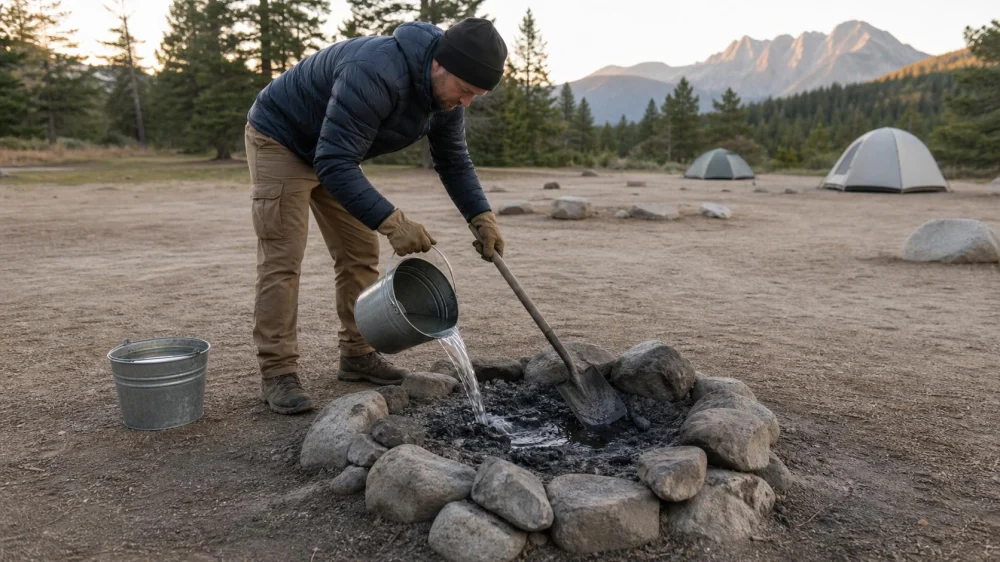
- Pour water slowly over the entire fire, including the edges of the ring. Avoid standing directly over steam.
- Use a shovel or poker to separate charred logs and stir ashes, embers, and coals so hidden hot material is exposed.
- Add more water while stirring until hissing stops and all material is thoroughly wet.
- Repeat the soak-and-stir cycle. Check beneath rocks or large pieces where heat can remain.
- Wait, then perform a final heat check before leaving or sleeping.
Do not bury live coals. Soil can insulate heat and allow smouldering material to reignite. Never remove hot coals or dump them near vegetation, a bin, or another campsite.
The cold test
Look for smoke, listen for hissing, and carefully feel for radiant heat with the back of your hand held above the material; do not touch anything until you are confident it is safe. Stir again and check several areas, not just the surface. The goal is cold, wet material with no warm pockets. If any heat remains, add water and repeat.
If water is limited
Plan not to build a fire when you cannot carry enough water to extinguish it. Some official guidance allows thoroughly mixing mineral soil or sand through embers when water is unavailable, but local rules vary and simply covering a fire can trap heat. A stove may be the lower-impact choice where it is lawful, though stove restrictions can also apply. Follow the instructions of the managing agency rather than improvising.
Wind and dry conditions
Wind can lift sparks and revive a fire that looks quiet. In strong wind, very dry conditions, or elevated fire danger, skip the campfire even if one is technically allowed. If fire escapes the ring and you cannot control it immediately, move to safety, note the location, and call 911 or the responsible ranger or dispatch service. Do not endanger yourself trying to suppress a spreading wildfire.
Departure checklist
- Current fire rules checked for this location and date.
- All flames, sparks, embers, and coals soaked.
- Charred pieces separated and ashes stirred.
- Soak-and-stir cycle repeated after hissing stopped.
- No smoke or warmth detected across the full ring.
- Tools and water packed only after the final cold check.
- Any escaped or abandoned fire reported as local guidance requires.
Limitations
This is general United States camping guidance, not permission to light a fire. State, tribal, federal, county, and private lands can impose stricter rules, seasonal bans, permit requirements, or fuel restrictions. Signs at the site and current agency notices take priority. Do not use this guide as wildfire-response training.
FAQ
Can I leave when flames are gone?
No. Coals can remain hot for hours and flare in wind. Leave only after the entire fire is cold.
Should I pour water only in the center?
No. Wet the full coal bed and edges, stir, and expose hidden pockets before adding more water.
Can I put dirt on top and walk away?
No. A layer of dirt can insulate hot coals. Follow local guidance and mix extinguishing material thoroughly while checking for heat.
What if a fire ban begins during my stay?
Follow the newest agency order and campground instructions. Extinguish any fire immediately if directed.
Evidence notes
The National Park Service advises campers to keep water nearby, never leave a fire unattended, and douse and stir coals until no heat remains. Its Big Thicket guidance specifically warns against burying coals because they can smoulder and reignite. Review the NPS campfire safety instructions and the current rules for the land you are visiting before every trip.
Conclusion
A fire is not finished when the evening is over; it is finished when every coal is cold. Build only where allowed, keep water ready, stop feeding the fire early, and repeat the drown-stir-feel process until there is no heat anywhere in the ring.
More
How to Choose the Right Tent Size for Your Group
Jul 15, 2026Learn how to choose the right tent size for your group with practical camping tips covering capacity, comfort, weather conditions, gear storage, and group camping needs.
How to Camp Comfortably in a Small Car Without Feeling Cramped or Disorganized
Jul 05, 2026Learn how to camp comfortably in a small car without feeling cramped or disorganized, with smart space-saving tips, gear strategies, real camping stories, and practical setup advice.
18 Camping Tips to Pack Light and Travel More Efficiently
Jul 02, 2026Discover 18 camping tips that help you pack light and travel more efficiently, with real camping stories, gear strategies, and practical outdoor packing advice.

25 Best Campgrounds in the US for Every Outdoor Experience
Jun 29, 2026Discover 25 Best Campgrounds in the US That Offer the Perfect Outdoor Experience for All Levels, from beginner-friendly sites to advanced wilderness escapes, with tips, stories, and planning advice for unforgettable camping trips.
How to Camp Comfortably Without Electricity: Practical Off-Grid Guide
Jun 27, 2026Learn how to camp comfortably without electricity using practical off-grid strategies, gear choices, and real camping experiences. Discover how Camping With Kayla helps you enjoy modern comfort in nature.
22 Camping Hacks That Will Change Your Outdoor Experience
Jun 24, 2026Discover 22 camping hacks that will completely change your outdoor experience with practical tips, real-life camping stories, and expert advice for comfort, safety, and efficiency.