Campground Check-In: Confirm Your Site, Rules, and Exit
Use this campground check-in guide to verify your site, arrival window, parking, current rules, hazards, emergency exits, and checkout duties.
Campground Check-In: Confirm Your Site, Rules, and Exit
Table of contents
Campground check-in is the moment when an online reservation becomes a real campsite with specific boundaries, facilities, hazards, and rules. Take a few minutes to confirm the site number, vehicle limits, checkout time, food-storage requirements, fire restrictions, and emergency information before unpacking. A rushed arrival can lead to setting up on the wrong pad, blocking access, or discovering after dark that the tent area drains poorly.
Every campground operates differently. A national park, state park, private resort, dispersed area, and backcountry permit system may use different check-in methods. Regulations and closures can change quickly because of weather, wildlife, wildfire, maintenance, or staffing. Treat the reservation confirmation and current instructions from the managing authority as the source for your stay.
Prepare before leaving home
Save the reservation confirmation, campground address, site number, booking name, vehicle information, and contact number. Download or print the map because mobile service may be weak. Confirm the route with the official campground source; a general navigation app can direct drivers to a closed gate, maintenance road, or wrong entrance.
Check current alerts on the day of departure. Look for road closures, fire bans, water advisories, severe weather, harmful algal blooms, wildlife activity, generator restrictions, and facility outages. If conditions create a safety concern, contact the campground about options rather than assuming the reservation guarantees access.
Review equipment limits. Confirm maximum vehicle and trailer length, number of tents, number of occupants, pets, extra vehicles, and whether a tow vehicle must fit on the pad. Measure the full combination, including racks and hitch-mounted gear. A site labelled for a certain length may still have turns, branches, or slopes that affect access.
Confirm the arrival window
Identify the earliest check-in, latest staffed arrival, quiet hours, gate closure, and checkout time. Do not arrive early expecting the previous camper to have left or the site to be ready. If you will be late, call before the office closes and ask whether the campground holds the reservation, posts an assignment, provides a gate code, or marks a guest as a no-show.
Plan to arrive with enough daylight to inspect and set up safely. Darkness makes it harder to see dead branches, uneven ground, drainage channels, poison ivy, animal signs, or a mismatched site marker. It also increases the chance of disturbing neighbours with headlights, doors, stakes, and conversation.
Build travel buffer for fuel, groceries, road construction, and slow park roads. Large recreational vehicles should not depend on turning around at a small entrance. Confirm fuel and charging options before reaching a remote area.
Ask the right questions at check-in
Provide the reservation name and identification required by the operator. Verify the assigned site and dates rather than relying solely on a confirmation created months earlier. Ask for a current map and mark the site, drinking-water locations, toilets, rubbish and recycling points, dump station if relevant, host or ranger location, and exit.
Confirm rules that affect immediate setup: where vehicles may park, how tents fit within the site, whether hammocks are allowed, quiet and generator hours, pet restrictions, food and scented-item storage, washing and grey-water disposal, and current fire rules. “Fire ring provided” does not mean fires are currently permitted. Use only approved fuel and equipment under current restrictions.
Ask how emergency alerts are communicated. The campground may use sirens, text alerts, staff rounds, posted notices, weather radio, or no local system. Record the after-hours contact and the location where reliable mobile service may be available. In the United States, call 911 for an immediate emergency when service is available, but be prepared to provide the campground, loop, and site details.
Inspect the assigned campsite
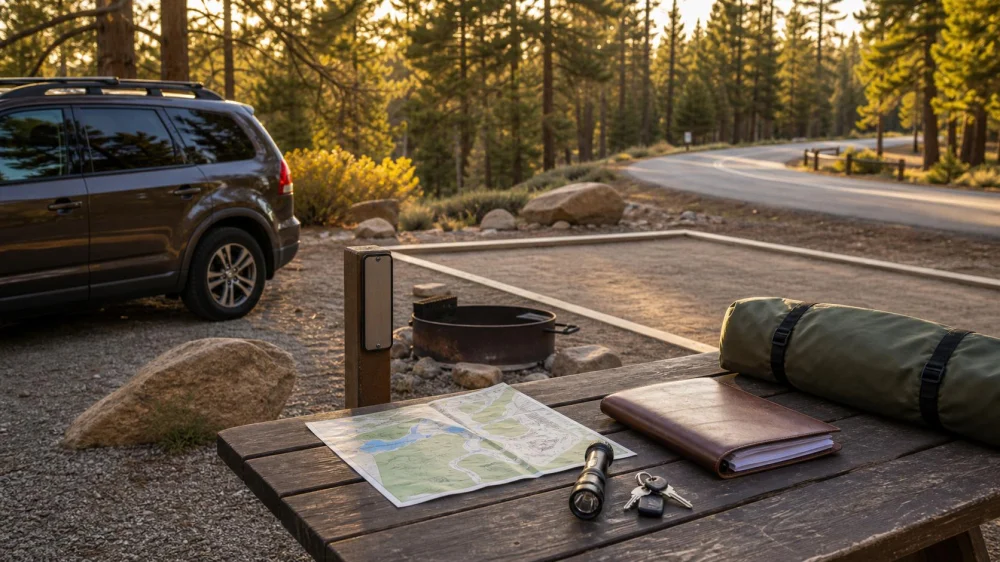
Park temporarily without blocking the loop and walk the site before committing the vehicle or tent. Confirm the numbered marker. Look overhead for hanging or dead limbs and around the ground for unstable trees, deep holes, sharp debris, insects, animal waste, broken glass, standing water, and signs of recent flooding. Do not enter a closed or taped-off area.
Choose a tent location within the designated pad on durable, relatively level ground. Avoid drainage channels and the lowest point of the site. Do not dig trenches, cut vegetation, move large rocks, or expand the cleared area. Keep the tent an appropriate distance from fires, grills, vehicles, and water according to local rules and equipment guidance.
Check the picnic table, fire ring, utility pedestal, water fixture, bear-resistant locker, and other provided equipment. Do not use a damaged electrical connection, leaking fuel fixture, unstable table, or broken locker. Report it to staff. Test potable-water status with the authority rather than assuming every spigot is safe to drink.
Respect boundaries and parking limits
Keep tents, canopies, vehicles, and gear inside the assigned site and designated parking spur. Vegetation is not overflow space. Avoid stretching guylines across paths or into neighbouring sites. Use high-visibility markers on permitted lines without creating bright nighttime glare.
Park so the vehicle can leave without extensive repositioning. Do not block hydrants, gates, host sites, accessible routes, or emergency access. Chock a trailer and level it using appropriate equipment according to manufacturer guidance; never rely on stabilisers as a substitute for safe wheel restraint.
Ask before parking an extra car on an empty neighbouring site. It may be reserved for a late arrival. Use designated overflow parking and display required permits. Keep keys accessible to a responsible adult in case vehicles need to move quickly.
Identify alerts and emergency exits
Drive or walk the primary exit route in daylight and note any secondary route identified by the campground. Do not invent a shortcut through a locked service road. Know which direction leads toward a main road, staffed building, or designated shelter. For floods, wildfires, severe storms, and other hazards, follow official instructions and leave early when directed.
Share the site number and campground coordinates or address with everyone in the group. Children should know which adult to find and should not wander to roads, water, cliffs, or neighbouring sites. Keep a light, footwear, essential medication, keys, and weather-appropriate clothing available at night.
Identify the nearest appropriate shelter for thunderstorms. A tent, canopy, picnic shelter, or isolated tree does not provide reliable lightning protection. A substantial building or enclosed hard-topped vehicle is generally safer; follow current weather-service guidance and campground direction.
Handle late or remote check-in
Follow only the late-arrival procedure provided by the campground. An envelope, board, code, or self-registration station may contain the assignment. Verify the name and dates without exposing another guest’s information. Do not occupy an apparently empty site unless it is clearly assigned or available under the posted system.
Use low beams, minimise engine idling, and keep voices and door noise down during quiet hours. Complete only the setup needed for a safe night. Save extensive organising, hammering, and bright area lighting for morning. If you cannot identify the site safely, use the approved after-hours contact or designated waiting area.
Remote first-come camping may require a fee envelope, digital registration, or permit. Follow the posted process exactly and retain proof. Never leave payment information or cash in an unofficial container.
Report site problems and request changes
Contact staff if the site is occupied, inaccessible, too small for the confirmed equipment, or affected by a safety issue. Document the site marker and condition without photographing other guests unnecessarily. Do not confront occupants or move to another site on your own; the office may have updates that are not visible online.
Explain the specific problem and what would resolve it. A preference for more shade is different from a hazardous branch or flooded pad. Another site may not be available, especially during peak periods. If the assigned site cannot be used safely, ask the operator for documented options under its policy.
Plan checkout before unpacking
Note checkout time, rubbish rules, fire-extinguishing requirements, dump-station hours, and any key or tag return. Set a departure reminder and leave time for drying gear, packing food, inspecting the site, and securing the load. Do not leave a fire, hot coals, food scraps, cord, stakes, or rubbish behind.
Before driving away, walk the tent pad, table, fire area, and parking spur. Confirm that every person, pet, key, and piece of gear is accounted for. Campground check-in and checkout form one loop: verify the site when you arrive, use it within the rules, and leave it safe and ready for the next camper.
More
How to Choose the Right Tent Size for Your Group
Jul 15, 2026Learn how to choose the right tent size for your group with practical camping tips covering capacity, comfort, weather conditions, gear storage, and group camping needs.
How to Camp Comfortably in a Small Car Without Feeling Cramped or Disorganized
Jul 05, 2026Learn how to camp comfortably in a small car without feeling cramped or disorganized, with smart space-saving tips, gear strategies, real camping stories, and practical setup advice.
18 Camping Tips to Pack Light and Travel More Efficiently
Jul 02, 2026Discover 18 camping tips that help you pack light and travel more efficiently, with real camping stories, gear strategies, and practical outdoor packing advice.

25 Best Campgrounds in the US for Every Outdoor Experience
Jun 29, 2026Discover 25 Best Campgrounds in the US That Offer the Perfect Outdoor Experience for All Levels, from beginner-friendly sites to advanced wilderness escapes, with tips, stories, and planning advice for unforgettable camping trips.
How to Camp Comfortably Without Electricity: Practical Off-Grid Guide
Jun 27, 2026Learn how to camp comfortably without electricity using practical off-grid strategies, gear choices, and real camping experiences. Discover how Camping With Kayla helps you enjoy modern comfort in nature.
22 Camping Hacks That Will Change Your Outdoor Experience
Jun 24, 2026Discover 22 camping hacks that will completely change your outdoor experience with practical tips, real-life camping stories, and expert advice for comfort, safety, and efficiency.