
Campground Shower Plan: Footwear, Dry Storage, and Timing
Prepare for a campground shower with facility checks, secure footwear, dry clothing storage, water-conscious timing, supervision, and a simple backup plan.
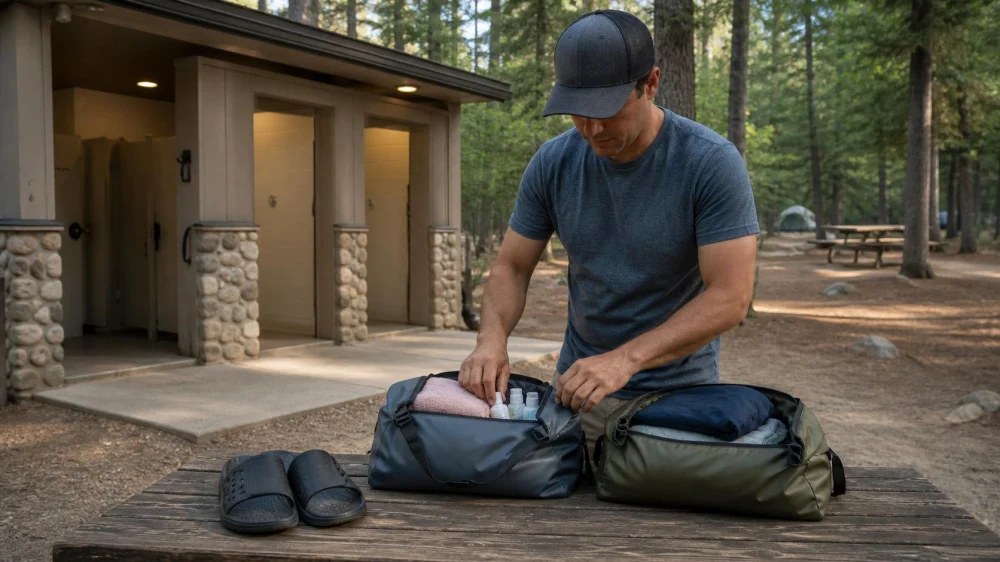
Campground Shower Plan: Footwear, Dry Storage, and Timing
Table of Contents
Quick answer
Before walking to a campground shower, confirm its hours, payment method, water status, accessibility, and product rules. Wear secure washable footwear, carry only what you need, and keep clean clothes in a closed dry bag. Test water cautiously, use grab points where provided, supervise children directly, and pack wet items separately after the shower. Keep a basic wash-up alternative for closures.
Check the facility first
Campground showers range from individual rooms to shared buildings, and some operate seasonally or on timed tokens. Check the campground's current information when booking and again on arrival. Water restrictions, maintenance, weather, or power outages may affect availability.
- Opening and cleaning hours
- Coin, token, card, code, or included access
- Hot-water availability and any time limit
- Accessible route, stall, bench, and controls
- Rules for toiletries, shaving, laundry, and dishwashing
- Where children or caregivers may be assisted
Do not assume a phone will work as the only payment or access method. Ask staff for the approved alternative.
Pack a compact shower kit
A small organised kit reduces dropped items and keeps the shared space clear. Bring a towel, clean clothes, necessary toiletries in sealed containers, secure shower footwear, and any personal care supplies. A hanging toiletry bag or clean caddy can keep products off the floor when permitted.
A headlamp may help on the outdoor route, but use it on a low setting and never place non-waterproof electronics where they can get wet. Leave valuables locked according to the campground's guidance rather than unattended in a changing area.
Separate dry and wet items
Put clean clothes and the towel inside a closed waterproof or water-resistant bag. Carry a second bag for damp clothing and sandals. A bench or hook can still be wet, so do not depend on the stall itself to protect dry items.
Afterward, open and dry wet gear at the campsite only where rules allow. Do not seal damp towels for long periods or hang them on vegetation, signs, utilities, or another camper's space.
Use the shower safely
Walk carefully because floors may be wet even when they look clean. Wear footwear with secure straps and suitable traction. Keep the floor area free of bottles, bags, and loose clothing. Use installed grab bars as intended, not pipes, dispensers, or towel hooks.
Test water temperature with care before stepping under the stream and make adjustments gradually. If controls are damaged, water is dangerously hot, drainage backs up, or a light or electrical fitting appears unsafe, stop and tell staff. Do not attempt repairs.
Follow water and product rules
Use water efficiently, particularly where supplies are limited or showers are timed. Prepare clothes and toiletries before starting the water. Use only products allowed by the campground and keep them in the shower drainage system—not in streams, lakes, soil, or storm drains.
Biodegradable wording does not make a product appropriate for direct use in natural water. Follow the campground's wastewater and personal-washing rules. Never use the shower stall for dishes, muddy equipment, pets, or laundry unless the facility specifically permits it.
Plan supervision and access
Children need direct adult supervision around wet floors, hot controls, doors, and changing areas. Bring only the number of items the adult can manage while maintaining supervision. Confirm family-room availability and occupancy rules rather than leaving a young child outside a stall.
For mobility or personal-care needs, ask about the route, door, turning space, seat, handheld shower, and caregiver access. A general accessible label may not describe every needed feature.
Have a no-shower backup
A shower may be closed or too busy. A practical backup can include a personal washcloth routine with a small basin or approved wipes, followed by correct wastewater or waste disposal. Use the campsite's designated facilities and privacy rules.
Do not create an outdoor shower that sends soap or water into the ground unless the campground explicitly allows the setup and specifies disposal. When a full wash is essential for a health reason, identify an appropriate facility before the trip.
Shower checklist
- Confirm hours, access, payment, and water status.
- Pack secure footwear and minimal toiletries.
- Seal clean clothes and towel in a dry bag.
- Carry a separate wet-item bag.
- Keep valuables secured and paths lit safely.
- Test temperature and keep the floor clear.
- Use water and products according to site rules.
- Supervise children and address access needs.
- Dry equipment and use the approved backup if closed.
FAQ
Do campground showers always have hot water?
No. Availability, temperature, and duration vary. Confirm current conditions with the campground.
Can I use biodegradable soap outdoors?
Not automatically. Keep all soap away from natural water and follow the site's washing and wastewater rules.
Should I go barefoot in the shower?
Secure washable footwear can improve traction and reduce direct contact with shared floors. Choose a style that fits well and does not itself create a trip risk.
What if the shower drain is blocked?
Stop using the stall and report it. Do not remove covers or attempt to clear facility plumbing.
Next steps
Verify the facility at check-in, assemble a two-bag dry-and-wet kit, and choose a quieter time within posted hours. Use the space efficiently, report hazards, and return with damp items contained. A simple backup prevents a closure from disrupting the trip.
Evidence note: Facility design, water conditions, product restrictions, and access arrangements vary. Current campground rules, posted instructions, product directions, and staff guidance take priority.
More
How to Choose the Right Tent Size for Your Group
Jul 15, 2026Learn how to choose the right tent size for your group with practical camping tips covering capacity, comfort, weather conditions, gear storage, and group camping needs.
How to Camp Comfortably in a Small Car Without Feeling Cramped or Disorganized
Jul 05, 2026Learn how to camp comfortably in a small car without feeling cramped or disorganized, with smart space-saving tips, gear strategies, real camping stories, and practical setup advice.
18 Camping Tips to Pack Light and Travel More Efficiently
Jul 02, 2026Discover 18 camping tips that help you pack light and travel more efficiently, with real camping stories, gear strategies, and practical outdoor packing advice.

25 Best Campgrounds in the US for Every Outdoor Experience
Jun 29, 2026Discover 25 Best Campgrounds in the US That Offer the Perfect Outdoor Experience for All Levels, from beginner-friendly sites to advanced wilderness escapes, with tips, stories, and planning advice for unforgettable camping trips.
How to Camp Comfortably Without Electricity: Practical Off-Grid Guide
Jun 27, 2026Learn how to camp comfortably without electricity using practical off-grid strategies, gear choices, and real camping experiences. Discover how Camping With Kayla helps you enjoy modern comfort in nature.
22 Camping Hacks That Will Change Your Outdoor Experience
Jun 24, 2026Discover 22 camping hacks that will completely change your outdoor experience with practical tips, real-life camping stories, and expert advice for comfort, safety, and efficiency.