
Campground Shower Plan: Water, Footing, Privacy, and Dry Gear
Plan a campground shower by checking hours, payment, water and temperature, footing, privacy, accessibility, dry storage, child supervision, and gear cleanup.
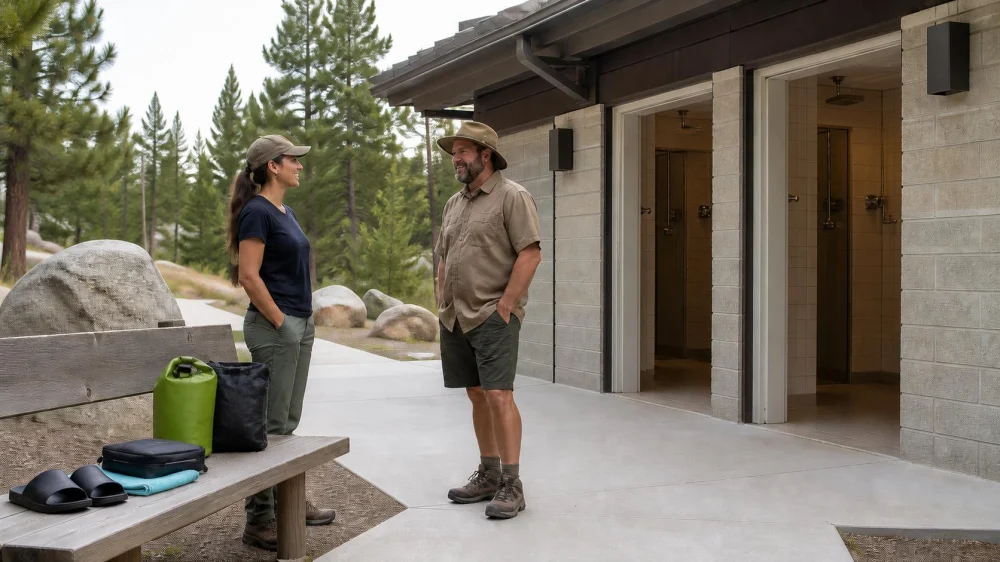
Campground Shower Plan: Water, Footing, Privacy, and Dry Gear
On this page
Quick answer
Check shower-house hours, payment, water availability, accessibility, and current campground notices before walking over. Pack only what you can keep controlled: shower footwear, toiletries, towel, clean clothing, light, and separate dry and wet bags. Test water gradually, use rails or seating only as intended, keep exits and drains clear, supervise children according to facility rules, and return with all gear while wet items are isolated for drying.
Why the shower trip needs its own small gear system
A campground shower may be coin, token, card, timed, seasonal, solar, unheated, or temporarily closed. The route can be dark or wet, hooks and benches may be limited, and spray can reach clothing or electronics. Separating clean, wet, and valuable items makes the visit simpler while preserving privacy and keeping the floor and exit clear.
This guide is for United States campers using an established campground shower facility. It is not water-quality certification, accessibility verification, medical bathing advice, or guidance for improvised outdoor showers. Follow campground rules, posted notices, local restrictions, caregiver plans, and individual health needs.
Practical checklist
- Facility location, route, hours, cleaning closures, seasonal operation, queue, gender-neutral or family rooms, accessibility, staff contact, and emergency exit.
- Free, coin, token, card, app, timed water, change machine, refund policy, signal, device privacy, and backup payment method.
- Water notice, potable or non-potable designation where relevant, hot and cold controls, temperature stability, pressure, time limit, and conservation rules.
- Steps, ramps, thresholds, wet floor, mats, drains, rails, seat, transfer space, lighting, ventilation, hooks, shelf, bench, door lock, and alarm pull.
- Shower footwear, towel, soap and shampoo allowed, washcloth, clean clothes, light, glasses, hearing or mobility aids, and personal care supplies.
- Dry bag, wet bag, valuables plan, phone and key protection, hanging method, floor contact, leaking bottles, towel storage, and post-shower drying.
- Child or dependent supervision, companion assistance, service animal plan, privacy, medication timing, fall risk, skin needs, and alternate wash plan.
Step-by-step plan
- Read current campground notices and confirm the route, opening time, payment, water status, accessibility, rules, and a backup hygiene plan before leaving camp.
- Pack toiletries in closed containers, clean clothing and towel in a dry bag, wet-return bag separately, and leave unnecessary valuables secured under the camp plan.
- Use the lit approved route, carry a light after dark, and approach carefully around wet thresholds, steps, ramps, footwear changes, and other guests.
- Inspect the stall without touching questionable surfaces, confirm the lock, hooks, drain, rails and seat, and choose a dry placement that does not block the exit.
- Test water gradually with a hand while standing clear of the spray, then enter only when temperature and footing are comfortable and stable.
- Keep the visit within posted limits, use approved products, preserve privacy, supervise dependents, and stop for temperature swings, drain backup, dizziness, or unsafe footing.
- Dry before dressing, place wet items in the wet bag, check hooks and floor, report hazards, and return by the safe route to air and dry gear fully.
For an extended stay or accessibility need, note facility location and hours, payment, closures, water notices, accessible features, assistance plan, route lighting, supplies, hazards reported, staff response, alternate facility, and gear drying. Avoid recording or photographing inside occupied shower or changing areas.
Limits and important notes
Do not enter a closed stall, bypass a lock, photograph others, leave devices charging in wet areas, place bags in exits, use unapproved soaps, force temperature controls, stand on a bench, or rely on a rail not designed for body support. Do not use a posted non-potable source contrary to instructions.
Stop and notify staff for scalding or unstable water temperature, backed-up drains, sewage, broken locks, exposed wiring, severe slip hazards, failed lighting, harassment, or inaccessible features promised by the facility. Seek emergency help for a serious fall, burn, breathing problem, faintness, or another urgent condition.
Frequently asked questions
Do campground showers always have hot water?
No. Systems, hours, season, fuel, solar conditions, demand, and outages vary. Check current notices and test gradually.
Should I take my phone into the stall?
Leave it secured when possible or protect it according to its rating, while respecting strict privacy and avoiding charging in wet areas.
Are shower sandals required?
Rules vary, but dedicated slip-resistant shower footwear can reduce direct floor contact when it fits securely and is allowed.
What if the stall has no dry hook?
Use a permitted self-contained hanging or waterproof bag arrangement that does not damage surfaces or block the door, drain, rail, or route.
Can soap water drain outdoors?
Use only the facility drain and approved products. Never divert wash water outdoors contrary to campground and environmental rules.
Sources and evidence
Use current campground shower-house rules and notices, accessibility information, posted water and product directions, facility payment instructions, weather and route information, and individual caregiver or clinician guidance. Those current site-specific sources override a generic shower checklist.
Conclusion and next steps
Confirm the facility, route, hours, payment, water, accessibility, and rules; pack dry and wet items separately with safe footwear and light. Inspect footing and privacy, test water gradually, keep the exit clear, stop for hazards, report problems, and dry both body and gear before returning everything to camp.
More
How to Choose the Right Tent Size for Your Group
Jul 15, 2026Learn how to choose the right tent size for your group with practical camping tips covering capacity, comfort, weather conditions, gear storage, and group camping needs.
How to Camp Comfortably in a Small Car Without Feeling Cramped or Disorganized
Jul 05, 2026Learn how to camp comfortably in a small car without feeling cramped or disorganized, with smart space-saving tips, gear strategies, real camping stories, and practical setup advice.
18 Camping Tips to Pack Light and Travel More Efficiently
Jul 02, 2026Discover 18 camping tips that help you pack light and travel more efficiently, with real camping stories, gear strategies, and practical outdoor packing advice.

25 Best Campgrounds in the US for Every Outdoor Experience
Jun 29, 2026Discover 25 Best Campgrounds in the US That Offer the Perfect Outdoor Experience for All Levels, from beginner-friendly sites to advanced wilderness escapes, with tips, stories, and planning advice for unforgettable camping trips.
How to Camp Comfortably Without Electricity: Practical Off-Grid Guide
Jun 27, 2026Learn how to camp comfortably without electricity using practical off-grid strategies, gear choices, and real camping experiences. Discover how Camping With Kayla helps you enjoy modern comfort in nature.
22 Camping Hacks That Will Change Your Outdoor Experience
Jun 24, 2026Discover 22 camping hacks that will completely change your outdoor experience with practical tips, real-life camping stories, and expert advice for comfort, safety, and efficiency.