Camping Cooler Plan: Layer Ice, Separate Raw Food, and Track Time
Pack a camping cooler by pre-chilling food and equipment, layering ice, sealing raw food low or separately, limiting lid openings, measuring temperature, securing wildlife storage, and discarding uncertainty.
Camping Cooler Plan: Layer Ice, Separate Raw Food, and Track Time
On this page
Quick answer
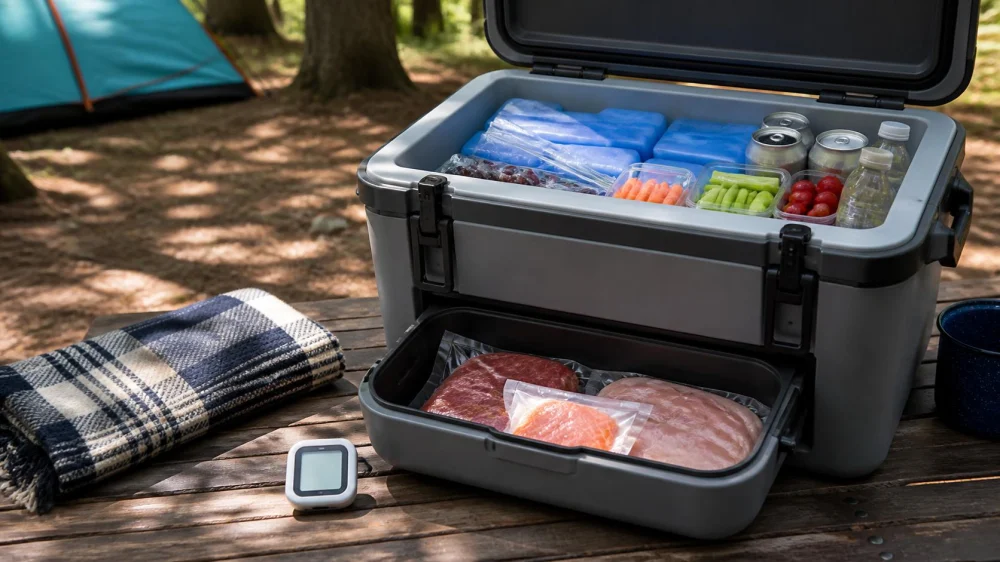
Pre-chill food and the cooler, use enough ice or frozen packs, and place a thermometer where you can read it quickly. Seal raw meat and seafood in leakproof containers at the bottom or in a separate cooler; keep ready-to-eat food and drinks above and apart. Open the lid briefly, drain meltwater only when the cooler design and food plan call for it, and replenish ice from a safe source. Track temperature and time, and discard food when safe limits cannot be verified.
Why it matters
Hot vehicles, frequent drink access, sunlight, melted packaging, and leaking raw food can warm or contaminate the cooler. Cold appearance is not a temperature measurement.
This United States camping food guide is general. Food type, trip length, cooler design, weather, ice access, wildlife rules, and public-health guidance vary.
Practical checklist
- Plan meals and remove unnecessary packaging before departure.
- Pre-chill perishable food, drinks, and the cooler.
- Use leakproof raw-food containers and separate drink access.
- Pack a readable appliance thermometer and backup ice plan.
- Choose a shaded secure location that follows wildlife storage rules.
- Assign one person to log temperature and lid openings.
- Bring soap, water treatment, utensils, waste bags, and a discard plan.
Step-by-step plan
- Freeze appropriate water bottles or packs and chill every perishable item before packing.
- Build cold layers around food rather than placing one small pack on top.
- Place raw animal foods in sealed lower containers away from produce and ready-to-eat items.
- Keep the cooler shaded, closed, level, and secured from animals.
- Check temperature at planned intervals and after long travel, heavy access, or ice loss.
- Use separate clean utensils and hands for raw preparation, then cook with a reliable food thermometer.
- When cold control is uncertain, follow food-safety discard guidance rather than tasting the food.
Log packing time, food, initial temperatures, ice type and amount, cooler location, readings, lid access, raw-food leaks, cooking temperatures, leftover cooling, replenishment, and discards.
Limits and warning signs
Ice remaining in one corner does not prove all food stayed cold. Smell, taste, sealed packaging, or reheating cannot reliably reverse unsafe time-temperature exposure.
Discard food exposed to raw leaks or unverifiable unsafe temperatures. Seek medical advice for serious foodborne illness symptoms and emergency help for severe dehydration, confusion, breathing trouble, or collapse.
Frequently asked questions
Should I drain melted ice?
Follow the cooler and food plan; draining may remove cold water but can also reduce cold mass, so keep packaging watertight.
Can drinks share the food cooler?
They can, but frequent opening warms food; a separate drink cooler often improves control.
Where should raw meat go?
In leakproof containers at the bottom or in a separate cooler, never above ready-to-eat food.
Can I judge safety by touch?
No. Use a thermometer and time record, then follow public-health discard guidance.
Sources and evidence
The guide applies cooler pre-chilling, cold holding, raw-to-ready separation, thermometer, hand hygiene, wildlife storage, cooking-temperature, and discard principles: layer cold, seal raw food, measure, limit opening, and document.
Conclusion and next steps
Pre-chill everything, pack raw food sealed and low, surround perishables with ice, keep a separate drink plan, secure the cooler in shade, and log temperature and time throughout the trip.
More
How to Choose the Right Tent Size for Your Group
Jul 15, 2026Learn how to choose the right tent size for your group with practical camping tips covering capacity, comfort, weather conditions, gear storage, and group camping needs.
How to Camp Comfortably in a Small Car Without Feeling Cramped or Disorganized
Jul 05, 2026Learn how to camp comfortably in a small car without feeling cramped or disorganized, with smart space-saving tips, gear strategies, real camping stories, and practical setup advice.
18 Camping Tips to Pack Light and Travel More Efficiently
Jul 02, 2026Discover 18 camping tips that help you pack light and travel more efficiently, with real camping stories, gear strategies, and practical outdoor packing advice.

25 Best Campgrounds in the US for Every Outdoor Experience
Jun 29, 2026Discover 25 Best Campgrounds in the US That Offer the Perfect Outdoor Experience for All Levels, from beginner-friendly sites to advanced wilderness escapes, with tips, stories, and planning advice for unforgettable camping trips.
How to Camp Comfortably Without Electricity: Practical Off-Grid Guide
Jun 27, 2026Learn how to camp comfortably without electricity using practical off-grid strategies, gear choices, and real camping experiences. Discover how Camping With Kayla helps you enjoy modern comfort in nature.
22 Camping Hacks That Will Change Your Outdoor Experience
Jun 24, 2026Discover 22 camping hacks that will completely change your outdoor experience with practical tips, real-life camping stories, and expert advice for comfort, safety, and efficiency.