
High Wind at Camp: Secure Gear and Know When to Leave
Prepare for high wind at camp by checking alerts, avoiding falling hazards, pitching correctly, securing gear, stopping unsafe cooking, and leaving early.
High Wind at Camp: Secure Gear and Know When to Leave
On this page
Quick answer
Check the official forecast and campground alerts before camping in wind. Avoid dead trees, exposed ridges, cliff edges, flood channels, and unsecured structures. Pitch within the shelter’s limits, stow every loose object, and stop using flames when control is uncertain. Leave early if trees fail, the shelter deforms, warnings escalate, or a safe exit could close.
Read the forecast and alerts
Look beyond a weather icon. Review expected sustained wind, gusts, timing, direction, associated thunderstorms or dust, and whether a warning, watch, fire restriction, or closure applies. Conditions at a ridge, canyon mouth, lakeshore, desert, or beach can differ greatly from the nearest town forecast.
Use the National Weather Service and land manager as primary sources in the United States. Download the forecast before losing signal, enable emergency alerts, and ask a ranger or host about local wind channels and evacuation routes. Recheck at planned intervals; a forecast viewed at home is not a guarantee for the whole trip.
Choose a lower-risk site
Inspect above and around the entire tent, parking place, cooking area, and path. Do not camp beneath dead, leaning, cracked, burned, or hanging trees and branches. After fire, drought, insects, heavy rain, or snow, trees that look stable can still fail. Move if you cannot confidently evaluate an overhead hazard.
Avoid the crest of a hill, an exposed point, the base of an unstable slope, and places where falling rocks or wind-driven debris could travel. Natural shelter from terrain may help, but do not tuck into a drainage that can flood. Keep legal distance from cliffs and shorelines. Use only designated sites where required, and follow a closure even if another location appears calm.
Pitch the shelter correctly
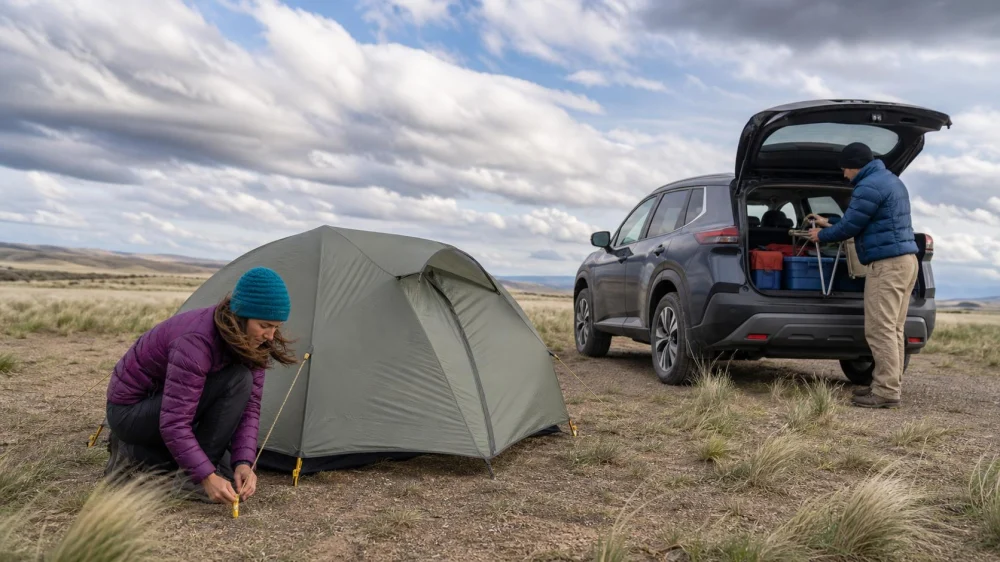
Read the tent or shelter instructions before the trip. Use all required poles, clips, stakes, and guylines. Orient the strongest or lowest profile into the expected wind when the manufacturer recommends it. Tension the fly evenly so fabric does not slap, touch the inner tent, or pull the frame out of shape.
Match stakes to the ground and place them as directed; rocks casually set on lines are not a substitute for a sound anchor. Make guylines visible and keep them out of walking routes. Do not attach a tent to a vehicle that might move. A tarp adds substantial wind load, so lower or remove it before it becomes a sail.
Secure loose gear and cooking
Put chairs, bins, shoes, towels, tools, toys, rubbish, and empty containers in a vehicle or closed storage before gusts arrive. Close doors, lids, awnings, roof boxes, and trailer equipment according to their instructions. Never use a person, child, or pet as an anchor, and do not chase an object into traffic, water, or steep terrain.
Wind can spread flames and hot embers. Obey fire bans and stove rules. Stop cooking when a stove cannot remain stable or its flame and heat cannot be controlled. Never move fuel-burning equipment into a tent, vehicle, or other enclosed space; carbon monoxide can accumulate without warning. Extinguish permitted fires completely using the land manager’s method.
Respond when wind increases
Put on shoes, eye protection when dusty, and warm or waterproof layers before conditions become difficult. Account for every person and pet. Keep keys, lights, medication, communication devices, and an emergency bag together. Park facing a safe exit where allowed, but stay clear of trees, power lines, signs, and structures that could fall.
Do not hold a failing pole or awning in a dangerous gust. Lower or abandon equipment if doing so can be done safely. A hard-sided building or vehicle may offer better protection from wind-driven debris, but not when positioned under trees, lines, or flood risk. For tornadoes or severe thunderstorms, follow the specific official shelter guidance rather than relying on a tent or ordinary campsite plan.
Use clear exit triggers
Decide in advance what ends the trip: an official warning or closure, falling limbs, repeated anchor failure, damaged poles, torn fabric, nearby fire, reduced visibility, rising water, an ill group member, or an access road likely to close. Leaving while roads and daylight remain is safer than waiting for equipment to fail.
Do not delay evacuation to recover replaceable gear. Follow ranger, emergency-service, and traffic instructions. If the route is blocked, contact emergency services when possible, state your location and group needs, and move only when the alternative is safer. Tell an outside contact when you are clear.
Frequently asked questions
Is a bigger tent safer in wind?
Not necessarily. Shape, design limits, correct setup, anchors, exposure, and condition matter. Large walls and awnings can catch more wind.
Should I shelter beside a large tree?
No. Trees and limbs can fail in strong wind. Choose a location without overhead or falling hazards.
Can I cook inside the tent when it is windy?
No. Fire, burns, and carbon monoxide make enclosed cooking dangerous. Stop cooking if outdoor use cannot be controlled safely.
Evidence and limitations
This guide follows common National Weather Service, emergency management, land-agency, and equipment-manufacturer principles: monitor warnings, avoid falling hazards, secure loose objects, keep combustion outside, and evacuate early. Exact wind limits depend on the shelter, terrain, trees, weather system, and local rules. Current official instructions override general advice.
Conclusion and next steps
Before departure, record the forecast, local alerts, shelter instructions, safer sites, and exit routes. At camp, inspect overhead hazards, pitch completely, and stow loose gear before wind rises. If the environment or shelter begins to fail, protect people rather than equipment and leave while the route remains usable.
More
How to Choose the Right Tent Size for Your Group
Jul 15, 2026Learn how to choose the right tent size for your group with practical camping tips covering capacity, comfort, weather conditions, gear storage, and group camping needs.
How to Camp Comfortably in a Small Car Without Feeling Cramped or Disorganized
Jul 05, 2026Learn how to camp comfortably in a small car without feeling cramped or disorganized, with smart space-saving tips, gear strategies, real camping stories, and practical setup advice.
18 Camping Tips to Pack Light and Travel More Efficiently
Jul 02, 2026Discover 18 camping tips that help you pack light and travel more efficiently, with real camping stories, gear strategies, and practical outdoor packing advice.

25 Best Campgrounds in the US for Every Outdoor Experience
Jun 29, 2026Discover 25 Best Campgrounds in the US That Offer the Perfect Outdoor Experience for All Levels, from beginner-friendly sites to advanced wilderness escapes, with tips, stories, and planning advice for unforgettable camping trips.
How to Camp Comfortably Without Electricity: Practical Off-Grid Guide
Jun 27, 2026Learn how to camp comfortably without electricity using practical off-grid strategies, gear choices, and real camping experiences. Discover how Camping With Kayla helps you enjoy modern comfort in nature.
22 Camping Hacks That Will Change Your Outdoor Experience
Jun 24, 2026Discover 22 camping hacks that will completely change your outdoor experience with practical tips, real-life camping stories, and expert advice for comfort, safety, and efficiency.