
Camping Lightning Plan: Leave the Tent for Safe Shelter
Plan campsite lightning safety by finding real shelter, monitoring storms, leaving tents at first thunder, accounting for everyone, and waiting 30 minutes.
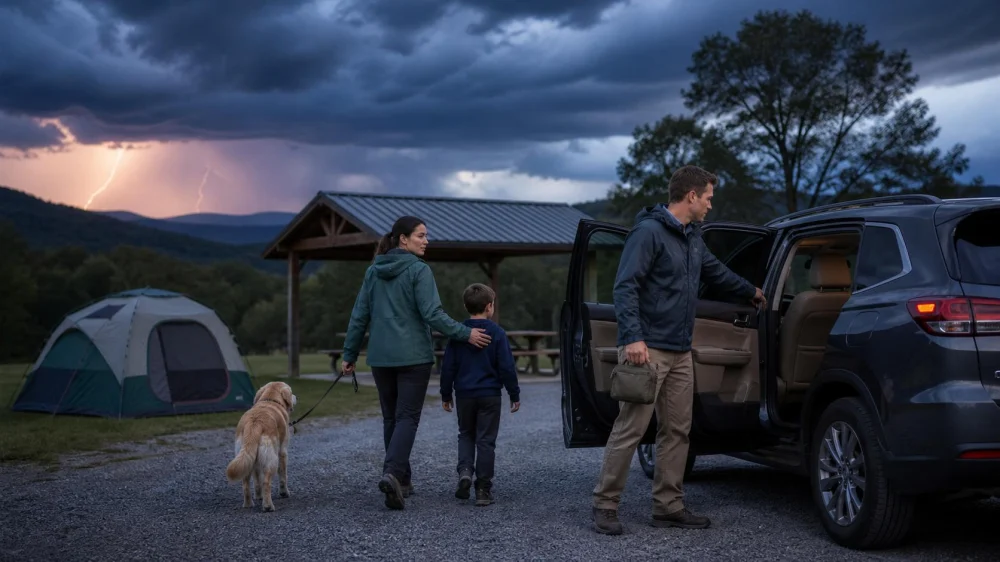
Camping Lightning Plan: Leave the Tent for Safe Shelter
Table of contents
- Quick answer
- Plan shelter before setting camp
- Monitor weather and triggers
- Know what counts as safer shelter
- Avoid false shelters
- Move early and account for everyone
- Wait safely inside
- If no safe shelter is reachable
- Respond to a lightning injury
- Lightning checklist
- Limitations
- Frequently asked questions
- Sources and evidence notes
- Conclusion
Quick answer
If you hear thunder at a campsite, lightning is close enough to strike. Stop cooking, swimming, fishing, hiking, and setup immediately. Move to a substantial enclosed building with wiring or plumbing, or an enclosed hard-topped vehicle with windows up. A tent, tree, open picnic shelter, awning, or small shed is not safe. Stay sheltered for at least 30 minutes after the last thunder.
Plan shelter before setting camp
Identify the campground's designated severe-weather shelter during check-in. Ask whether restrooms, bathhouses, visitor centers, or other buildings are substantial and open overnight. Locate your hard-topped vehicle and time the walking route from the tent, water, trailhead, and common areas.
Write a simple trigger and destination: “At the first thunder, everyone goes to the bathhouse; if closed, use the vehicle.” Include children, pets, people with mobility needs, and neighboring campers in the timing. Keep keys, shoes, headlamps, required medication, and weather radio together so no one searches during the storm.
Monitor weather and triggers
Check the National Weather Service forecast for the campsite, not your home. Note hourly storm chances, severe watches and warnings, and mountain or coastal patterns. Keep alerts enabled and use a weather radio or offline-capable backup where cell coverage is weak.
Do not wait for rain overhead. Lightning can occur away from the heaviest rain. Thunder itself is the action trigger. Darkening skies, growing towers, gusty wind, or flashes should prompt earlier movement when shelter takes time to reach. Postpone exposed activities when thunderstorms are forecast.
Know what counts as safer shelter
The National Weather Service recommends a substantial enclosed building with electricity or plumbing. A fully enclosed, hard-topped metal vehicle with windows closed is another safer option. The metal shell helps route current around occupants; rubber tires are not the reason for protection.
Inside a vehicle, close doors and windows and avoid touching metal connected to the exterior. Keep hands in laps and wait. Convertibles, open utility vehicles, motorcycles, bicycles, and golf carts do not provide the same protection.
Avoid false shelters
A tent provides no lightning protection, regardless of poles, fabric, size, or rainfly. Open-sided picnic pavilions, porches, carports, lean-tos, and small isolated sheds are also not safe substitutes for a substantial building. Leaving the tent may mean getting wet; avoiding lightning is the priority.
Never shelter under an isolated tall tree, on a ridge, hilltop, exposed field, beach, dock, or near a metal fence or power line. Leave water immediately. Metal and water do not “attract” lightning in a simple sense, but they conduct current and can carry it over distance.
Move early and account for everyone
Assign one adult to lead and another to check that the tent area, toilets, vehicles, and nearby trail are clear. Do not split up to retrieve gear. Leave stoves, poles, fishing equipment, and wet items behind. Walk briskly without running blindly on slippery ground.
At a group site, use a head count. Help mobility-limited campers move before thunder begins when storms are approaching. Secure pets in advance so they can enter a vehicle without a chase. If driving, watch for pedestrians and do not block emergency access.
Wait safely inside
Remain in safe shelter for at least 30 minutes after the last sound of thunder. Restart the clock if thunder returns. Do not leave simply because rain stops or the sky brightens. Many exposures occur as people return too soon.
In a substantial building, avoid corded phones, plumbing, showers, sinks, windows, doors, porches, and direct contact with concrete walls or floors during the storm. Use a cell phone if needed. Monitor warnings for wind, hail, flooding, or tornado hazards that may require different actions.
If no safe shelter is reachable
There is no safe place outdoors in a thunderstorm. Outdoor actions can only reduce, not eliminate, risk. Get off ridges, peaks, open fields, shorelines, and water. Avoid isolated tall trees, rock overhangs, fences, poles, wet ropes, and metal equipment. In a forest, move toward a lower stand of trees rather than the tallest one.
Spread group members apart to reduce the chance that current affects several people, while maintaining communication. Do not lie flat on the ground. Follow current NWS and land-manager backcountry guidance; terrain, flooding, falling trees, and exposure may change the least-bad option.
Respond to a lightning injury
A lightning-struck person does not retain an electrical charge and is safe to touch. Call 911 or the local emergency number, give location details, and move rescuers to safety if another strike remains possible. Check breathing and responsiveness.
Begin CPR and use an automated external defibrillator if needed and if trained or directed by emergency dispatch. Treat burns, falls, hearing injury, or confusion as serious. Multiple victims may need triage; follow dispatcher instructions until responders arrive.
Lightning checklist
- Identify a substantial building and hard-topped vehicle before setup.
- Time the route and keep keys, shoes, lights, and medication ready.
- Monitor the campsite forecast, alerts, and sky.
- At first thunder, stop activity and move immediately.
- Do not use tents, trees, pavilions, or small open structures.
- Account for everyone and leave gear behind.
- Wait 30 minutes after the last thunder before returning.
Limitations
This guide cannot make an outdoor location safe or account for every combination of lightning, wind, hail, flood, fire, terrain, or medical need. Follow official warnings, campground staff, land managers, and emergency responders. Backcountry risk-reduction steps are last resorts, not safe shelter.
Frequently asked questions
Is a tent with metal poles safe?
No. A tent does not provide lightning protection. Move to a substantial building or enclosed hard-topped vehicle.
Is an open picnic pavilion safe?
No. Open-sided structures do not provide adequate lightning protection.
Can I return when the rain stops?
Not yet. Wait at least 30 minutes after the last thunder, restarting the clock if thunder returns.
Is a person struck by lightning dangerous to touch?
No. They do not retain an electrical charge. Call emergency services and begin lifesaving care as directed.
Sources and evidence notes
This article follows National Weather Service guidance on outdoor lightning safety, lightning safety tips, and the lightning safety overview. These sources support immediate shelter, tents as unsafe, the 30-minute wait, and safe contact with lightning victims. Accessed August 10, 2026.
Conclusion
A campsite lightning plan should be decided in dry weather. Know the building and vehicle, keep the route clear, move at the first thunder, and wait the full 30 minutes. Gear can get wet; people should not remain exposed to protect it.
More
How to Choose the Right Tent Size for Your Group
Jul 15, 2026Learn how to choose the right tent size for your group with practical camping tips covering capacity, comfort, weather conditions, gear storage, and group camping needs.
How to Camp Comfortably in a Small Car Without Feeling Cramped or Disorganized
Jul 05, 2026Learn how to camp comfortably in a small car without feeling cramped or disorganized, with smart space-saving tips, gear strategies, real camping stories, and practical setup advice.
18 Camping Tips to Pack Light and Travel More Efficiently
Jul 02, 2026Discover 18 camping tips that help you pack light and travel more efficiently, with real camping stories, gear strategies, and practical outdoor packing advice.

25 Best Campgrounds in the US for Every Outdoor Experience
Jun 29, 2026Discover 25 Best Campgrounds in the US That Offer the Perfect Outdoor Experience for All Levels, from beginner-friendly sites to advanced wilderness escapes, with tips, stories, and planning advice for unforgettable camping trips.
How to Camp Comfortably Without Electricity: Practical Off-Grid Guide
Jun 27, 2026Learn how to camp comfortably without electricity using practical off-grid strategies, gear choices, and real camping experiences. Discover how Camping With Kayla helps you enjoy modern comfort in nature.
22 Camping Hacks That Will Change Your Outdoor Experience
Jun 24, 2026Discover 22 camping hacks that will completely change your outdoor experience with practical tips, real-life camping stories, and expert advice for comfort, safety, and efficiency.