
Camping Lightning Plan: Shelter, Route, and Wait Time
Build a camping lightning plan around a real building or enclosed vehicle, a timed route, immediate action at thunder, and a 30-minute wait after it ends.
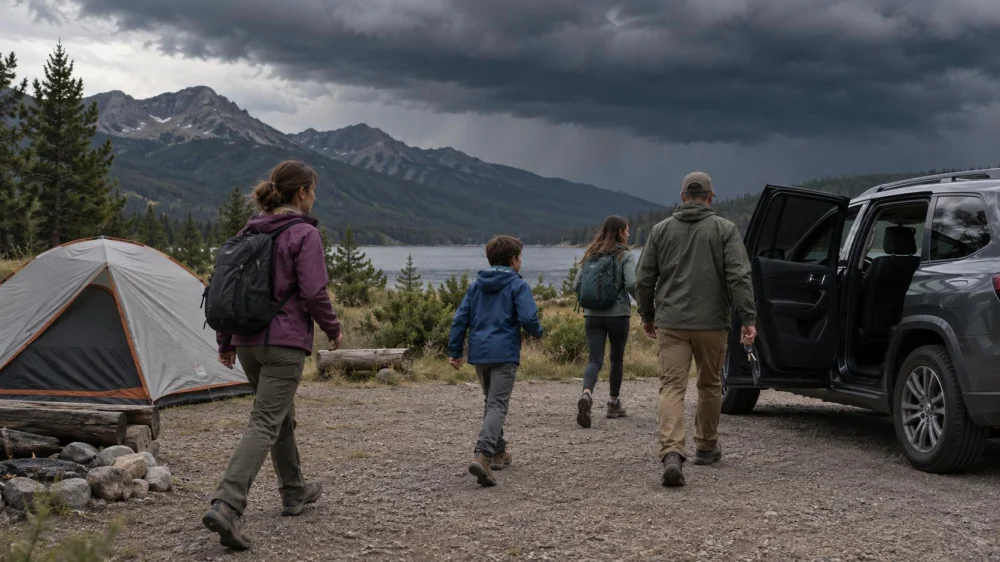
Camping Lightning Plan: Shelter, Route, and Wait Time
On this page
Quick answer
A tent, open shelter, tree, or awning does not provide lightning safety. Before camping, check the forecast and identify a substantial enclosed building or a hard-topped metal vehicle with windows closed. Time the route in daylight, keep keys accessible, and move immediately at the first thunder. Remain sheltered for at least 30 minutes after the last thunder before returning.
Plan before leaving home
Check the point forecast for the campground, not only the weather at home. Review watches, warnings, storm timing, campground alerts, road access, gate hours, and mobile or weather-radio coverage.
Cancel, delay, or change the trip when safe shelter cannot be reached before expected storms. Give every group member the shelter name, route, transport plan, and decision signal.
Identify real shelter
National Weather Service guidance identifies a substantial building with electricity or plumbing as safe shelter. When that is unavailable, an enclosed hard-topped metal vehicle with windows up can provide protection.
Tents, picnic pavilions, open-sided shelters, canopies, isolated trees, and shallow sheds are not safe. A recreational vehicle's protection depends on its construction; verify manufacturer and campground guidance rather than assuming.
Time and practise the route
Walk or drive the route in daylight and record the travel time for the slowest group member. Keep vehicle keys, shoes, essential medication, mobility aids, and a light in a known place.
Do not choose a campsite that requires crossing water, exposed ridges, or locked gates to reach shelter during a storm. Recheck the route after dark, flooding, or campground changes.
Act at the first thunder
If thunder is audible, lightning is close enough to pose danger. Stop cooking, fishing, swimming, paddling, hiking, and campsite setup, and move immediately to the planned shelter.
Do not pause to pack the tent or gather nonessential gear. Stay away from water, wet ropes, fences, poles, and isolated tall objects while moving. Follow staff and emergency alerts.
Wait before returning
Remain in the safe shelter at least 30 minutes after the last thunder. Restart the clock if thunder is heard again. Rain ending or a bright patch of sky is not an all-clear.
Before returning, check alerts and assess wind, flooding, fallen branches, downed lines, and access. Leave the area if another hazard remains.
Important safety limits
There is no completely safe outdoor location during a thunderstorm. Outdoor risk-reduction steps are last resorts, not equivalents to shelter. Call emergency services for a lightning strike, collapse, breathing difficulty, or unresponsiveness, and follow dispatcher instructions.
Frequently asked questions
Is a tent safe if it has no metal poles?
No. A tent does not provide lightning protection regardless of pole material.
Can we wait under the campground pavilion?
Not if it is open-sided. Use the planned substantial building or enclosed hard-topped vehicle.
Should we shelter under a low tree?
No tree is a safe lightning shelter. Move to an appropriate building or vehicle.
Why wait 30 minutes?
Lightning can remain a threat after the closest rain and thunder appear to pass.
Sources and evidence notes
The National Weather Service provides detailed outdoor and camping lightning guidance and a concise lightning safety checklist covering shelter and the 30-minute wait.
Next steps
Save the forecast, choose the building or vehicle, time the route, brief the group, and keep keys ready. Leave the campsite for shelter as soon as thunder is heard.
More
How to Choose the Right Tent Size for Your Group
Jul 15, 2026Learn how to choose the right tent size for your group with practical camping tips covering capacity, comfort, weather conditions, gear storage, and group camping needs.
How to Camp Comfortably in a Small Car Without Feeling Cramped or Disorganized
Jul 05, 2026Learn how to camp comfortably in a small car without feeling cramped or disorganized, with smart space-saving tips, gear strategies, real camping stories, and practical setup advice.
18 Camping Tips to Pack Light and Travel More Efficiently
Jul 02, 2026Discover 18 camping tips that help you pack light and travel more efficiently, with real camping stories, gear strategies, and practical outdoor packing advice.

25 Best Campgrounds in the US for Every Outdoor Experience
Jun 29, 2026Discover 25 Best Campgrounds in the US That Offer the Perfect Outdoor Experience for All Levels, from beginner-friendly sites to advanced wilderness escapes, with tips, stories, and planning advice for unforgettable camping trips.
How to Camp Comfortably Without Electricity: Practical Off-Grid Guide
Jun 27, 2026Learn how to camp comfortably without electricity using practical off-grid strategies, gear choices, and real camping experiences. Discover how Camping With Kayla helps you enjoy modern comfort in nature.
22 Camping Hacks That Will Change Your Outdoor Experience
Jun 24, 2026Discover 22 camping hacks that will completely change your outdoor experience with practical tips, real-life camping stories, and expert advice for comfort, safety, and efficiency.