
Camping Tick Check: Remove, Record, and Monitor
Check for ticks after camping, remove an attached tick promptly with tweezers, clean and record the bite, and monitor for rash, fever, or other symptoms.
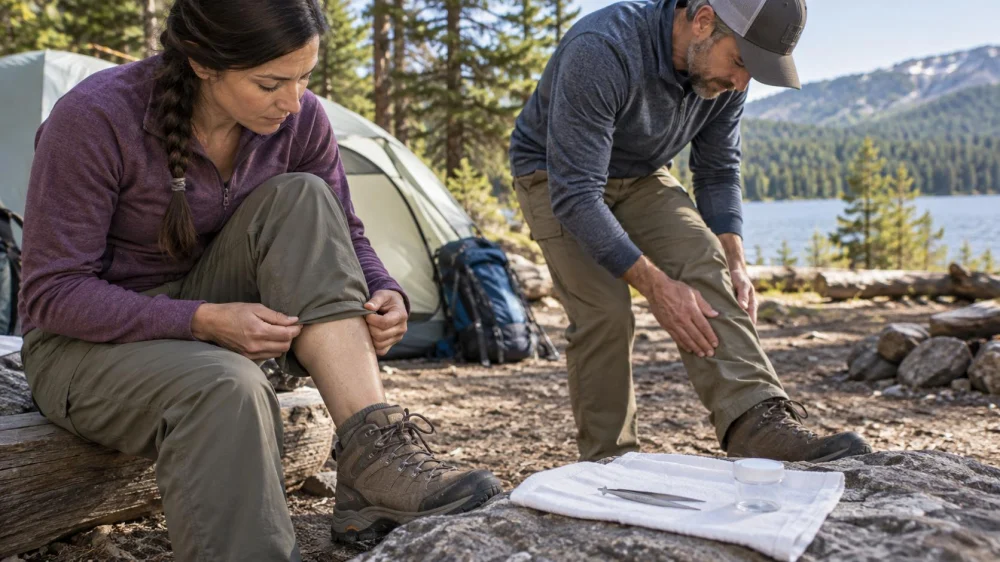
Camping Tick Check: Remove, Record, and Monitor
On this page
Quick answer
After camping in tick habitat, check clothing, gear, pets, and the whole body, especially hidden warm areas. Remove an attached tick promptly with clean fine-tipped tweezers, grasping close to the skin and pulling upward with steady, even pressure. Clean the area and hands, record the date and location, and contact a healthcare professional if fever, rash, or other concerning symptoms develop.
Reduce exposure
Check local tick activity and follow current public-health guidance for approved repellents and treated clothing. Stay near the centre of clear trails, avoid brushing against tall grass and leaf litter, and keep sleeping and clothing areas organised.
Follow every product label, age limit, pet warning, reapplication direction, and washing instruction. Never use a product intended for animals on people or a human product on pets unless a veterinarian directs it.
Perform a full tick check
On return, inspect packs, tents, chairs, blankets, shoes, and clothing before bringing them into living areas. Use the CDC-recommended clothing and shower steps appropriate to the item and trip.
Check under arms, in and around ears, inside the belly button, behind knees, between legs, around the waist, and in hair. Use a mirror or trusted helper for areas that are hard to see. Check children and pets carefully.
Remove an attached tick
Do not wait for a clinic appointment solely to begin removal. With clean fine-tipped tweezers, grasp the tick as close to the skin surface as possible without squeezing its body, then pull away with steady, even pressure.
Do not twist, jerk, burn, smother, paint, or cover the tick with petroleum jelly, nail polish, or another substance. After removal, dispose of it as CDC directs and clean the bite area and hands with soap and water, rubbing alcohol, or hand sanitiser.
Record the bite
Write down the date, campsite or trail, body location, estimated attachment time if known, and removal method. Take a clear photograph of the tick and bite without delaying removal.
If saving the tick is recommended locally, seal and label it without handling it barehanded. Tick identification or testing policies vary, and a result does not replace medical assessment.
Monitor for symptoms
Watch for fever, rash, headache, fatigue, muscle or joint pain, facial weakness, or other unusual symptoms in the following days and weeks. Symptoms and timing vary among tick-borne illnesses.
Contact a healthcare professional if symptoms develop and state when and where the bite occurred. Follow local advice about preventive treatment; do not take leftover antibiotics or veterinary medicine.
Important safety limits
Seek urgent medical help for breathing difficulty, collapse, severe weakness, confusion, rapidly worsening illness, or another emergency. If mouthparts remain, the bite becomes infected, removal is not possible, or the person is at higher medical risk, ask a qualified clinician for guidance.
Frequently asked questions
Should I put oil on the tick first?
No. CDC advises prompt mechanical removal without petroleum jelly, heat, nail polish, or other substances.
What if I do not have fine-tipped tweezers?
CDC's current fact sheet gives alternatives, but add clean tweezers to the first-aid kit for future trips.
Do I need to keep the tick?
Local guidance varies. Photograph and record it, then follow the health department or clinician's instructions.
Does every tick bite cause illness?
No, but prompt removal, records, and symptom monitoring support safer follow-up.
Sources and evidence notes
CDC provides a current tick-removal fact sheet and updated after-bite guidance on checking, removal, cleaning, and symptom follow-up.
Next steps
Add fine-tipped tweezers, a small sealed container, and a mirror to the camping kit. Check everyone and all gear after each outing, remove ticks promptly, and keep the bite record.
More
How to Choose the Right Tent Size for Your Group
Jul 15, 2026Learn how to choose the right tent size for your group with practical camping tips covering capacity, comfort, weather conditions, gear storage, and group camping needs.
How to Camp Comfortably in a Small Car Without Feeling Cramped or Disorganized
Jul 05, 2026Learn how to camp comfortably in a small car without feeling cramped or disorganized, with smart space-saving tips, gear strategies, real camping stories, and practical setup advice.
18 Camping Tips to Pack Light and Travel More Efficiently
Jul 02, 2026Discover 18 camping tips that help you pack light and travel more efficiently, with real camping stories, gear strategies, and practical outdoor packing advice.

25 Best Campgrounds in the US for Every Outdoor Experience
Jun 29, 2026Discover 25 Best Campgrounds in the US That Offer the Perfect Outdoor Experience for All Levels, from beginner-friendly sites to advanced wilderness escapes, with tips, stories, and planning advice for unforgettable camping trips.
How to Camp Comfortably Without Electricity: Practical Off-Grid Guide
Jun 27, 2026Learn how to camp comfortably without electricity using practical off-grid strategies, gear choices, and real camping experiences. Discover how Camping With Kayla helps you enjoy modern comfort in nature.
22 Camping Hacks That Will Change Your Outdoor Experience
Jun 24, 2026Discover 22 camping hacks that will completely change your outdoor experience with practical tips, real-life camping stories, and expert advice for comfort, safety, and efficiency.