Camping Tick Check: Inspect Skin, Clothing, Gear, and Pets
Table of contents
Quick answer
After camping in tick habitat, check clothing, skin, children, gear, and pets before ticks move into a tent, vehicle, or home. Shower soon after coming indoors and perform a full-body check, including hidden areas. CDC advises tumble-drying dry clothes on high heat for 10 minutes; damp items need longer, and hot water is recommended if clothes are washed first. Remove attached ticks promptly with clean fine-tipped tweezers and seek medical advice for concerning symptoms.
Reduce exposure before camp
Check the destination’s public-health or land-management information for tick species, seasons, and current alerts. Ticks occur in different habitats and regions, so a single national risk map cannot describe one campsite on one date. Plan for trail vegetation, leaf litter, brush, pets, and the activities the group will do.
The EPA recommends reducing time in tall grass and shrubs, walking near the centre of trails, and using clothing to reduce exposed skin. Light-coloured clothing can make moving ticks easier to see. Long sleeves, long trousers, and closed footwear create more surface to inspect, though clothing alone does not guarantee protection.
Choose an EPA-registered skin-applied insect repellent labelled for ticks and appropriate for the user. Read the full label for age, application site, reapplication, face and hand use, flammability, and washing. More product is not necessarily better. An EPA registration means the product was evaluated for safety and effectiveness when used according to its label.
CDC says permethrin products can be used on boots, clothing, and camping gear and that pretreated gear is also available. Permethrin is not applied to skin. Follow the product label, treat items in the specified place, allow required drying, keep products away from children and pets as directed, and never substitute an agricultural or veterinary product.
Make checks part of the daily routine
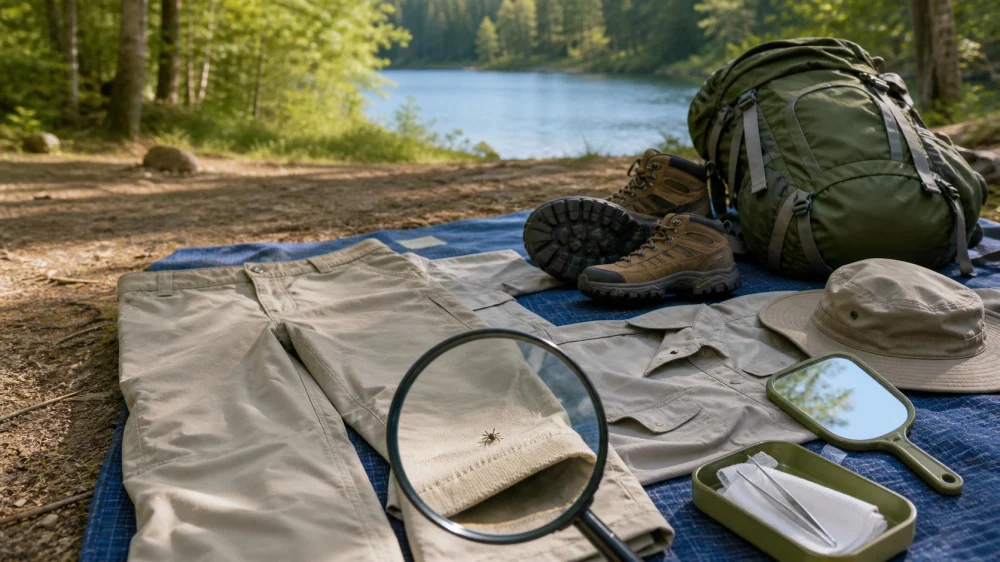
Do not wait until the trip ends. Schedule a brief check when returning from a hike, before entering the tent, and before bed. Use a light-coloured ground cloth or porch area so a moving tick is easier to spot. Keep worn clothing separate from sleep gear.
Partners can inspect areas that are hard to see, while respecting privacy. Parents or caregivers should help children. Use a mirror and bright light. The goal is a systematic scan, not a quick glance at exposed arms.
When a tick is found crawling on clothing or skin but not attached, remove it without crushing it with bare fingers and dispose of it safely. Then continue the check; one tick does not mean it was the only one.
Check the whole body
CDC recommends a full-body tick check after returning from potentially tick-infested areas. Inspect under the arms, in and around the ears, inside the belly button, behind the knees, in and around hair, between the legs, and around the waist. Also look at the scalp, neck, sock lines, shoe edges, waistband, bra line, and other clothing pressure points.
Use fingers to feel for small bumps while looking closely. Ticks can be small and may resemble a freckle, scab, seed, or speck of dirt. Do not scrape an uncertain spot. Use magnification or ask another person when needed.
Shower soon after being outdoors. CDC notes that showering within two hours of coming indoors may wash off unattached ticks and provides a good opportunity for a check. A shower does not replace close inspection or remove a firmly attached tick automatically.
Process clothing correctly
Keep outdoor clothes out of bedrooms and upholstered areas until they are processed. Check cuffs, seams, waistbands, pockets, socks, hats, and footwear. Ticks can ride indoors on clothing and attach later.
CDC advises placing dry clothing in a dryer on high heat for 10 minutes after coming indoors. If clothes are damp, additional time may be needed. If washing first, CDC recommends hot water because cold and medium-temperature water will not kill ticks. Always follow garment care labels and dryer safety instructions; delicate or heat-sensitive gear may require a different manufacturer-approved plan plus careful inspection.
Do not seal damp clothing for long storage. Moisture can damage gear and encourage odour or microbial growth. If immediate laundering is not possible, isolate items in a secure washable container away from living and sleeping spaces, then process them promptly.
Inspect gear and pets
CDC advises examining coats, daypacks, and other gear because ticks can travel into the home on equipment. Check tent floors and doors, sleeping-bag exteriors, camp chairs, pack straps, blankets, boots, vehicle mats, and pet bedding. Follow item care instructions before applying heat or pesticides.
Pets need a separate plan from a veterinarian. Ask about species-, size-, age-, and health-appropriate tick prevention before the trip. Never use a dog product on a cat or a human repellent on an animal unless the label and veterinarian specifically allow it.
After outdoor activity, inspect the pet as the veterinarian recommends, including ears, collar area, toes, legs, tail, and skin folds. Keep the pet from carrying ticks into tents, beds, and vehicles until checked. Contact a veterinarian for safe removal or symptoms rather than improvising with household chemicals.
Remove an attached tick promptly
CDC advises removing an attached tick as soon as possible rather than waiting for a medical appointment. Use clean, fine-tipped tweezers. Grasp the tick as close to the skin surface as possible without squeezing its body, then pull away from the skin with steady, even pressure. Do not twist or jerk.
If mouthparts break off and can be removed easily with clean tweezers, remove them. If they cannot be removed easily, CDC advises leaving them alone and allowing the skin to heal. Clean the bite area and hands with soap and water, rubbing alcohol, or hand sanitiser.
Do not use petroleum jelly, nail polish, heat, or another substance to force detachment. Do not crush a live tick with fingers. CDC lists disposal options such as placing it in a sealed container, wrapping it tightly in tape, flushing it, or placing it in alcohol. Follow local disposal rules.
Record the date, location on the body, and geographic place where exposure likely occurred. A clear photo may help document the tick. Do not delay removal just to preserve it for identification.
Watch for symptoms after the trip
CDC advises seeing a healthcare provider if a rash or fever develops within several days to weeks after tick removal. Other concerning symptoms can vary by disease and region. Tell the clinician when and where the bite or outdoor exposure occurred and provide the photo or record if available.
Seek urgent medical care for severe symptoms such as trouble breathing, confusion, fainting, a severe headache with illness, or another emergency. This guide cannot diagnose a tickborne disease or decide whether preventive medication is appropriate. Those decisions depend on tick, timing, location, patient factors, and current clinical guidance.
Do not take leftover antibiotics or apply veterinary treatments to a bite. Keep checking other group members, gear, and pets so a second tick is not missed.
Build a tick-check kit
- Clean fine-tipped tweezers in a protective case
- Small mirror and bright headlamp
- Hand soap, alcohol wipes, or sanitiser
- Sealable container or tape for disposal
- EPA-registered repellent with readable label
- Separate bag or bin for worn clothing
- Destination health and ranger contacts
- Veterinarian-approved pet prevention and removal plan
Keep the kit accessible rather than buried in a vehicle. Check expiration dates and damaged packaging before each trip.
Frequently asked questions
When should I do a tick check?
Check after outdoor exposure, before entering sleep areas, and when returning indoors. Shower soon after coming inside and repeat a full-body check.
Can I wash ticks away with cold water?
Do not rely on it. CDC says cold and medium-temperature water will not kill ticks and recommends hot water if washing first, subject to garment care.
Can permethrin go on skin?
No. Use it only on clothing and gear exactly as the product label permits. Choose a separately labelled skin repellent for exposed skin.
Should I burn or smother an attached tick?
No. CDC advises prompt mechanical removal with tweezers and warns against heat, petroleum jelly, nail polish, and similar methods.
When should I call a clinician?
Contact a healthcare provider for rash, fever, or other concerning symptoms after exposure, and seek urgent care for severe symptoms. Provide the date and place of exposure.
Sources and verification
- Centers for Disease Control and Prevention, Preventing Tick Bites — clothing, gear, shower, tick-check, and dryer guidance.
- CDC, What to Do After a Tick Bite — current removal, disposal, and symptom guidance.
- U.S. Environmental Protection Agency, Tips to Prevent Tick Bites — habitat, clothing, and repellent actions.
- EPA, Regulation of Skin-Applied Repellents — meaning and limits of EPA registration.
Check destination public-health guidance, product labels, and personal medical or veterinary advice for the current situation.
Conclusion
A tick check works when it covers more than visible skin. Build prevention into clothing and route choices, inspect the whole body daily, process clothes, examine gear and pets, and remove attached ticks promptly with the correct technique. A written exposure record and timely care for symptoms complete the plan after camp.