
Camping Water Treatment: Treat Every Uncertain Source
Treat uncertain camping water by researching advisories, choosing the best source, boiling or filtering plus disinfecting, separating clean gear, and carrying backup.
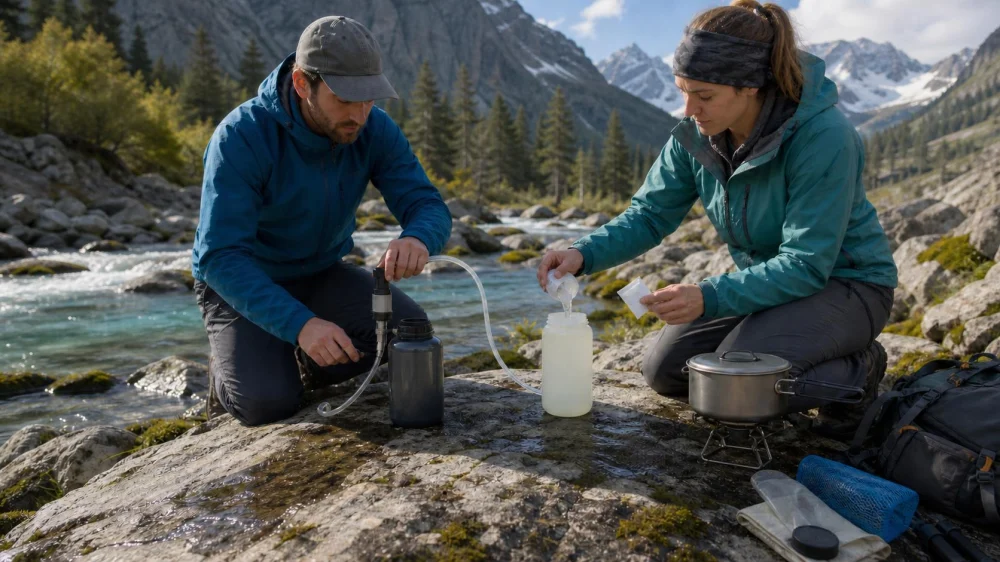
Camping Water Treatment: Treat Every Uncertain Source
Clear mountain water can contain bacteria, viruses, and parasites that are impossible to see. Water may also contain harmful chemicals or toxins that boiling and disinfecting cannot remove. Research local advisories, carry enough known-safe water and a backup method, collect from the best available source, and treat all uncertain water used for drinking, cooking, ice, food washing, and tooth brushing.
Quick answer
CDC says boiling is the best way to kill germs in uncertain water. Bring clear water to a rolling boil for one minute, or three minutes above 6,500 feet, then let it cool safely. When boiling is not practical, the next best option is to filter and then disinfect, using equipment and chemicals that address the expected organisms and following every instruction and contact time.
Research the route
Check park, forest, land-manager, public-health, and weather advisories shortly before departure. Water sources can be seasonal, frozen, dry, closed, contaminated by flooding, or affected by harmful algal blooms, wildfire, mining, agriculture, sewage, or animal activity.
Calculate drinking, cooking, hygiene, pet, and emergency needs for the entire group. Carry known-safe reserve water and enough fuel, filter capacity, batteries, or treatment doses for delays.
Choose the best source
Prefer a flowing source above obvious camps, livestock, trails, and wastewater when local guidance permits. Collect away from muddy banks and disturbed sediment. Clear appearance, cold temperature, and pleasant taste do not prove safety.
Use a clean collection container and avoid dipping the drinking opening or clean hose into untreated water. Let very cloudy water settle or prefilter it as the treatment system directs.
Boil correctly
Use a stable stove outdoors with ventilation and fire clearance. Bring clear water to a full rolling boil for the required time, then turn off the stove and allow the pot to cool where it cannot spill. Do not hold hot water near a tent, child, or pet.
Boiling kills germs but does not remove harmful chemicals, salts, or radioactive contaminants. It can concentrate some chemicals as water evaporates. Use another source when chemical contamination or an algal toxin is suspected.
Filter and disinfect
Portable filters vary. Many remove parasites but not viruses or all bacteria. CDC notes that an absolute pore size of 0.3 micron or smaller removes bacteria and parasites but not viruses; reverse osmosis can remove parasites, bacteria, viruses, and salt.
Filtering followed by appropriate disinfection provides broader germ protection. Match the system to destination risk, water clarity, group size, and manufacturer claims. Do not assume a straw filter and a purifier are equivalent.
Follow product instructions
Read the complete label before the trip. Know the volume per dose, prefiltration requirements, water-temperature adjustments, mixing, contact time, storage, shelf life, and organisms addressed. Cold or cloudy water may require different handling.
Chemical disinfectants can kill bacteria and viruses but may not reliably kill all parasites. Iodine is unsuitable for some people and should not be used for extended periods. Ask a clinician about pregnancy, thyroid disease, sensitivity, or immune compromise.
Prevent recontamination
Mark dirty-water and clean-water containers clearly using colour or texture rather than relying only on memory. Keep dirty hoses, bottle threads, hands, and caps from touching treated water. After treatment, wipe or rinse threads according to product guidance.
Wash hands after toileting and before handling food or clean equipment. Keep sanitation at least the distance required by the land manager from water, and never wash dishes or bathe directly in the source.
Avoid chemical contamination
Do not collect water with an oily sheen, chemical odour, unusual colour, dead wildlife, algal scum, mine drainage, pesticide runoff, or an active advisory. Boiling, ordinary filters, and disinfectants cannot make every chemical or toxin hazard safe.
Leave the area or use sealed known-safe water. Contact the land manager or public-health authority for advice. Do not taste the source to assess it.
Plan for failure
Carry a second independent method: treatment tablets for a pump failure, fuel for boiling if a filter freezes, or another purifier for a lost component. Protect filters from freezing after use because ice can damage internal fibres invisibly.
Know how to backflush and maintain equipment without contaminating the clean side. If the filter was dropped, frozen, cracked, or used beyond capacity, follow manufacturer replacement guidance rather than guessing.
Frequently asked questions
Is clear stream water safe?
Not necessarily. Germs can be present without changing appearance, smell, or taste.
Does filtering alone remove viruses?
Many portable filters do not. Check exact claims and consider filtering plus disinfection.
Can boiling remove chemicals?
No. Use a different known-safe source when chemical contamination is possible.
Must treated water be used for brushing teeth?
Yes. Also use it for cooking, ice, drinks, and washing foods.
Next steps
Research current advisories, calculate needs, choose a primary and backup treatment, practise at home, separate dirty and clean components, and carry known-safe reserve water. Treat every uncertain source and abandon any source with chemical or toxin concerns.
Before each day’s travel, inspect seals, hoses, batteries, tablets, fuel, and container closures, then estimate the distance to the next reliable source. Treat water before the group becomes dehydrated or darkness forces hurried work, and record any failed component so it is replaced before the next trip.
See CDC guidance on water treatment while hiking and camping.
More
How to Choose the Right Tent Size for Your Group
Jul 15, 2026Learn how to choose the right tent size for your group with practical camping tips covering capacity, comfort, weather conditions, gear storage, and group camping needs.
How to Camp Comfortably in a Small Car Without Feeling Cramped or Disorganized
Jul 05, 2026Learn how to camp comfortably in a small car without feeling cramped or disorganized, with smart space-saving tips, gear strategies, real camping stories, and practical setup advice.
18 Camping Tips to Pack Light and Travel More Efficiently
Jul 02, 2026Discover 18 camping tips that help you pack light and travel more efficiently, with real camping stories, gear strategies, and practical outdoor packing advice.

25 Best Campgrounds in the US for Every Outdoor Experience
Jun 29, 2026Discover 25 Best Campgrounds in the US That Offer the Perfect Outdoor Experience for All Levels, from beginner-friendly sites to advanced wilderness escapes, with tips, stories, and planning advice for unforgettable camping trips.
How to Camp Comfortably Without Electricity: Practical Off-Grid Guide
Jun 27, 2026Learn how to camp comfortably without electricity using practical off-grid strategies, gear choices, and real camping experiences. Discover how Camping With Kayla helps you enjoy modern comfort in nature.
22 Camping Hacks That Will Change Your Outdoor Experience
Jun 24, 2026Discover 22 camping hacks that will completely change your outdoor experience with practical tips, real-life camping stories, and expert advice for comfort, safety, and efficiency.