Campsite Cooler Food Safety Guide: Keep Food Cold
Table of contents
Quick answer
Keep perishable food at 40°F or colder in a well-insulated cooler packed with ice or frozen gel packs. Add a refrigerator thermometer, keep raw meat sealed and below ready-to-eat food, and open the lid as little as possible. Discard perishables held above 40°F for more than two hours, or one hour when the outdoor temperature exceeds 90°F.
Before you pack the cooler
A safe cooler starts in the kitchen, not at the campsite. Chill food thoroughly in the refrigerator before departure. A cooler is designed to maintain a cold temperature; it is inefficient at cooling warm potato salad, freshly cooked chicken, or drinks that started at room temperature.
Freeze what can be frozen without harming quality. Bottled water, chili, pasta sauce, and some prepared meals can double as cold sources while they thaw. Use leakproof, watertight containers or sturdy zip-top bags. This keeps melting ice water out of food and prevents raw juices from reaching fruit, sandwiches, or cooked dishes.
Estimate portions before leaving. Dividing food into meal-size containers reduces lid-open time and avoids repeatedly warming a large container. Label packages with the meal and day so nobody has to search through the cooler.
Choose the right cooler setup
For trips with frequent drink breaks, use two coolers: one for beverages and one for perishable food. The drink cooler will be opened often, while the food cooler can stay closed and cold. Choose coolers that can be filled almost completely; empty air space warms faster than a well-packed interior.
Place a refrigerator or cooler thermometer where it is easy to read. Surface frost, cold cans, or remaining ice do not reliably prove every food stayed at a safe temperature.
How to pack a campsite cooler
- Prechill the cooler. If practical, add sacrificial ice or frozen bottles several hours before packing, then drain any warm water.
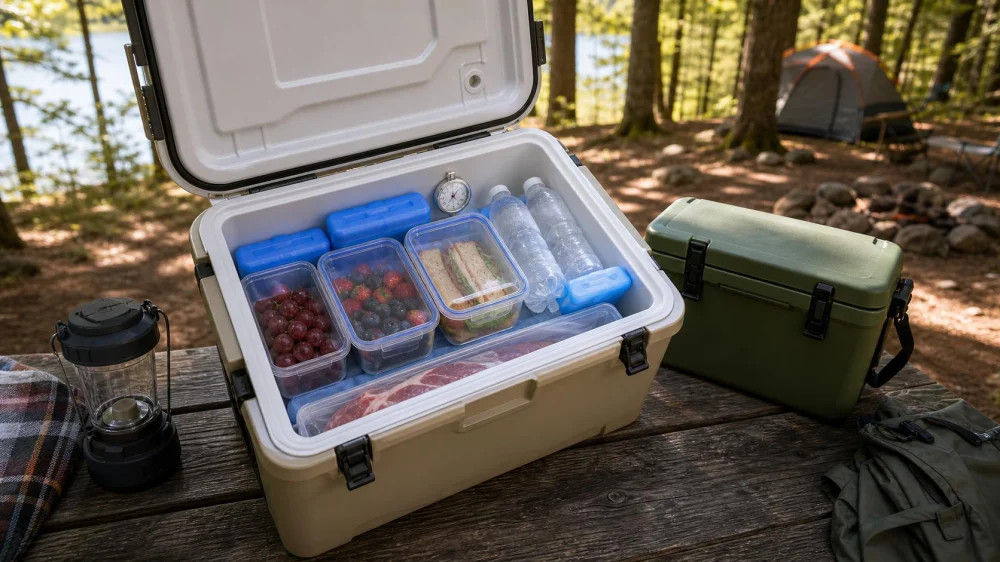
- Build a cold base. Place block ice, frozen bottles, or gel packs across the bottom. Blocks generally last longer; smaller ice fills gaps.
- Put the last meals on the bottom. Pack in reverse order so the first meal is easiest to reach.
- Isolate raw proteins. Double-bag raw meat, poultry, and seafood, then place them in a rigid container at the lowest practical level. This protects ready-to-eat foods if packaging leaks.
- Fill the gaps. Surround food with cold sources, including along the sides and top. Cold air settles, but heat also enters through the lid, so a frozen top layer helps.
- Add the thermometer. Position it near vulnerable refrigerated food rather than directly against an ice block.
Keep foods used without further cooking—such as washed fruit, cheese, dips, and sandwich fillings—separate from raw ingredients. Bring dedicated utensils and plates for raw and cooked food. Never return grilled food to the plate that carried it raw unless the plate has been washed.
Keep food cold at camp
Move the cooler into deep shade as soon as camp is established. Shade changes during the day, so recheck the location after lunch. A reflective blanket, tarp, or damp towel over the cooler can reduce radiant heat, but do not block hinges or create a tripping hazard.
Keep the lid latched and appoint one person to retrieve ingredients for each meal. Decide what is needed before opening the cooler, remove everything at once, and close it promptly. Return unused perishables immediately rather than leaving them on the picnic table through the meal.
Check the thermometer in the morning, before cooking, and when adding fresh ice. Replenish ice before the supply is nearly gone. If using loose ice, drain water only when it is warm or contaminating packaging; cold meltwater can help surround sealed containers and maintain temperature.
Protect the cooler from animals
Food safety also includes secure storage. Follow campground rules for bear-resistant lockers, approved canisters, or locked vehicle storage. Do not keep food, scented toiletries, trash, or the cooler inside a tent. Animal-storage rules vary by location and take priority over a general camping routine.
Time and temperature limits
Use 40°F as the operational ceiling for cold perishable food. The temperature range from 40°F to 140°F supports rapid bacterial growth, so time outside safe cold or hot holding matters even when food still looks and smells normal.
- Keep cold perishable food at 40°F or below.
- Do not leave perishables above 40°F for more than two hours total.
- When the outdoor temperature is above 90°F, reduce that limit to one hour total.
- Count all exposure time, including meal preparation, serving, and earlier stops during travel.
- If temperature history is uncertain, discard the food. Tasting is not a safety test.
These are discard limits, not targets. Plan to return food to cold storage much sooner. Shelf-stable foods such as unopened cans, whole uncut produce, nuts, jerky, and peanut butter can reduce dependence on cooler capacity, but follow package directions after opening.
What if the ice melted?
Melting alone does not decide whether food is safe. Read the thermometer and consider how long the food may have been above 40°F. Food that still contains ice crystals or has remained at 40°F or below is generally still cold. When the reading and timeline cannot be established, choose the safer option and discard vulnerable perishables.
Campsite cooler checklist
- Insulated cooler with a sound lid, gasket, and latch
- Refrigerator or cooler thermometer
- Block ice, frozen bottles, or frozen gel packs
- Leakproof meal-size containers and labels
- A rigid bin or double bags for raw meat
- Separate drink cooler when space allows
- Clean utensils and separate raw-food tools
- Soap, potable water, paper towels, and trash bags
- Backup shelf-stable meals for delayed travel or lost ice
- Wildlife-resistant storage required by the campground
Evidence behind the advice
The U.S. Department of Agriculture Food Safety and Inspection Service advises campers to pack coolers with ice or frozen gel packs, keep cold foods cold, store food in watertight containers, and consider separate coolers for drinks and perishables. Its food-safety guidance sets 40°F as the maximum temperature for cold holding and applies the two-hour rule, shortened to one hour in temperatures above 90°F.
Primary sources: USDA FSIS: Food Safety While Hiking, Camping & Boating and USDA FSIS: Danger Zone (40°F–140°F).
This guide provides general food-safety planning, not a determination that a specific item is safe. Product labels, public-health advisories, and campground food-storage rules may be more restrictive.
Frequently asked questions
How much ice should I use in a camping cooler?
Use enough cold material to surround the food and fill empty spaces, including a layer on top. The exact amount depends on cooler insulation, trip length, weather, food temperature, and how often the lid opens. Treat a thermometer reading—not an ice-to-food ratio—as the deciding measure.
Can I use frozen water bottles instead of loose ice?
Yes. Frozen bottles are tidy, reduce meltwater, and become drinking water after thawing. Combine them with gel packs or smaller ice where necessary to eliminate warm air gaps. Do not drink from a bottle if its exterior was contaminated by leaking raw food.
Should raw meat go on the top or bottom?
Keep raw meat and seafood sealed and below ready-to-eat foods so a leak cannot drip onto them. A rigid secondary container adds protection. Arrange the cooler so the package can be removed without handling unrelated food.
Is food safe if it smells normal?
Not necessarily. Harmful bacteria may grow without changing odor, taste, or appearance. Use measured temperature and elapsed time. Never taste questionable food to decide whether it is safe.
Can I leave the cooler in the car?
A parked vehicle can heat quickly and make the cooler work harder. Follow wildlife rules, but whenever permitted, store the cooler in secure shade and monitor its internal thermometer. In bear country, use the storage method required by the managing agency.
Next steps
- Check the forecast, trip duration, campsite rules, and nearest reliable ice source.
- Plan one labeled container per meal and add a shelf-stable backup dinner.
- Prechill the cooler and food the night before departure.
- Pack a thermometer and confirm a reading of 40°F or below before leaving.
- At camp, log morning and pre-meal temperatures and replenish ice early.
A simple temperature check turns cooler management from guesswork into a repeatable camping habit—and makes it easier to focus on the trip instead of worrying about dinner.