Campsite Drinking Water Plan: Source, Treat and Store
Build a safer campsite drinking-water plan. Learn how to verify sources, protect clean containers, choose treatment and prepare a reliable backup.
Campsite Drinking Water Plan: Source, Treat and Store
On this page
Quick answer
A reliable campsite drinking-water plan starts before the trip: confirm whether water is available and currently safe, carry enough for your group and a delay, keep clean containers separate from untreated water, and bring a treatment method appropriate to the likely hazards. If source safety is uncertain and you cannot treat it correctly, do not drink it.
Potable water is water considered safe for drinking under the guidance of the responsible authority. Clear appearance, cold temperature or a natural source does not prove that water is potable. Conditions can change after storms, infrastructure failures, wildfire, flooding or heavy visitor use.
Plan for people, conditions and delays
There is no single packing amount that fits every camping trip. Needs change with heat, humidity, altitude, exertion, age, health, food preparation, pets and trip length. Use current guidance from the land manager and relevant public-health authorities, then add a practical reserve for delays or a closed source.
Build the plan around these questions:
- How many people and animals depend on the supply?
- Will the group hike, paddle, climb or do other strenuous activity?
- What temperatures and weather changes are expected?
- Does cooking require water, and can meals be changed if supply becomes limited?
- How far is the next verified source or safe exit?
- Could a road closure, injury or vehicle problem extend the trip?
People with medical conditions, pregnant campers, infants and others with specific hydration needs should follow advice from an appropriate health professional. Do not reduce drinking water to preserve a recreational plan; shorten or change the trip instead.
Verify every water source
Check the campground or public-land manager's official information shortly before departure and again on arrival when possible. A map icon or old review may show that a tap, spring or pump exists, but not that it works or that the water is currently approved for drinking.
- Identify the responsible authority. Use the official campground, park, forest or local public-health source.
- Read current alerts. Look for boil notices, contamination advisories, seasonal closures and damaged infrastructure.
- Confirm the source type. Learn whether water is treated, untreated, intermittent or unavailable.
- Ask what treatment is needed. Different hazards require different methods; a filter alone is not a universal solution.
- Carry a backup. Never make an uncertain source the only plan.
Avoid collecting near obvious pollution, fuel, wastewater, livestock concentration, algal growth or heavy sediment. Moving water can still contain harmful organisms or chemicals, and visual inspection cannot establish safety.
Carry and store water safely
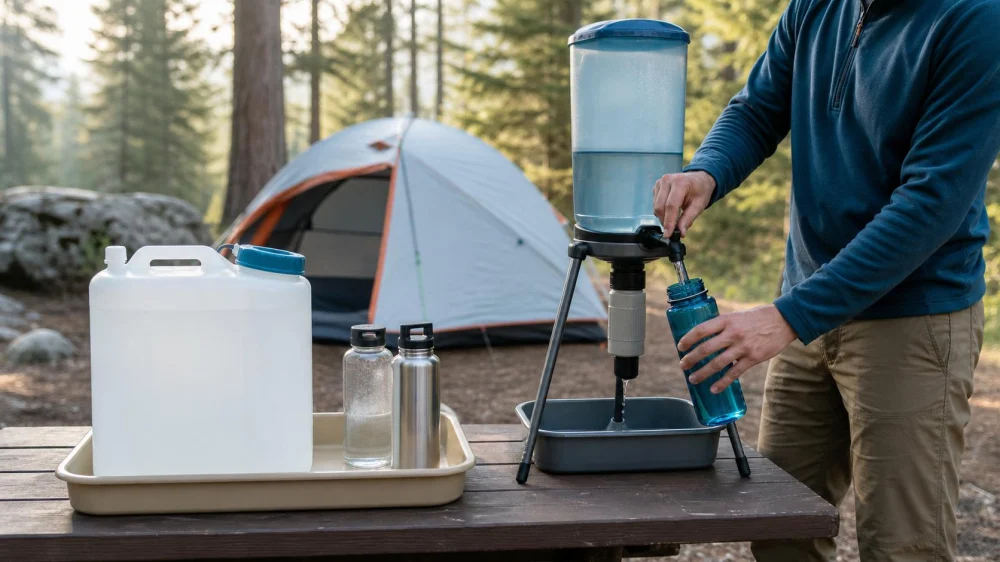
Use food-grade containers intended for drinking water. Inspect caps, seals, handles and seams before leaving home. Clean and sanitise reusable containers according to the container manufacturer or public-health guidance, and allow them to dry as directed.
- Label drinking-water containers clearly and do not use them for fuel or chemicals.
- Keep container openings, caps and dispensing taps away from dirty hands and untreated water.
- Secure heavy containers low in the vehicle so they cannot shift, fall or obstruct an exit.
- Protect containers from excessive heat, freezing, direct sun and damage as their instructions require.
- Use a clean pour or tap method instead of dipping cups or bottles into the main supply.
- Separate untreated water and treatment equipment from the clean-water area.
At camp, place the supply where it will not be mistaken for wash water, knocked over or accessed by wildlife. Follow local food and scented-item storage rules, especially in areas with bears or other wildlife.
Choose a treatment method
Common backcountry methods include boiling, filtration, chemical disinfection and ultraviolet treatment. Each has operating requirements and limitations. The best choice depends on the organisms or contaminants of concern, water clarity, temperature, altitude, group size and equipment instructions.
Before relying on a method:
- Read the complete manufacturer instructions and confirm the device is intended for the source.
- Check filter condition, battery charge, treatment expiry dates and required contact time.
- Know whether pre-filtering cloudy water is required.
- Bring a backup that does not depend on the same failure point.
- Practise at home without contaminating clean components.
Many camping treatments target microorganisms; they may not make water affected by fuel, pesticides, mining waste, salt or harmful algal toxins safe. When chemical contamination is possible, use an approved alternative source or leave the area. Follow official advisories rather than improvising.
Campsite water checklist
Use this list before departure and at camp:
- Official source status checked recently.
- Group needs and an emergency delay considered.
- Food-grade containers inspected, cleaned and secured.
- Untreated and treated water systems clearly separated.
- Primary treatment matches official guidance and instructions.
- Backup treatment or carried supply is available.
- Replacement parts, batteries or fuel are ready if required.
- Every group member knows which water is safe to drink.
- A safe exit plan exists if the supply fails.
Assign one adult to monitor the shared supply, but make the status visible to everyone. A simple agreed marker can prevent a container of untreated water from being mistaken for finished drinking water.
Common problems and decisions
The campground tap is off: Use the carried reserve and confirm whether another official potable source is open. Do not connect to restricted infrastructure or assume a nearby natural source is safe.
The filter clogs: Stop and follow its cleaning or replacement instructions. Do not force water through a damaged element. Switch to the suitable backup or leave.
Treated and untreated parts touched: Treat the clean side as contaminated until it has been cleaned or disinfected according to reliable instructions.
Water has an unusual smell, colour or surface growth: Do not taste it to investigate. Avoid the source and check official warnings.
The reserve is dropping faster than planned: Reduce nonessential use, change meals if safe, and leave while there is still adequate drinking water for the journey. Do not wait for the final container to empty.
Limitations and safety notes
This is general planning information, not a source-specific safety determination. Federal, state, tribal and local authorities may issue different instructions based on current conditions in the United States.
- Follow boil-water and do-not-drink advisories exactly; they address different hazards.
- Seek medical advice for symptoms of dehydration or illness after consuming questionable water, especially for vulnerable people.
- Do not drink untreated floodwater or water near hazardous-material incidents.
- Do not depend on taste, smell, clarity or wildlife activity as proof of safety.
- Never substitute alcoholic or highly caffeinated drinks for an adequate water plan.
Sources and evidence notes
This guide reflects broad outdoor-safety and public-health principles: verify current source status, prevent cross-contamination, match treatment to hazards, follow equipment instructions and retain a backup. Exact treatment steps and emergency needs depend on the water source, location, conditions and individual. Use current guidance from the land manager, public-health authority and treatment-equipment manufacturer.
Frequently asked questions
Can I trust a campground tap shown on a map?
No map can confirm current operation or water quality. Check the responsible authority's latest information and any notice posted at the source. Carry a backup in case the tap is unavailable.
Is clear stream water safe to drink?
Not necessarily. Disease-causing organisms and some contaminants are invisible. Use official local advice and a suitable treatment method, or choose a verified potable source.
Is a water filter enough for every campsite?
No. Filters vary, and some hazards require disinfection or cannot be managed by common portable treatment. Review the product's claims and current source guidance before the trip.
Should I treat campground water labelled potable?
Follow the site operator's current instructions. If an advisory has been issued or you have a health concern, use the specified precautions and consult an appropriate professional when needed.
What is the safest response to an uncertain source?
Do not drink it until reliable guidance and a suitable treatment plan establish a safe path. Use your carried reserve, reach a verified source or end the trip early.
Conclusion and next steps
Good campsite water planning combines verified information, protected storage, suitable treatment and a backup exit. Before your next trip, identify the responsible land manager, check current alerts, inspect every container and test your equipment as instructed. If any essential part remains uncertain, carry water from a trusted source or choose a campsite with confirmed potable service.
More
How to Choose the Right Tent Size for Your Group
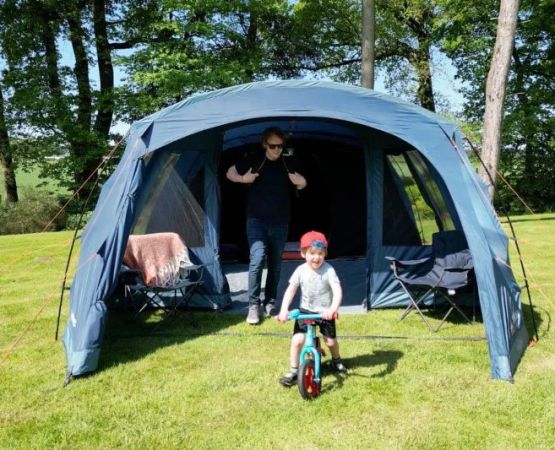
Jul 15, 2026Learn how to choose the right tent size for your group with practical camping tips covering capacity, comfort, weather conditions, gear storage, and group camping needs.
How to Camp Comfortably in a Small Car Without Feeling Cramped or Disorganized
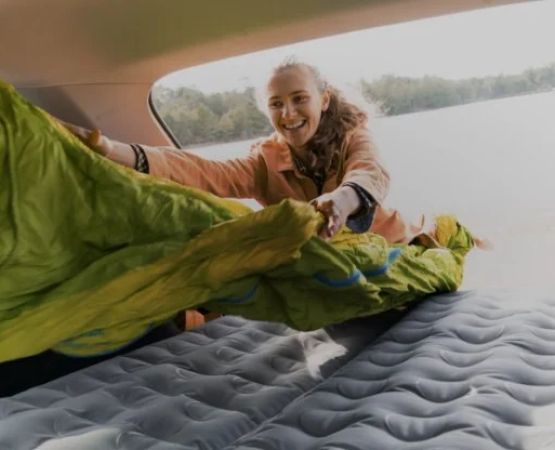
Jul 05, 2026Learn how to camp comfortably in a small car without feeling cramped or disorganized, with smart space-saving tips, gear strategies, real camping stories, and practical setup advice.
18 Camping Tips to Pack Light and Travel More Efficiently
Jul 02, 2026Discover 18 camping tips that help you pack light and travel more efficiently, with real camping stories, gear strategies, and practical outdoor packing advice.
25 Best Campgrounds in the US for Every Outdoor Experience
Jun 29, 2026Discover 25 Best Campgrounds in the US That Offer the Perfect Outdoor Experience for All Levels, from beginner-friendly sites to advanced wilderness escapes, with tips, stories, and planning advice for unforgettable camping trips.
How to Camp Comfortably Without Electricity: Practical Off-Grid Guide
Jun 27, 2026Learn how to camp comfortably without electricity using practical off-grid strategies, gear choices, and real camping experiences. Discover how Camping With Kayla helps you enjoy modern comfort in nature.
22 Camping Hacks That Will Change Your Outdoor Experience
Jun 24, 2026Discover 22 camping hacks that will completely change your outdoor experience with practical tips, real-life camping stories, and expert advice for comfort, safety, and efficiency.