
Campsite Vehicle Key Plan: Secure Storage and Backup Access
Avoid a campsite lockout with a deliberate vehicle-key handoff, secure weather-protected storage, battery checks, and a realistic backup access plan.
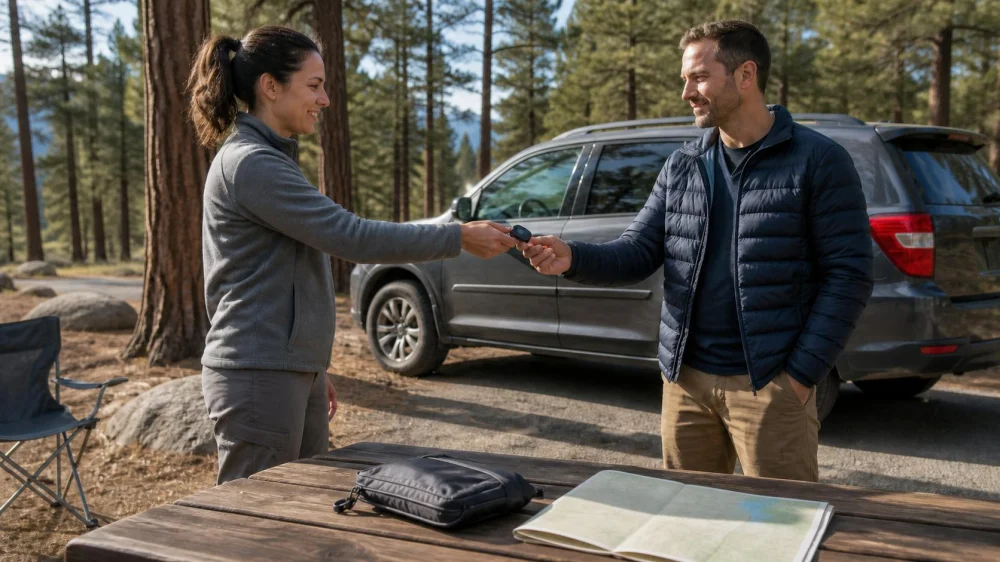
Campsite Vehicle Key Plan: Secure Storage and Backup Access
Table of Contents
Quick answer
Choose one responsible adult to control the vehicle key, keep it in a secure weather-protected place on that person or in locked storage, and announce every handoff. Before the trip, test all keys and remote functions, learn the vehicle's manual-entry method, and record roadside-assistance details. Never hide a key on the vehicle or lock the only key inside while people, pets, medicine, or essential gear remain dependent on access.
Assign responsibility
Loose keys easily disappear among tents, chairs, clothing, and shared gear. At arrival, name the person responsible for the vehicle key and the exact approved storage location. Other adults should know who holds it without broadcasting that information beyond the group.
If the group separates for a hike, swim, or activity, decide who needs vehicle access and whether transferring the key is appropriate. The responsible person should remain capable of protecting it and returning with the group.
Choose secure storage
Good storage is deliberate, concealed, weather-protected, and compatible with the key's design. A zipped internal pocket or a small secured pouch carried by the responsible adult is often easier to track than a loose table, tent pocket, cup holder, or camp chair.
A tent is not automatically secure, and a campground lockbox should be used only according to its instructions and site rules. Keep the key away from food storage, trash, shared wash kits, and anything likely to be moved, hung outdoors, or packed into another vehicle.
Protect keys from water and battery trouble
Electronic keys may not be waterproof. Check the vehicle manual before using a pouch, taking a key near water, or relying on a removable mechanical blade. A waterproof container should close correctly and be tested empty before the trip; trapped moisture can still cause damage.
Test the remote and spare key at home. Replace a weak key-fob battery using the specified type and procedure, or have it serviced. Learn how the vehicle signals a low key battery and how its manual entry and emergency start procedure work. Do not experiment for the first time at a remote campsite.
Make handoffs explicit
A handoff is complete only when the new holder takes the key and verbally confirms the storage location. Do not leave it silently on a cooler or ask someone who is distracted to remember it. When returning the key, place it directly in the agreed location and tell the responsible person.
If several drivers share the trip, keep a simple check: holder, vehicle status, and next planned use. Avoid attaching personal address information to the key ring.
Build a backup access plan
A spare key helps only if it is functional, authorised, secure, and not locked inside the same vehicle. Decide whether a trusted adult should carry it separately. Follow the vehicle manufacturer and rental agreement; duplicating or separating keys may not be allowed for every vehicle.
Save roadside-assistance, insurer, rental company, campground office, and emergency contacts offline. Record the vehicle make, model, registration details, and campsite location without leaving that information exposed. Know where phone service may be available and what the campground recommends after hours.
Check keys before departure
Before breaking camp completely, locate the primary and spare keys and test access. Then pack in a controlled order. This prevents the key being sealed inside a tent bag, roof box, or trailer compartment.
Before driving, confirm all people and pets are accounted for, doors and storage are closed, and no gear remains on the roof or ground. Remove any temporary campsite passes as instructed without covering required vehicle information.
Avoid risky shortcuts
- Do not hide a key on a tyre, bumper, wheel well, or nearby rock.
- Do not leave it in an unlocked tent, public charging area, or washroom.
- Do not attach the campsite number and home address to the same ring.
- Do not depend entirely on a phone app without testing offline limitations.
- Do not force a lock or window during a lockout.
- Never leave a person or animal in a vehicle while solving an access problem.
For an immediate threat to life, contact emergency services. For a routine lockout, use authorised roadside, rental, manufacturer, or locksmith support.
Key-plan checklist
- Test every authorised key before departure.
- Review manual entry and emergency start instructions.
- Pack the correct spare battery if appropriate.
- Assign a primary key holder and storage location.
- Protect the key from moisture and loss.
- Confirm every handoff aloud.
- Store a functioning spare separately when permitted.
- Save assistance and campground contacts offline.
- Locate all keys before packing and leaving.
FAQ
Should I hide a spare key under the vehicle?
No. That is predictable and exposes the vehicle and its contents. Use an authorised, secure plan that keeps the spare separate.
Can I take an electronic key swimming?
Only if its manufacturer explicitly supports that use and the protection method is suitable. Many electronic keys can be damaged by water.
Will a phone app always unlock the vehicle?
No. Battery, account, subscription, signal, server, pairing, and vehicle-power conditions can affect it. Treat an app as one method, not the entire backup plan.
What if a child or pet is locked inside?
Treat heat, cold, distress, or other immediate danger as an emergency and contact emergency services. Do not delay while trying risky entry methods.
Next steps
Before the next trip, test the keys, read the vehicle's access instructions, select secure storage, and save assistance contacts. At camp, use one responsible holder and explicit handoffs. Confirm both primary and spare access before the last gear is packed.
Evidence note: Vehicle systems and key features differ. The owner's manual, manufacturer guidance, rental terms, roadside provider, campground procedures, and emergency services take priority.
More
How to Choose the Right Tent Size for Your Group
Jul 15, 2026Learn how to choose the right tent size for your group with practical camping tips covering capacity, comfort, weather conditions, gear storage, and group camping needs.
How to Camp Comfortably in a Small Car Without Feeling Cramped or Disorganized
Jul 05, 2026Learn how to camp comfortably in a small car without feeling cramped or disorganized, with smart space-saving tips, gear strategies, real camping stories, and practical setup advice.
18 Camping Tips to Pack Light and Travel More Efficiently
Jul 02, 2026Discover 18 camping tips that help you pack light and travel more efficiently, with real camping stories, gear strategies, and practical outdoor packing advice.

25 Best Campgrounds in the US for Every Outdoor Experience
Jun 29, 2026Discover 25 Best Campgrounds in the US That Offer the Perfect Outdoor Experience for All Levels, from beginner-friendly sites to advanced wilderness escapes, with tips, stories, and planning advice for unforgettable camping trips.
How to Camp Comfortably Without Electricity: Practical Off-Grid Guide
Jun 27, 2026Learn how to camp comfortably without electricity using practical off-grid strategies, gear choices, and real camping experiences. Discover how Camping With Kayla helps you enjoy modern comfort in nature.

22 Camping Hacks That Will Change Your Outdoor Experience
Jun 24, 2026Discover 22 camping hacks that will completely change your outdoor experience with practical tips, real-life camping stories, and expert advice for comfort, safety, and efficiency.