
Hot-Weather Camping: Shade, Hydration, Rest, and an Exit Plan
Plan safer hot-weather camping with hourly forecasts, real shade, hydration, cooler activity times, buddy checks, heat-illness response, and early exit triggers.
Hot-Weather Camping: Shade, Hydration, Rest, and an Exit Plan
On this page
- Quick answer
- Check more than the daytime high
- Choose a campsite with real heat relief
- Build a personal hydration plan
- Move activity to cooler hours
- Manage a hot tent and sleep period
- Use a buddy check
- Recognise heat illness and act
- Set an exit threshold before arrival
- Hot-camp checklist
- Important limitations
- Evidence notes
- FAQ
- Next steps
Quick answer
For hot-weather camping, check the official hourly forecast, HeatRisk, overnight low, humidity, air quality and local alerts. Reserve a site with reliable shade or nearby cooled shelter, carry more drinking water than the group expects to use, move activity to the coolest hours, take frequent rest breaks and watch one another for symptoms.
Decide in advance when you will cancel, move to air conditioning or leave. Confusion, altered mental status, slurred speech, seizure or loss of consciousness can indicate heat stroke: call 911, begin rapid cooling and stay with the person. Do not give fluids to someone who is confused or unconscious.
Check more than the daytime high
Heat stress depends on temperature, humidity, sun, wind, elevation, activity, clothing, sleep and individual health. Look at hourly conditions for setup, cooking, hiking and the overnight period. Check for poor air quality, wildfire smoke, water restrictions, fire bans and campground notices.
Download the forecast and emergency information before entering a low-signal area. Ask rangers or campground staff about shade, potable water, cooled buildings, gate hours and the fastest route to medical care.
Choose a campsite with real heat relief
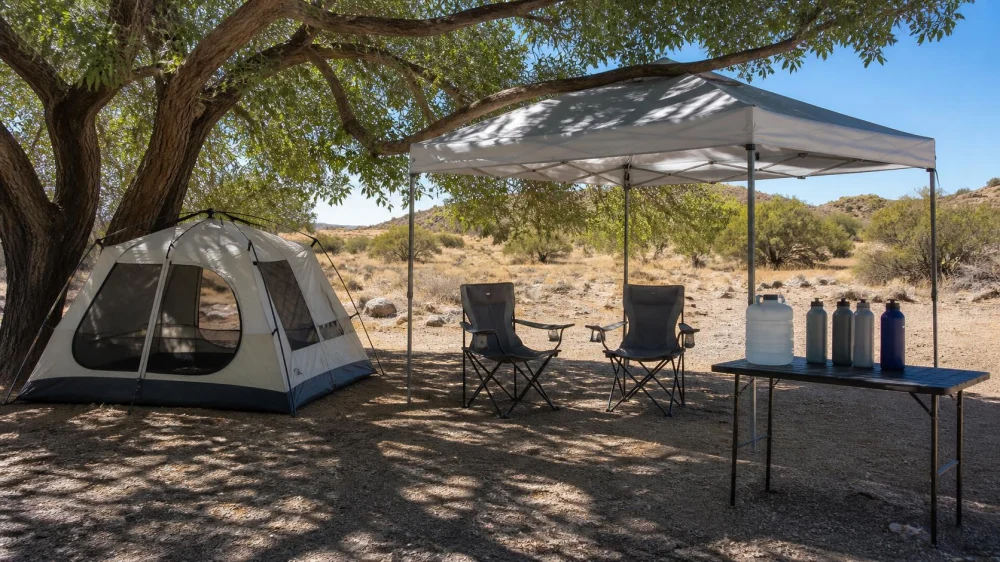
Tree shade can lower radiant heat, but inspect overhead hazards and follow hammock or tarp rules. A shade canopy helps only when safely anchored and ventilated. Know where natural shade moves through the day and keep rest seating out of direct afternoon sun.
A tent and parked vehicle can become dangerously hot. Never leave a child, adult needing assistance or pet inside a vehicle, even briefly. Do not treat an unpowered tent, enclosed camper or fan blowing hot air as equivalent to air conditioning.
Build a personal hydration plan
Carry ready-to-drink water plus a reliable refill or treatment plan. Make bottles easy to reach and drink regularly rather than waiting for intense thirst. CDC guidance advises staying hydrated on hot days and limiting alcohol; beverages very high in sugar or caffeine may not be the best main fluid source.
Needs vary with body size, activity, weather, health conditions and medicines. People with fluid or sodium restrictions should follow a clinician's plan rather than generic intake targets. Store water containers out of extreme heat and label personal bottles to reduce sharing.
Move activity to cooler hours
Set up critical shelter and water supplies before the hottest period when possible. Hike, cook and perform camp tasks in the morning or evening, shorten routes, reduce pack weight and take shade breaks. A previously easy trail can become unsafe in heat.
Wear loose, lightweight clothing and sun protection appropriate to the activity. Reapply sunscreen as directed, but remember that sunscreen does not prevent heat illness.
Manage a hot tent and sleep period
Pitch where permitted ventilation and shade work together. Use mesh openings only when privacy, insects, smoke and weather allow. Keep bedding light and dry, and avoid covering vents with gear. Check whether the overnight low provides meaningful cooling.
Poor sleep and a hot night can reduce next-day capacity. If the tent remains oppressive, move to the preselected cooled location or leave; do not wait until everyone is exhausted.
Use a buddy check
Pair campers and check speech, coordination, mood, sweating, skin condition, headache, nausea, cramps, dizziness and unusual fatigue. People developing heat illness may not recognise their own confusion or declining judgment.
Check more often on children, older adults, pregnant people, people with chronic conditions, anyone taking medicines that affect heat tolerance or hydration, new arrivals not acclimatised to heat, and pets. Discuss personal risk with a clinician before the trip.
Recognise heat illness and act
Heavy sweating, headache, dizziness, nausea, weakness, cramps or faintness can signal heat-related illness. Stop activity, move to a cool shaded or air-conditioned place, loosen excess clothing, cool the person and follow current medical guidance. Get medical help if symptoms worsen, vomiting occurs, or recovery is not prompt.
Heat stroke is a medical emergency. For confusion, altered mental status, slurred speech, seizure, collapse or loss of consciousness, call 911 immediately. Move the person to a cooler area and cool rapidly with cold water, wet cloths and air movement while waiting for emergency services. Do not leave the person alone.
Set an exit threshold before arrival
Write down triggers such as an upgraded heat warning, failed water source, lost shade, unsafe air quality, hot overnight conditions, repeated symptoms, vehicle trouble or a vulnerable camper who cannot cool. Identify the destination: staffed visitor centre, cooling centre, lodging, home or emergency care.
Keep enough fuel, battery, cash or card, navigation and daylight for the exit. Packing up can add exertion, so leave early rather than during a medical crisis.
Hot-camp checklist
- Hourly heat, overnight low, air quality and alerts checked.
- Shade and cooled backup location confirmed.
- Drinking water, refill and treatment backup packed.
- Activities moved to cooler hours.
- Buddy checks and vulnerable-person plan agreed.
- Heat-illness first aid and 911 access reviewed.
- Written cancellation and exit thresholds set.
Important limitations
This is general U.S. camping safety information, not medical advice. Heat risk, water needs, health conditions, medicines, elevation, park services and emergency access vary. Follow current local alerts, ranger directions and clinician guidance; call 911 for suspected heat stroke.
Evidence notes
CDC heat guidance emphasises staying cool, hydrated, using shade and scheduling outdoor activity during cooler periods. CDC/NIOSH identifies confusion, altered mental status, slurred speech, seizure and loss of consciousness as heat-stroke warning signs requiring emergency care and rapid cooling. NPS camping guidance supports checking park-specific hazards, knowing group limits and using a backup plan.
FAQ
Is a tent safe shade during extreme heat?
Not necessarily. Tents can trap heat and are not a substitute for a cooled shelter.
Can a fan cool me at any temperature?
Not always; CDC cautions that fans can increase body temperature in very hot indoor conditions.
How much water should I drink?
Needs vary. Drink regularly and follow clinician guidance for fluid or sodium restrictions.
Should I wait for thirst?
No. Make fluids accessible and drink regularly during heat.
What if someone becomes confused?
Treat it as possible heat stroke: call 911 and begin rapid cooling.
When should we cancel?
Use thresholds set before travel based on alerts, cooling access, water and group health.
Next steps
Open the hourly forecast and HeatRisk for the campsite, identify shade and an air-conditioned backup, calculate water and refill redundancy, then write the buddy-check schedule and exit triggers before departure.
More
How to Choose the Right Tent Size for Your Group
Jul 15, 2026Learn how to choose the right tent size for your group with practical camping tips covering capacity, comfort, weather conditions, gear storage, and group camping needs.
How to Camp Comfortably in a Small Car Without Feeling Cramped or Disorganized
Jul 05, 2026Learn how to camp comfortably in a small car without feeling cramped or disorganized, with smart space-saving tips, gear strategies, real camping stories, and practical setup advice.
18 Camping Tips to Pack Light and Travel More Efficiently
Jul 02, 2026Discover 18 camping tips that help you pack light and travel more efficiently, with real camping stories, gear strategies, and practical outdoor packing advice.

25 Best Campgrounds in the US for Every Outdoor Experience
Jun 29, 2026Discover 25 Best Campgrounds in the US That Offer the Perfect Outdoor Experience for All Levels, from beginner-friendly sites to advanced wilderness escapes, with tips, stories, and planning advice for unforgettable camping trips.
How to Camp Comfortably Without Electricity: Practical Off-Grid Guide
Jun 27, 2026Learn how to camp comfortably without electricity using practical off-grid strategies, gear choices, and real camping experiences. Discover how Camping With Kayla helps you enjoy modern comfort in nature.
22 Camping Hacks That Will Change Your Outdoor Experience
Jun 24, 2026Discover 22 camping hacks that will completely change your outdoor experience with practical tips, real-life camping stories, and expert advice for comfort, safety, and efficiency.