
How to Build a Comfortable Camping Sleep System
Build a comfortable camping sleep system by matching your pad, sleeping bag, dry layers, and campsite setup to expected overnight conditions.
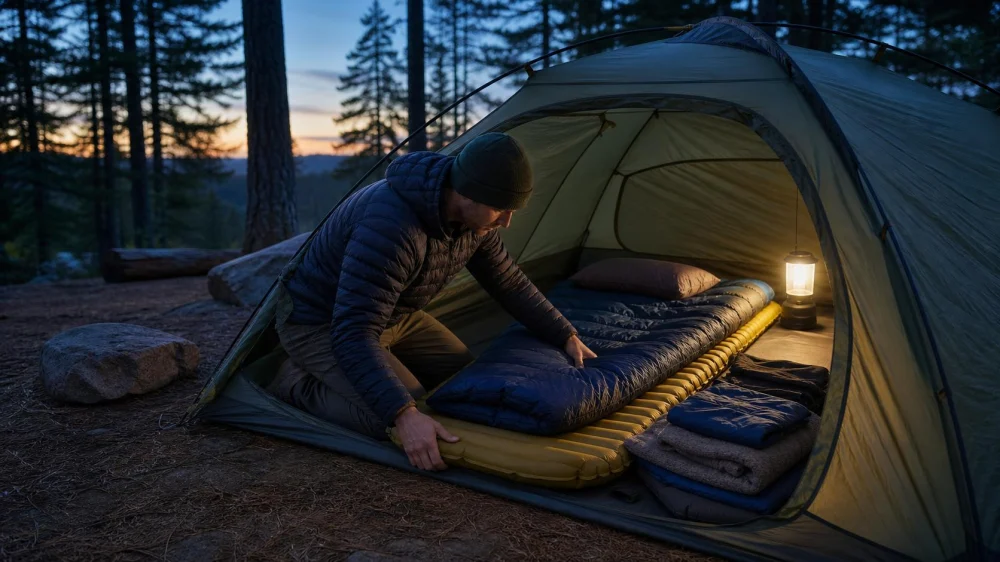
How to Build a Comfortable Camping Sleep System
On this page
Quick answer
A comfortable camping sleep system combines ground insulation, a correctly sized sleeping bag or quilt, dry sleep clothing, and a stable campsite setup. Choose each part for the expected overnight low—not the daytime forecast—then test the complete system at home. A thicker bed is not automatically warmer, and a warm bag cannot fully compensate for poor insulation beneath you.
A camping sleep system is the complete set of equipment and habits that manage comfort, insulation, moisture, and support while you sleep outdoors. The parts work together, so evaluate the pad, bedding, clothing, shelter, and conditions as one system.
This guide is for recreational campers in the United States using established campsites. It provides general planning guidance, not a guarantee of warmth or medical safety in cold conditions.
The four parts of a sleep system
- Ground insulation and support: a sleeping pad, cot-and-pad combination, or other camping-rated surface that separates you from the ground.
- Top insulation: a sleeping bag or quilt appropriate for the user and expected conditions.
- Sleep clothing: clean, dry layers that do not restrict circulation.
- Environment and setup: a suitable site, weather-ready shelter, ventilation, and protection from moisture.
Best results come from balancing all four. A very plush air mattress can feel comfortable but lose heat if it has little insulation. A high-loft bag can underperform when compressed beneath the sleeper or dampened by condensation.
Match the system to real conditions
Check the forecast for the campsite location and elevation, including the overnight low, wind, precipitation, and expected humidity. Conditions can differ from a nearby town. Use official weather information and any alerts from the land manager or campground.
Add a reasonable margin for uncertainty, but do not convert a mild-weather setup into a winter system through guesswork. When temperatures may approach the limit of your equipment or experience, choose more suitable gear, a lower-risk location, or another date.
Also consider the sleeper. People vary in metabolism, circulation, body size, age, medications, fatigue, and cold tolerance. A setup that works for one camper is not proof that it will work for another.
Choose and test a sleeping pad
The sleeping pad provides cushioning and reduces heat transfer to the ground. Compare these practical factors:
- Insulation: use the manufacturer’s stated seasonal guidance or insulation value and understand whether multiple pads may be combined as directed.
- Dimensions: shoulders, hips, and feet should remain supported in a normal sleep position.
- Stability: side sleepers may need a different thickness or construction from back sleepers.
- Inflation and adjustment: a pad can feel hard when overinflated; release small amounts of air while lying on it.
- Durability and repair: inspect valves, seams, and the campsite surface, and carry the manufacturer-recommended repair method.
Test the pad for a full night at home. Check whether hips or shoulders touch the floor, whether the pad slides, and whether it loses pressure. Temperature changes can alter air pressure, so a slightly softer feel at night does not always mean a leak.
Choose a sleeping bag or quilt
Use temperature information supplied by the manufacturer as a comparison tool, not a promise. Confirm whether a label describes comfort, lower-limit, or another test value. Choose the rating relevant to the intended user and allow for conditions, clothing, and individual cold tolerance.
Fit matters. A bag that is too tight can compress insulation and restrict comfortable movement. One that is unnecessarily large may leave more space to warm. For a quilt, make sure the pad attachment and draft control suit the expected temperature.
Keep insulation dry. Transport bedding in weather-resistant storage appropriate to the trip, air it when conditions permit, and avoid breathing inside the bag where moisture can accumulate. Follow the product’s care instructions rather than storing it permanently compressed.
Clothing, pillow, and small comforts
Change out of damp hiking or camp clothing before bed. Use dry layers that fit comfortably and do not bind at the waist, wrists, or ankles. Clean sleep socks can help, but adding layers that compress the bag or reduce circulation may make comfort worse.
A pillow or supported clothing bundle can improve neck position. Keep hard objects, food, open drink containers, and sharp gear out of the sleep area. Place essential items such as a light and required medication where they can be reached without searching in the dark.
Eat and hydrate according to your normal needs and trip plan. Do not use alcohol as a warming strategy. It can impair judgment and does not replace insulation or a safe response to cold stress.
Campsite setup checklist
- Confirm the overnight forecast and campground alerts.
- Select a permitted, level site without obvious water pooling or hazards.
- Clear only loose items allowed by site rules; do not alter vegetation.
- Inspect the tent floor and pad area for sharp objects.
- Inflate and adjust the pad before becoming tired or cold.
- Fluff the sleeping bag or quilt and keep it away from wet tent walls.
- Set aside completely dry sleep clothing.
- Ventilate the shelter according to its instructions and conditions.
- Keep a light, extra insulation, and an exit plan accessible.
- Reassess if the actual weather is colder, windier, or wetter than planned.
Limits and safety notes
Cold discomfort that persists after adding appropriate insulation is a decision signal, not a challenge to endure. Shivering, loss of coordination, confusion, unusual fatigue, or slurred speech can indicate a serious cold-related problem. Follow emergency guidance, seek appropriate help, and move to reliable warmth when needed.
Children, older adults, and people with health conditions may require additional planning. Seek qualified medical advice for individual risk. Never use fuel-burning heaters, stoves, lanterns, or improvised heat sources inside a tent or vehicle unless the product and space are specifically designed and approved for that use; carbon monoxide and fire hazards can be fatal.
This system is not ideal for forecast conditions beyond the equipment’s intended range, remote trips without a reliable exit plan, or situations where gear cannot remain dry. Change the plan rather than relying on untested combinations.
Evidence notes
The guidance here reflects broad outdoor practice and basic heat-management principles: reduce heat loss to the ground, trap dry air around the sleeper, prevent moisture from degrading insulation, and match equipment to forecast conditions. It does not endorse a particular product or temperature claim.
Use the current forecast and alerts from authoritative weather and land-management sources. Follow the tent, pad, sleeping bag, quilt, heater, and repair instructions supplied by their manufacturers. Product-specific directions and emergency guidance take priority over general tips.
Frequently asked questions
Is a sleeping bag enough without a pad?
Not in most camping conditions. Body weight compresses the insulation underneath, while the ground draws heat away. A suitable pad adds both insulation and support.
Can I stack two sleeping pads?
Some campers combine pads for insulation, protection, or comfort. Check compatibility, stability, and manufacturer guidance, then test the stack before the trip.
Why am I cold in a bag rated for the temperature?
Possible factors include the meaning of the rating, poor ground insulation, damp gear, drafts, fit, wind, individual cold tolerance, and a forecast that differs from the campsite. Reassess the whole system.
Should I wear all my clothes inside the sleeping bag?
No. Wear clean, dry, comfortable layers suited to the conditions. Too many tight layers can compress insulation or restrict circulation. Keep additional loose insulation available if conditions require it.
Is a cot warmer than a sleeping pad?
A cot provides support and airflow beneath the sleeper, but it is not automatically warm. It commonly needs an insulating pad or other manufacturer-approved insulation on top.
How should I test the system?
Use the complete setup for a full night at home or in a low-risk nearby setting with an easy indoor backup. Test fit, pad pressure, drafts, clothing, and morning moisture.
Next steps
List the expected overnight conditions, the sleeper’s comfort needs, and the equipment already available. Identify the weakest part of the system, test the complete setup, and adjust one variable at a time. Before departure, compare the latest forecast with the tested range and keep a clear option to add reliable warmth, relocate, or end the trip if real conditions exceed the plan.
More
How to Choose the Right Tent Size for Your Group
Jul 15, 2026Learn how to choose the right tent size for your group with practical camping tips covering capacity, comfort, weather conditions, gear storage, and group camping needs.
How to Camp Comfortably in a Small Car Without Feeling Cramped or Disorganized
Jul 05, 2026Learn how to camp comfortably in a small car without feeling cramped or disorganized, with smart space-saving tips, gear strategies, real camping stories, and practical setup advice.
18 Camping Tips to Pack Light and Travel More Efficiently
Jul 02, 2026Discover 18 camping tips that help you pack light and travel more efficiently, with real camping stories, gear strategies, and practical outdoor packing advice.

25 Best Campgrounds in the US for Every Outdoor Experience
Jun 29, 2026Discover 25 Best Campgrounds in the US That Offer the Perfect Outdoor Experience for All Levels, from beginner-friendly sites to advanced wilderness escapes, with tips, stories, and planning advice for unforgettable camping trips.
How to Camp Comfortably Without Electricity: Practical Off-Grid Guide
Jun 27, 2026Learn how to camp comfortably without electricity using practical off-grid strategies, gear choices, and real camping experiences. Discover how Camping With Kayla helps you enjoy modern comfort in nature.
22 Camping Hacks That Will Change Your Outdoor Experience
Jun 24, 2026Discover 22 camping hacks that will completely change your outdoor experience with practical tips, real-life camping stories, and expert advice for comfort, safety, and efficiency.