
How to Complete Campground Checkout Without Rushing
Leave camp on time without unsafe rushing using a practical departure timeline, packing order, fire and waste checks, site sweep, and final vehicle inspection.
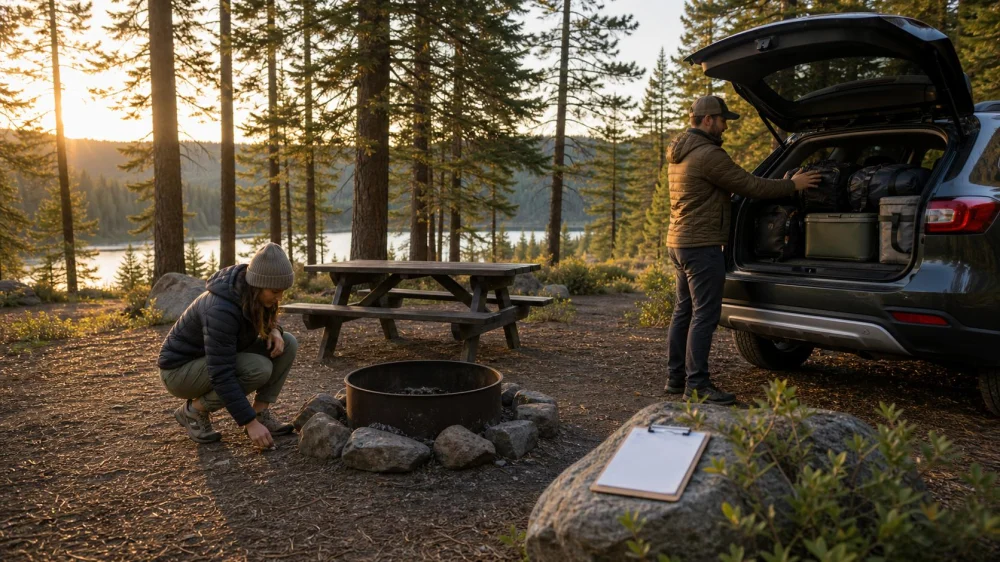
How to Complete Campground Checkout Without Rushing
On this page
Quick answer
Confirm the campground's checkout time and procedure when you arrive, then plan backward. Pack unused gear the night before, allow wet equipment extra drying time, extinguish the fire completely, dispose of rubbish and wastewater only in approved places, inspect the entire site, and leave enough time for keys, tags, gates, or dump-station tasks.
Do not let a deadline push you into handling hot coals, towing equipment, or driving unsafely. Contact campground staff early if illness, weather, or an equipment problem will delay departure.
Prepare the night before
Check the reservation confirmation, entrance board, or host instructions for checkout time, quiet hours, vehicle movement restrictions, gate codes, and any requirement to return a key or site tag. Ask where rubbish, recycling, dishwater, sewage, and cold fire debris belong.
Pack spare clothing, games, chairs, and cooking tools you will not need in the morning. Charge essential devices, plan breakfast with minimal cleanup, secure food from wildlife, and separate a final-use bag containing toiletries, medicines, weather layers, water, and vehicle keys.
Work backward from checkout time
Set a target to be ready 15 to 30 minutes before the formal deadline. Add more time for children, mobility needs, large tents, an RV connection, a trailer, wet weather, or a distant disposal station. Assign each adult a clear zone such as kitchen, shelter, vehicle, or ground sweep.
A simple two-hour plan might reserve the first 30 minutes for breakfast and dishes, the next 45 for shelter and gear, 20 for waste and fire checks, 15 for the site sweep, and 10 for the campground's checkout step. Adjust this example to the site rather than treating it as a fixed rule.
Pack in a safe order
- Store food, medicines, and wildlife attractants.
- Wash, dry, and pack cooking equipment.
- Disconnect power, water, or sewer connections using the manufacturer's procedure.
- Pack bedding and dry interior gear.
- Shake out and collapse the shelter when conditions are safe.
- Load heavy items low and secure loose equipment.
- Keep wheel chocks or stabilizers in place until the tow vehicle and trailer are correctly coupled.
- Place the final-use bag where it remains accessible.
Wet tents and tarps may need temporary packing. Mark them clearly and unpack them to dry as soon as practical at home; never delay checkout by spreading equipment into another reserved site without permission.
Complete a final site sweep
Walk a slow grid from the site's edges toward the vehicle. Look under the picnic table, around tent stakes, beside logs, in the fire area, near water points, and along the route to the restroom. Pick up micro-trash such as foil, food scraps, cable ties, bottle caps, and cord.
Count stakes, poles, chairs, people, and pets. Check branches for clotheslines or lantern hooks, restore moved items only as instructed, and remove every personal marker. Do not burn rubbish or leave unwanted gear for the next camper.
If fires are permitted, follow the campground's extinguishing directions. Coals must be cold before departure; never bury warm coals or put hot material in a rubbish container. Report a damaged fire ring, leaking tap, hazardous tree limb, spill, or injured wildlife to staff.
Finish the official checkout
Return keys, permits, or borrowed equipment and record any requested meter reading. Confirm passengers are seated, pets secured, steps retracted, roof items stowed, doors latched, and trailer lights connected. Walk around the vehicle once more before moving.
Use only approved dump stations and disposal points. If the station has a queue, do not block the campground road or exceed checkout without contacting staff. Save a receipt or checkout confirmation when the campground provides one.
Campground checkout checklist
- Confirm the exact checkout time and procedure.
- Pack nonessential gear the night before.
- Allow extra time for wet or complex equipment.
- Extinguish the fire completely.
- Use approved waste and wastewater facilities.
- Sweep the site for gear and micro-trash.
- Count people, pets, keys, and essential equipment.
- Perform a final vehicle or trailer walk-around.
- Return required items and leave on time.
Limitations and safety notes
- Campground rules, fire restrictions, checkout procedures, and disposal systems vary.
- Never handle unfamiliar RV, trailer, propane, electrical, or sewage systems without the correct instructions.
- Do not move or burn hazardous, medical, or suspicious waste; notify staff.
- Severe weather, wildfire warnings, flooding, or an emergency may override a routine checkout plan.
Frequently asked questions
What if my tent is still wet?
Pack it separately if necessary, then unpack and dry it promptly at home to reduce mildew and material damage.
May I leave firewood for the next camper?
Ask staff. Transport and storage rules can restrict firewood, and unattended material may be treated as waste.
What if we cannot meet checkout time?
Contact the campground as early as possible. Do not assume an empty-looking site means a late departure is allowed.
Should I dismantle first or eat breakfast first?
A simple breakfast first usually reduces food handling after the handwashing and kitchen gear are packed.
How do I avoid leaving small items?
Use a grid sweep, count stakes and poles, and have a second person perform an independent final walk.
National Park Service guidance
The National Park Service advises campers to confirm site-specific checkout procedures, vacate by the stated time, and leave the campsite better than they found it. Local campground instructions remain controlling.
Create a reusable departure card
Write your checkout time, four packing zones, fire and waste steps, final headcount, and return items on one laminated card. Store it with the vehicle keys so the last sweep happens before anyone drives away.
More
How to Choose the Right Tent Size for Your Group
Jul 15, 2026Learn how to choose the right tent size for your group with practical camping tips covering capacity, comfort, weather conditions, gear storage, and group camping needs.
How to Camp Comfortably in a Small Car Without Feeling Cramped or Disorganized
Jul 05, 2026Learn how to camp comfortably in a small car without feeling cramped or disorganized, with smart space-saving tips, gear strategies, real camping stories, and practical setup advice.
18 Camping Tips to Pack Light and Travel More Efficiently
Jul 02, 2026Discover 18 camping tips that help you pack light and travel more efficiently, with real camping stories, gear strategies, and practical outdoor packing advice.

25 Best Campgrounds in the US for Every Outdoor Experience
Jun 29, 2026Discover 25 Best Campgrounds in the US That Offer the Perfect Outdoor Experience for All Levels, from beginner-friendly sites to advanced wilderness escapes, with tips, stories, and planning advice for unforgettable camping trips.
How to Camp Comfortably Without Electricity: Practical Off-Grid Guide
Jun 27, 2026Learn how to camp comfortably without electricity using practical off-grid strategies, gear choices, and real camping experiences. Discover how Camping With Kayla helps you enjoy modern comfort in nature.

22 Camping Hacks That Will Change Your Outdoor Experience
Jun 24, 2026Discover 22 camping hacks that will completely change your outdoor experience with practical tips, real-life camping stories, and expert advice for comfort, safety, and efficiency.