
How to Keep a Tent Dry During a Rainy Camping Trip
Keep a tent dry in rain by choosing safe drainage, sizing the footprint, tensioning the rainfly, ventilating, separating wet gear, and drying it after camp.
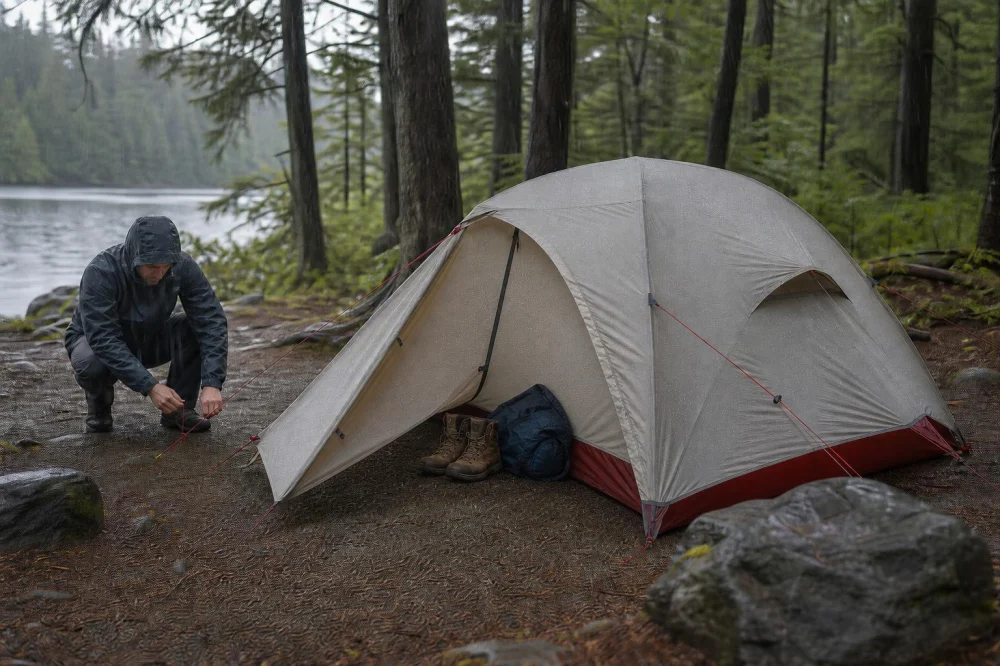
How to Keep a Tent Dry During a Rainy Camping Trip
In this guide
A waterproof label does not make a tent immune to water. Rain reaches shelters through poor site choice, exposed doors, undersized rainflies, slack fabric, worn coatings, puddled footprints, wet clothing, and condensation from the occupants themselves. Staying dry depends on the entire setup and on leaving when weather or water creates a genuine hazard.
Quick answer
Pitch on an established, slightly crowned or well-drained site—not in a depression, drainage path, dry wash, or beside rising water. Keep the footprint completely inside the tent floor outline. Stake the body, install and tension the full rainfly, open protected vents, and keep fly fabric separated from the inner wall. Store rainwear and muddy footwear in the vestibule, close doors quickly, and dry the tent completely after the trip.
Know when rain becomes an evacuation problem
A dry tent is not safe shelter from every storm. Check official forecasts, campground alerts, ranger guidance, flood watches and warnings, road conditions, and closure notices before and during the trip. Download or carry a weather radio where mobile service is unreliable.
Leave low areas, washes, stream banks, canyons, river bars, and flood-prone roads when heavy rain or rising water threatens. Flash flooding can occur where rain is not visible at the campsite. Never drive or walk through moving floodwater.
For thunder and lightning, a tent provides no lightning protection. Move to a substantial building or hard-topped enclosed vehicle according to the campground's emergency plan. Protecting gear is secondary to protecting people.
Choose a legal, well-drained tent site
Use the designated tent pad or an established durable surface. Look for a slight natural crown and a route for water to continue past, not through, the sleeping area. Avoid hollows, compacted bowls, gullies, and the bottom of a slope.
Look uphill for runoff channels and loose soil. Look up for dead limbs, unstable trees, and rocks; wet ground and wind can increase tree hazards. Move to a safer approved site rather than trying to engineer drainage.
Do not dig trenches, cut vegetation, build berms, or relocate rocks unless land managers explicitly permit it. These changes damage campsites and can direct water toward neighbours.
Size and place the footprint correctly
A footprint protects the tent floor from abrasion and can add a moisture barrier. It must not extend beyond the floor. Exposed material catches rain and funnels it underneath, where water can pool between footprint and tent.
Use the tent manufacturer's fitted footprint or fold a compatible groundsheet so every edge sits several centimetres inside the floor outline. Smooth sharp sticks and debris by hand without disturbing the site more than necessary.
A footprint cannot compensate for standing water, damaged floor coating, or an unsuitable site. Check it during setup and again after the tent shifts under load.
Pitch the tent and rainfly fully
Practise at home before the trip. Assemble every pole, clip, sleeve, stake point, fly buckle, guyline, vent, and vestibule as the instructions show. A partial setup that feels adequate in dry weather can fail under sustained rain.
Stake the tent square so doors align and the floor is not twisted. Attach the rainfly with the correct orientation and use guylines to create an even, taut surface. Water should run off instead of collecting in a sag.
Maintain an air gap between fly and inner tent. Where the two fabrics touch, water or condensation can transfer inside. Retension fabric after it becomes wet because some materials stretch.
Ventilate to reduce condensation
Breathing, damp clothing, wet soil, and cooking moisture add water vapour inside a shelter. On cool fly fabric, vapour condenses into droplets that can be mistaken for a leak. Sealing every vent often makes the interior wetter.
Open roof and low vents that remain protected by the fly, and create cross-flow through screened door sections when rain direction permits. Keep sleeping bags and clothing away from tent walls.
Never run a stove, heater, lantern with a flame, or engine inside a tent or vestibule. Fire and carbon monoxide hazards outweigh any drying benefit. Use only tent-safe lighting and follow equipment instructions.
Create a dry entry routine
Orient the main door away from prevailing wind when the campsite and tent design allow. Extend the vestibule fully and keep its zipper accessible. Open only the section needed, enter one person at a time, and close it promptly.
Shake rainwear away from the doorway. Remove muddy footwear in the vestibule and place it on a small waterproof mat or bag so runoff does not flow under the floor. Keep a dedicated absorbent cloth near the entrance for drips.
Do not leave the tent door open while organising gear. Pack items in waterproof sacks or lidded containers so fewer loose objects need to cross the threshold.
Separate wet gear from sleeping gear
Use dry bags or sealed liners for sleeping bags, spare clothing, medication, electronics, maps, and ignition tools. A rain cover alone may not protect a backpack in prolonged weather. Keep one complete sleep layer sealed until inside.
Store wet shells, trousers, boots, and umbrellas in the vestibule or another ventilated rain-protected area. Do not drape saturated clothing over a sleeping bag or against the inner wall.
Wipe small puddles early and ventilate. If insulation becomes wet, its warmth can decline. Change into dry clothing and monitor the group for shivering, confusion, clumsiness, or other signs of cold stress.
Use a separate tarp without creating hazards
A tarp over a cooking or social area can preserve dry space, but it should not depend on damaged trees, cross a road or trail, or create head-height guylines without visibility. Follow campground rules for attachment and use tree-friendly straps where allowed.
Pitch one edge lower so water drains to a safe area away from tents, paths, fire rings, and neighbouring sites. Avoid flat pockets that can collect heavy water. Retension after rain and wind.
Do not cook in a tent or sealed tarp enclosure. Maintain ventilation and equipment clearances, and keep flames away from fabric. In high wind, lightning, flooding, or falling-branch conditions, take the tarp down only if it is safe to do so and seek proper shelter.
Pack up wet without trapping damage
If rain continues at departure, pack sleeping gear and clothing into waterproof storage inside the tent first. Move remaining items to the vehicle or covered area, then take down the inner tent as late as the design allows. Some tents permit fly-first pitching or fly-last removal.
Keep the wet tent separate from dry equipment. At home, unpack it as soon as possible and hang or pitch it until every layer, seam, cord, pole sleeve, and storage sack is completely dry.
Brush off dry soil after drying, inspect coatings and seam tape, and repair according to the manufacturer's directions. Never store a damp tent long-term; mildew, odour, staining, and coating damage can develop.
Frequently asked questions
Should a tarp go under the tent?
A fitted footprint can, but no edge should project beyond the tent floor. An exposed tarp can collect rain underneath.
Why is the inside wet when the fly did not leak?
Condensation is common. Increase protected ventilation, separate fly and inner fabric, and keep wet gear outside the sleeping area.
Should I dig a trench around the tent?
No. It damages the site and can redirect runoff. Choose a better established site and follow land-manager rules.
Can I touch the inside of a tent in rain?
Modern double-wall tents do not leak simply from a touch, but pressing inner and fly together can transfer moisture. Keep the layers separated.
Is a tent safe in a thunderstorm?
No. A tent offers no lightning protection. Follow alerts and move to a substantial building or hard-topped enclosed vehicle.
Dry camping is a system
Keeping a tent dry begins with the forecast and a safe, well-drained legal site. A correctly sized footprint, full rainfly, taut guylines, protected ventilation, disciplined entry, and separated wet gear work together. When the trip ends, complete drying and inspection protect the next trip. If water, wind, lightning, or unstable trees threaten people, leave the tent and use safer shelter.
More
How to Choose the Right Tent Size for Your Group
Jul 15, 2026Learn how to choose the right tent size for your group with practical camping tips covering capacity, comfort, weather conditions, gear storage, and group camping needs.
How to Camp Comfortably in a Small Car Without Feeling Cramped or Disorganized
Jul 05, 2026Learn how to camp comfortably in a small car without feeling cramped or disorganized, with smart space-saving tips, gear strategies, real camping stories, and practical setup advice.
18 Camping Tips to Pack Light and Travel More Efficiently
Jul 02, 2026Discover 18 camping tips that help you pack light and travel more efficiently, with real camping stories, gear strategies, and practical outdoor packing advice.

25 Best Campgrounds in the US for Every Outdoor Experience
Jun 29, 2026Discover 25 Best Campgrounds in the US That Offer the Perfect Outdoor Experience for All Levels, from beginner-friendly sites to advanced wilderness escapes, with tips, stories, and planning advice for unforgettable camping trips.
How to Camp Comfortably Without Electricity: Practical Off-Grid Guide
Jun 27, 2026Learn how to camp comfortably without electricity using practical off-grid strategies, gear choices, and real camping experiences. Discover how Camping With Kayla helps you enjoy modern comfort in nature.
22 Camping Hacks That Will Change Your Outdoor Experience
Jun 24, 2026Discover 22 camping hacks that will completely change your outdoor experience with practical tips, real-life camping stories, and expert advice for comfort, safety, and efficiency.