
How to Light a Campsite Without Disturbing Others
Light a campsite considerately with warm LEDs, downward beams, careful headlamp use, clear paths, safe tent lighting, battery planning, and emergency backup.
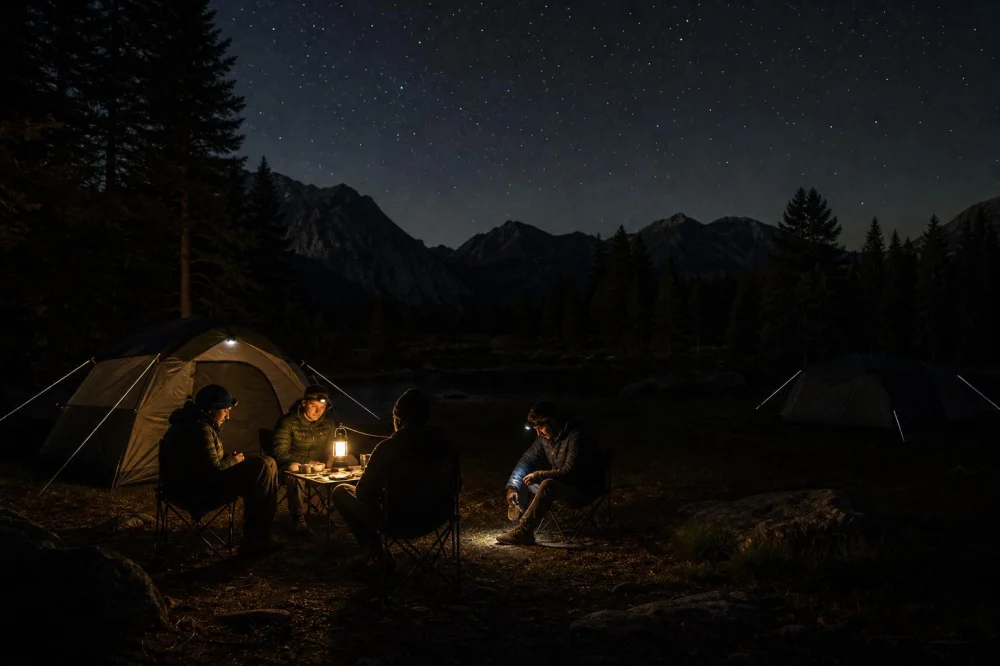
How to Light a Campsite Without Disturbing Others
In this guide
Good campsite lighting helps people cook, find gear, walk safely, and respond to emergencies without turning night into a car park. The goal is not maximum brightness. It is enough light on the task, aimed downward, used for the shortest practical time, with a separate brighter option reserved for real safety needs.
Quick answer
Place small, warm, dimmable LED lights low over the table, near the shelter entrance, and beside specific trip hazards. Point every beam down and away from neighbouring sites. Use a headlamp's low or red setting when talking with others, and tilt it down before looking at a person. Turn decorative and work lights off at quiet time. Keep one charged white flashlight accessible for emergencies and navigation away from camp.
Use several small lights, not one floodlight
A bright lantern in the centre creates glare, deep shadows, and spill beyond the site. Several lower-output lights can cover separate tasks more evenly: a table lantern for food, a small entrance light for zippers, and a personal headlamp for walking.
Start at the lowest setting and increase only until the task is comfortable. Eyes adapt to darkness over time; blasting a high mode resets that adaptation for everyone nearby.
Use diffusers or indirect reflection from a pale shelter ceiling where the equipment permits. Do not hang a heavy lantern from a point that cannot support it or where people will strike it.
Aim headlamps below other people's eyes
A headlamp points wherever the wearer looks, so ordinary conversation can become repeated glare. Angle the lamp toward the ground, use low mode, or switch it off while seated. Before turning toward someone, cover or lower the beam.
Choose a broad low beam for camp tasks and reserve a focused high beam for route finding. Avoid rapid flashing modes except for emergencies because they can disorient others and affect people sensitive to flashing light.
Children need instruction and supervision. A headlamp is not a toy to shine into tents, vehicles, wildlife, roads, or faces.
Use warm or red modes appropriately
Warm amber light generally feels less harsh than cool blue-white light and can reduce the apparent glow beyond camp. Red modes often preserve night adaptation better for simple close tasks and produce less glare at low output.
Red light changes colour perception. It is poor for judging whether food is fully cooked, reading a medical condition, identifying coloured map symbols, checking wound appearance, or matching wires and equipment. Use adequate white light when colour accuracy affects safety.
Brightness matters as much as colour. A powerful red beam can still disturb neighbours, while a dim shielded white light may be considerate.
Mark hazards without lighting the whole forest
Remove or avoid trip hazards in daylight first. Keep guylines, stakes, coolers, chairs, and cords out of walking routes. Reflective guyline or small markers can reveal an obstacle when a headlamp passes over it without glowing all night.
If a step, root, or edge cannot be avoided, place a tiny downward-facing marker close to it. Do not line trails with bright lights or mark a route that encourages people to leave the established path.
Walk to the toilet, water point, or vehicle with a personal light. Do not assume pathway lighting exists or leave your campsite lantern blazing as a beacon.
Use only appropriate electric lights in tents
Use battery-powered LED lights designed for the environment and hung from the tent's approved light loop. Keep them away from wet fabric if they are not rated for moisture and prevent hard edges from abrading the shelter.
Never use a candle, fuel lantern, stove, charcoal, flame heater, or engine inside a tent or enclosed vestibule. Fire and carbon monoxide can kill, and an open door does not make the practice safe.
Switch off the light before sleep or use the dimmest brief setting needed. Store the headlamp in the same reachable place each night so it can be found in darkness.
Keep light inside your campsite
Stand at the edge of the site after setup and look back. If bare bulbs are visible or light reaches the next tent, road, water, or cabin window, lower, shield, dim, or reposition the fixture.
Respect campground quiet hours as low-light hours too, even when rules mention only sound. String lights and vehicle awning bars should be switched off when the social period ends.
Do not illuminate another person's site, a ranger station, road traffic, boaters, climbers, or aircraft. Powerful spotlights and lasers have no routine role in a shared campground.
Reduce insect and wildlife problems
Many insects are attracted to light, especially bright short-wavelength output. Use warm, low, shielded light and place the main lantern slightly away from open tent doors when practical. Keep mesh doors closed.
Light is not a wildlife barrier. Continue all required food, rubbish, toiletry, and scented-item storage. Do not shine lights at animals for entertainment, approach them for photos, or use repeated flashes.
If wildlife enters camp, follow land-manager guidance. Use light only as needed to identify hazards and move people to safety; do not corner or pursue the animal.
Manage batteries and charging safely
Start with charged devices and carry compatible spare batteries or a power bank protected from water, heat, puncture, and short circuits. Keep loose batteries in cases so terminals cannot contact metal objects.
Inspect batteries for swelling, leakage, corrosion, damage, or unusual heat. Stop using a suspect device and follow the manufacturer's disposal guidance. Do not charge lithium batteries inside a sleeping bag or against flammable fabric.
Generators must follow campground rules and manufacturer clearances. Operate them outdoors far from tents, vehicles, and openings so exhaust cannot enter occupied spaces. Never run an engine just to power tent lighting in an enclosed area.
Keep emergency light separate and ready
Low-impact camp lighting should not leave the group without a strong reliable light for first aid, evacuation, a lost person, vehicle trouble, or hazard identification. Keep a charged white-beam flashlight or headlamp in a known accessible location.
Each person walking away from camp should carry their own light and spare power. A phone flashlight is a backup, not an ideal primary tool; using it can drain communication and navigation power.
Know the device's emergency mode before the trip. Use flashing signals only when needed to attract help or warn of danger, and avoid directing them at drivers or rescuers unless instructed.
Frequently asked questions
How many lumens does a campsite need?
No single number fits every task. Start low, use a diffused light close to the work, and reserve high output for navigation or emergencies.
Is red light always better at night?
It helps night adaptation for simple tasks but hides colour detail. Use white light when colour affects food, maps, repairs, or medical assessment.
Are string lights rude at a campground?
They can be acceptable if the rules allow them and they are warm, dim, contained within the site, and switched off at quiet time.
Can I leave a lantern on all night?
Usually it is unnecessary and can disturb people and wildlife. Keep a light reachable but off, or use only a tiny safety marker where permitted.
Why do insects crowd my lantern?
Many insects orient toward light. Lower the brightness, use warmer output, shield it, and move it away from tent entrances.
Light the task, then turn it down
A considerate campsite uses light with precision: several small sources, low output, warm colour, downward aim, and a clear off time. Headlamps stay out of faces, pathways are cleared before they are marked, tents use only safe electric lights, and emergency brightness remains ready but unused. The reward is safer movement without losing the night everyone came to experience.
More
How to Choose the Right Tent Size for Your Group
Jul 15, 2026Learn how to choose the right tent size for your group with practical camping tips covering capacity, comfort, weather conditions, gear storage, and group camping needs.
How to Camp Comfortably in a Small Car Without Feeling Cramped or Disorganized
Jul 05, 2026Learn how to camp comfortably in a small car without feeling cramped or disorganized, with smart space-saving tips, gear strategies, real camping stories, and practical setup advice.
18 Camping Tips to Pack Light and Travel More Efficiently
Jul 02, 2026Discover 18 camping tips that help you pack light and travel more efficiently, with real camping stories, gear strategies, and practical outdoor packing advice.

25 Best Campgrounds in the US for Every Outdoor Experience
Jun 29, 2026Discover 25 Best Campgrounds in the US That Offer the Perfect Outdoor Experience for All Levels, from beginner-friendly sites to advanced wilderness escapes, with tips, stories, and planning advice for unforgettable camping trips.
How to Camp Comfortably Without Electricity: Practical Off-Grid Guide
Jun 27, 2026Learn how to camp comfortably without electricity using practical off-grid strategies, gear choices, and real camping experiences. Discover how Camping With Kayla helps you enjoy modern comfort in nature.
22 Camping Hacks That Will Change Your Outdoor Experience
Jun 24, 2026Discover 22 camping hacks that will completely change your outdoor experience with practical tips, real-life camping stories, and expert advice for comfort, safety, and efficiency.