How to Set Up a Reliable Camp Handwashing Station
Build a reliable camp handwashing station using safe running water, soap, good placement, effective technique, clean drying, and responsible greywater disposal.
How to Set Up a Reliable Camp Handwashing Station
On this page
Quick answer
A useful camp handwashing station needs clean running water, plain soap, a catch basin or approved drainage method, and a clean way to dry hands. Put it near the cooking and eating area but far enough away that splash, soap, and wastewater cannot contaminate food, drinking water, a natural water source, or a walking route. Check campground rules before releasing any greywater.
Wash with soap and running water for at least 20 seconds. Hand sanitizer is a backup when soap and water are unavailable, not a full replacement for visibly dirty or greasy hands.
Choose a safe location
Use a level, stable surface where the water container cannot tip. Keep the station outside the tent and away from the fire ring, electrical equipment, vehicle traffic, and places where children may pull on the container. It should be easy to reach before food preparation, after toilet use, and after handling rubbish, pets, bait, or raw ingredients.
Do not place the station directly beside a stream, lake, spring, well, drinking-water tap, or communal food table. Follow the campground's stated distance and wastewater rules; sensitive backcountry sites may require carrying all wash water out.
Pack the right supplies
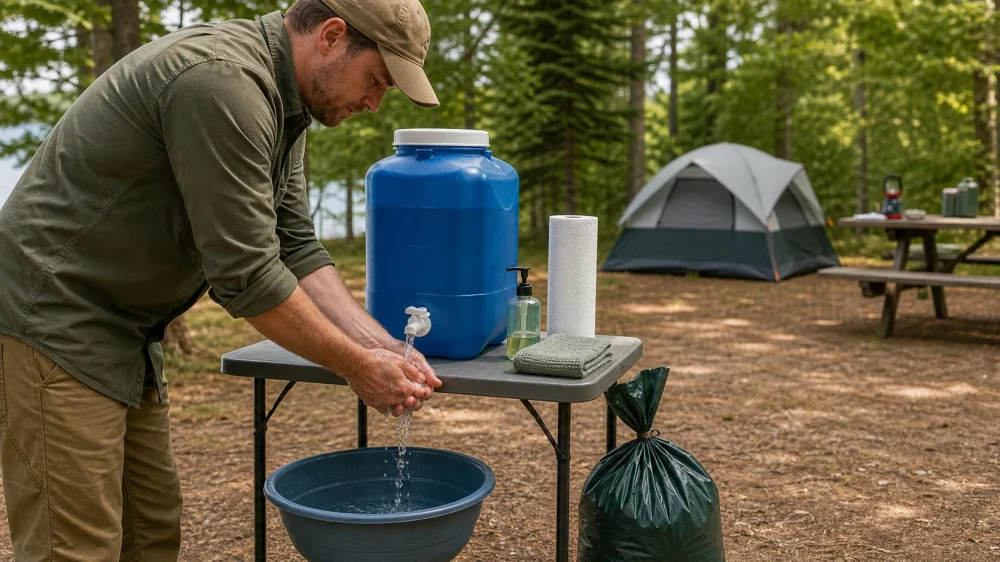
- A food-safe water container with a controlled spigot or foot pump
- Enough treated or otherwise safe water for the group
- Plain liquid or bar soap in a protected container
- A basin or bucket to catch used water
- Paper towels or individual clean towels that can dry fully
- A rubbish bag for used paper towels
- At least 60% alcohol hand sanitizer for limited backup use
- A small light for safe use after dark
Biodegradable soap still should not enter natural water. It describes how a product may break down under suitable conditions; it does not make direct disposal into a lake or stream acceptable.
Build the station step by step
- Fill the container with safe water and close it securely.
- Set it on a stable table or stand with the spigot over the catch basin.
- Test the flow so hands can be rinsed without touching the spout.
- Place soap where it stays clean and cannot fall into the basin.
- Hang towels and the rubbish bag away from splash.
- Add a simple reminder for children and first-time campers.
- Check for leaks, pooled water, insects, and slippery ground throughout the day.
A low-flow spigot conserves water, but the flow must still be continuous enough to rinse away soap and loosened dirt. Do not let several people rinse in one shared bowl of standing water.
Use an effective washing routine
Wet hands with clean running water, apply soap, and lather palms, backs of hands, between fingers, thumbs, fingertips, and under nails. Scrub for at least 20 seconds, rinse under running water, and dry with a clean towel or air dry. Avoid touching the spigot with freshly washed hands; use a lever, foot control, or clean towel if necessary.
Wash before preparing or eating food and after using the toilet, changing a diaper, cleaning a child, touching animals or animal waste, handling rubbish, coughing, or treating a cut. Anyone with vomiting or diarrhea should not prepare food for the group.
Manage wastewater correctly
Catch used water rather than allowing a muddy puddle to form. Dispose of it only where campground staff or posted rules direct—such as a designated utility sink, drain, or greywater station. Never pour it into a drinking-water fixture, toilet-area hand basin when prohibited, storm drain, or natural water source.
Strain out food particles if required and pack the particles out with rubbish. Clean and dry the basin after the trip so it does not become a source of odour or contamination.
Camp handwashing checklist
- Confirm the campground's water and greywater rules.
- Bring a stable, controllable water container.
- Use safe running water and soap.
- Keep the station away from food and natural water.
- Provide clean drying materials.
- Wash for at least 20 seconds.
- Use sanitizer only as an appropriate backup.
- Empty wastewater only at an approved location.
Limitations and health notes
- This guide does not replace campground, public-health, or backcountry regulations.
- Sanitizer works poorly on visibly dirty or greasy hands and does not reliably remove every germ or chemical.
- Untreated surface water may look clean while containing disease-causing organisms.
- Seek medical advice for persistent vomiting or diarrhea, signs of dehydration, severe pain, bloody stool, or illness in a high-risk person.
Frequently asked questions
Can I use a water jug with a push button?
Yes, if it is stable, supplies clean running water, and can be operated without recontaminating washed hands.
Is biodegradable soap safe to use in a creek?
No. Keep all soap and wash water out of natural water and follow the site's disposal rule.
Can everyone share one cloth towel?
Individual clean towels, disposable towels, or air drying reduce the chance of a wet shared towel becoming contaminated.
Is sanitizer enough after using the toilet?
Soap and running water are preferred, especially because sanitizer does not work well against norovirus.
How much water should I bring?
Estimate for drinking, cooking, and repeated handwashing, then add a reserve appropriate to group size, weather, and refill access.
Public-health guidance
The CDC explains the five handwashing steps and key times to wash. Its camping-specific norovirus guidance recommends soap and water for at least 20 seconds and warns that sanitizer alone does not work well against norovirus.
Prepare before departure
Assemble and test the complete station at home. Then photograph the setup, pack all parts together, and save the campground's wastewater instructions so everyone in the group follows the same routine.
More
How to Choose the Right Tent Size for Your Group
Jul 15, 2026Learn how to choose the right tent size for your group with practical camping tips covering capacity, comfort, weather conditions, gear storage, and group camping needs.
How to Camp Comfortably in a Small Car Without Feeling Cramped or Disorganized
Jul 05, 2026Learn how to camp comfortably in a small car without feeling cramped or disorganized, with smart space-saving tips, gear strategies, real camping stories, and practical setup advice.
18 Camping Tips to Pack Light and Travel More Efficiently
Jul 02, 2026Discover 18 camping tips that help you pack light and travel more efficiently, with real camping stories, gear strategies, and practical outdoor packing advice.

25 Best Campgrounds in the US for Every Outdoor Experience
Jun 29, 2026Discover 25 Best Campgrounds in the US That Offer the Perfect Outdoor Experience for All Levels, from beginner-friendly sites to advanced wilderness escapes, with tips, stories, and planning advice for unforgettable camping trips.
How to Camp Comfortably Without Electricity: Practical Off-Grid Guide
Jun 27, 2026Learn how to camp comfortably without electricity using practical off-grid strategies, gear choices, and real camping experiences. Discover how Camping With Kayla helps you enjoy modern comfort in nature.
22 Camping Hacks That Will Change Your Outdoor Experience
Jun 24, 2026Discover 22 camping hacks that will completely change your outdoor experience with practical tips, real-life camping stories, and expert advice for comfort, safety, and efficiency.