
How to Store Camping Gear Safely Between Trips
Store camping gear safely between trips by drying, cleaning, inspecting, separating fuel, and protecting equipment from heat, pests, and compression.
How to Store Camping Gear Safely Between Trips
On this page
Quick answer
Store camping gear only after it is clean, completely dry, and inspected. Keep sleeping bags and insulated clothing loose, tents relaxed rather than tightly compressed, cookware free of food residue, and batteries removed when the manufacturer recommends it. Separate fuel and chemicals from living areas and heat sources. Use a cool, dry, pest-resistant space, and check stored gear before the next trip.
Between-trip gear storage is the process of returning outdoor equipment to a stable, dry, low-stress condition so moisture, compression, residue, pests, battery leakage, and temperature extremes do not cause avoidable damage.
This guide is for recreational campers in the United States storing ordinary tent-camping equipment. Product materials and safety requirements vary, so manufacturer instructions and local rules take priority.
Dry everything before storage
Moisture left in fabric, foam, wood, seams, or closed containers can support mildew, odour, corrosion, and material breakdown. Gear that felt dry at the campground may still hold moisture in folds, pole sleeves, valve areas, stuff sacks, and insulated layers.
- Unpack promptly after returning home.
- Open tents, rainflies, tarps, sleeping bags, pads, chairs, and packs.
- Air items in a protected, well-ventilated place away from prolonged harsh sun.
- Turn or reposition thick and folded items so hidden surfaces can dry.
- Check seams, corners, pockets, valves, and storage sacks by touch.
- Pack only when every component is dry and at room conditions.
Do not use high heat unless the care label specifically permits it. Radiators, dryers, hair dryers, and direct heaters can damage coatings, adhesives, foam, elastic, and synthetic insulation.
Clean and inspect by material
Remove soil, food, sap, salt, and sunscreen using the product’s care instructions. More detergent is not automatically better; residue can affect water-repellent finishes and attract dirt. Avoid household cleaners or bleach unless approved for the material.
As each item dries, inspect it under good light:
- look for tears, punctures, worn webbing, seam separation, and broken fasteners;
- check poles for cracks, bends, damaged ferrules, and weakened shock cord;
- inspect pad valves and stove connections without pressurising damaged equipment;
- look for corrosion in cookware, tools, lanterns, and battery compartments;
- note missing stakes, repair supplies, caps, and small parts.
Clean and repair gear before the need becomes urgent. Mark questionable safety equipment as unavailable until it has been assessed using the manufacturer’s process or by a qualified service provider.
Store tents, bags, and soft gear
Tents, rainflies, and tarps
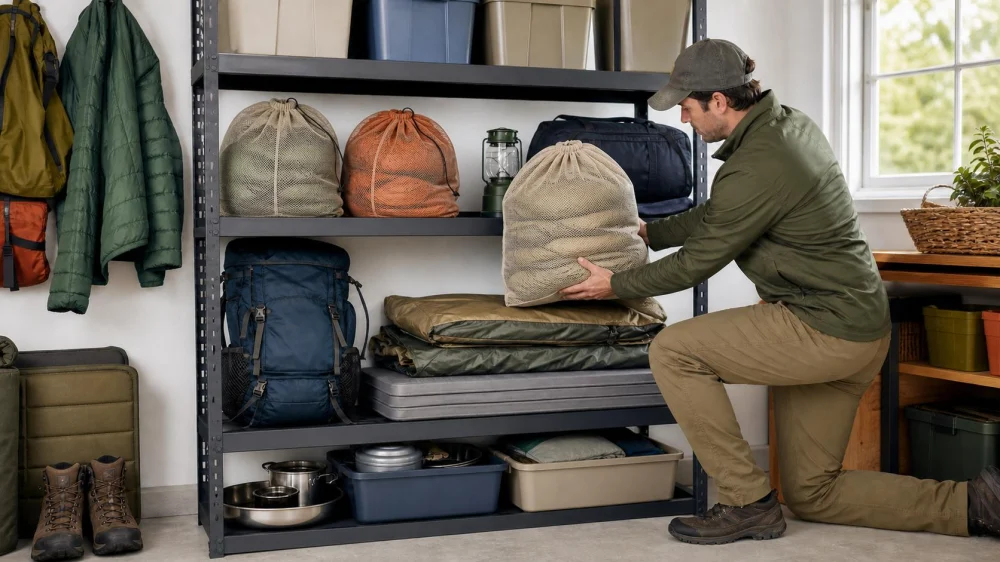
Store fabric clean, dry, and loosely folded or rolled according to its instructions. Avoid leaving a tent under heavy objects or in a tightly compressed field sack for long periods when the maker recommends relaxed storage. Keep poles and stakes contained so sharp ends cannot damage fabric.
Sleeping bags and insulated clothing
Insulation needs room to recover its loft. Use a large breathable storage sack or hang the item only when its care instructions permit and the hanger will not strain the fabric. Do not use a small compression sack for long-term storage unless the manufacturer explicitly approves it.
Sleeping pads
Clean and dry the surface, open or close valves as directed, and store the pad flat or loosely rolled when possible. Keep it away from sharp tools, pets, heat, and heavy loads. Self-inflating and closed-cell pads may have different storage needs.
Packs and clothing
Empty every pocket, remove food and rubbish, loosen straps, and let padding dry. Store clothing clean and dry. Keep waterproof shells away from oils and chemicals that could affect coatings.
Store cooking and hard gear
Wash food-contact items, let them dry fully, and store them so air can circulate. Food film and crumbs can create odours and attract pests. Keep knives and sharp tools protected, dry, and inaccessible to children.
For stoves, lanterns, water filters, and pumps, follow the product’s shutdown, cleaning, drying, and storage instructions. Some filters can be damaged by freezing after use because water remains inside. Others require specific treatment before storage. Do not assume that visibly empty equipment is internally dry.
Check first-aid and repair kits for used, expired, damaged, or missing supplies. Store medication according to its label rather than leaving it indefinitely with outdoor gear.
Separate batteries, fuel, and chemicals
Remove disposable or rechargeable batteries from devices for longer storage when the manufacturer recommends it. Inspect contacts for residue or corrosion. Store batteries in their original packaging or a purpose-made case so terminals cannot contact metal objects, and keep different battery types separated.
Fuel canisters, liquid fuel, fire starters, bear spray, insect repellent, cleaning products, and other chemicals need product-specific storage. Keep them in approved containers, upright when directed, away from heat, flames, ignition sources, children, and living spaces. Do not transfer fuel to an unlabelled container.
Storage and disposal rules vary by product and location. Follow the label, fire-safety guidance, and household hazardous-waste rules in your community. Do not keep leaking, swollen, corroded, punctured, or heat-damaged containers with normal gear.
Choose the right storage location
A useful storage space is cool, dry, ventilated, stable, and protected from pests. It should not experience roof leaks, standing water, prolonged direct sun, or extreme heat. Garages, sheds, attics, basements, and vehicle trunks can all have temperature or moisture problems depending on the building and climate.
Use clean shelves or containers to keep gear off the floor, but do not seal even slightly damp equipment in airtight plastic. Label containers by function and keep a simple inventory. Place heavy items low and avoid stacking weight on helmets, pads, stoves, water containers, or other equipment that can deform.
Keep food and scented items out of gear bins unless they are cleaned and stored in a pest-resistant way suitable for the location. Inspect periodically for droppings, chewing, insects, odour, moisture, and corrosion.
Post-trip storage checklist
- Unpack every vehicle, bag, pocket, and storage sack.
- Air and dry all fabric, insulation, foam, and enclosed equipment.
- Remove food, rubbish, dirt, and residues using approved methods.
- Inspect for damage and record repairs or replacements.
- Store insulated items without long-term compression.
- Protect sharp parts and loosen unnecessary strap tension.
- Service water, cooking, and lighting equipment as instructed.
- Separate batteries, fuel, chemicals, and medication appropriately.
- Update first-aid, repair, and spare-parts kits.
- Use a dry, stable, pest-resistant storage location.
- Schedule a gear check well before the next departure.
Limits and evidence notes
The recommendations here reflect general material-care and household-safety principles: moisture and residue should be removed, insulation should retain loft, loads should not deform equipment, and energy sources and chemicals require controlled storage. They do not replace instructions for a particular product.
Use the care label and manufacturer documentation for cleaning, drying, battery removal, valve position, filter treatment, fuel handling, repair, and storage duration. Use current local fire and hazardous-waste guidance for regulated materials. Professional inspection is appropriate when load-bearing, fuel, electrical, pressurised, or safety-critical equipment shows damage.
Frequently asked questions
Can I leave clean gear packed in the car?
A vehicle can experience extreme heat, cold, moisture, and theft risk. It is generally not ideal for long-term storage, especially for batteries, fuel, adhesives, foam, electronics, or medication.
Should sleeping bags stay in compression sacks?
Usually not for long periods. Many manufacturers recommend loose storage so insulation can maintain loft. Follow the instructions for the specific bag or quilt.
Can I store a tent in an airtight plastic bin?
Only after it is completely dry, and only if the tent’s instructions allow it. A bin can protect from pests and leaks but can also trap moisture. Periodic checks remain important.
How often should stored gear be checked?
Check after storage conditions change, after storms or leaks, and with enough time before a trip to complete repairs. Longer storage or humid and pest-prone locations justify more frequent inspection.
What should I do with a leaking fuel canister or battery?
Keep people away, avoid ignition sources, and follow the product’s emergency and disposal instructions plus local hazardous-waste guidance. Do not place a damaged item back in a general gear bin.
Can wet gear wait until the next day?
Dry it as soon as practical. If immediate full setup is impossible, unpack and improve airflow rather than leaving wet equipment compressed and sealed.
Next steps
Create one unpacking zone and process gear in the same order after every trip: empty, dry, clean, inspect, repair, and store. Record the location and condition of major items, then set a reminder to test equipment before the next departure. Good storage turns the end of one trip into a safer, faster start for the next.
More
How to Choose the Right Tent Size for Your Group
Jul 15, 2026Learn how to choose the right tent size for your group with practical camping tips covering capacity, comfort, weather conditions, gear storage, and group camping needs.
How to Camp Comfortably in a Small Car Without Feeling Cramped or Disorganized
Jul 05, 2026Learn how to camp comfortably in a small car without feeling cramped or disorganized, with smart space-saving tips, gear strategies, real camping stories, and practical setup advice.
18 Camping Tips to Pack Light and Travel More Efficiently
Jul 02, 2026Discover 18 camping tips that help you pack light and travel more efficiently, with real camping stories, gear strategies, and practical outdoor packing advice.

25 Best Campgrounds in the US for Every Outdoor Experience
Jun 29, 2026Discover 25 Best Campgrounds in the US That Offer the Perfect Outdoor Experience for All Levels, from beginner-friendly sites to advanced wilderness escapes, with tips, stories, and planning advice for unforgettable camping trips.
How to Camp Comfortably Without Electricity: Practical Off-Grid Guide
Jun 27, 2026Learn how to camp comfortably without electricity using practical off-grid strategies, gear choices, and real camping experiences. Discover how Camping With Kayla helps you enjoy modern comfort in nature.
22 Camping Hacks That Will Change Your Outdoor Experience
Jun 24, 2026Discover 22 camping hacks that will completely change your outdoor experience with practical tips, real-life camping stories, and expert advice for comfort, safety, and efficiency.