Medication at Camp: Temperature, Dry Storage, Doses, and Backup
Prepare medication for camping by confirming product-specific temperature, dry storage, refrigeration, dose reminders, device power, security, and emergency backup.
Medication at Camp: Temperature, Dry Storage, Doses, and Backup
On this page
- Quick answer
- Review every medicine before the trip
- Follow the exact temperature requirement
- Plan refrigeration without freezing
- Keep the dosing schedule reliable
- Secure medicine but keep it accessible
- Protect devices, batteries, and sharps
- If medicine gets hot, wet, frozen, or damaged
- Carry a medical backup plan
- Medication packing checklist
- Important limitations
- Evidence notes
- FAQ
- Next steps
Quick answer
Before camping, ask a pharmacist or prescriber how each prescription, over-the-counter medicine, injectable, test strip and medical device should be stored and used for the exact trip conditions. Keep medicines in labelled original containers, protected from heat, freezing, moisture and direct sun. Pack the current list, dosing instructions, enough supply plus an authorised backup, and emergency contacts.
Do not change or stop a medicine because of heat without clinician guidance. Never leave medicines in a parked vehicle or place temperature-sensitive products directly on ice. If storage limits may have been exceeded, isolate the item and contact a pharmacist or manufacturer for product-specific advice.
Review every medicine before the trip
List the medicine name, strength, dose, time, purpose, prescriber, pharmacy, allergies and refill status. Include inhalers, rescue medicines, insulin, injectable treatments, controlled medicines, eye drops, patches, liquids, test strips, glucose supplies and powered devices.
Read the pharmacy label and manufacturer storage instructions. Check expiration dates and obtain refills early enough to avoid running out. Ask how schedule, diet, activity, altitude, heat, dehydration and time-zone changes affect the plan.
Follow the exact temperature requirement
“Room temperature” is a defined product condition, not whatever temperature exists inside a tent or car. Some medicines require refrigeration; others must not freeze or become too hot. FDA advises reading the label because improper storage can reduce effectiveness even before the expiration date.
Use a dedicated thermometer or data logger when the pharmacist or manufacturer recommends monitoring. Keep the medicine container shaded and dry, but do not improvise a new temperature range from a general article.
Plan refrigeration without freezing
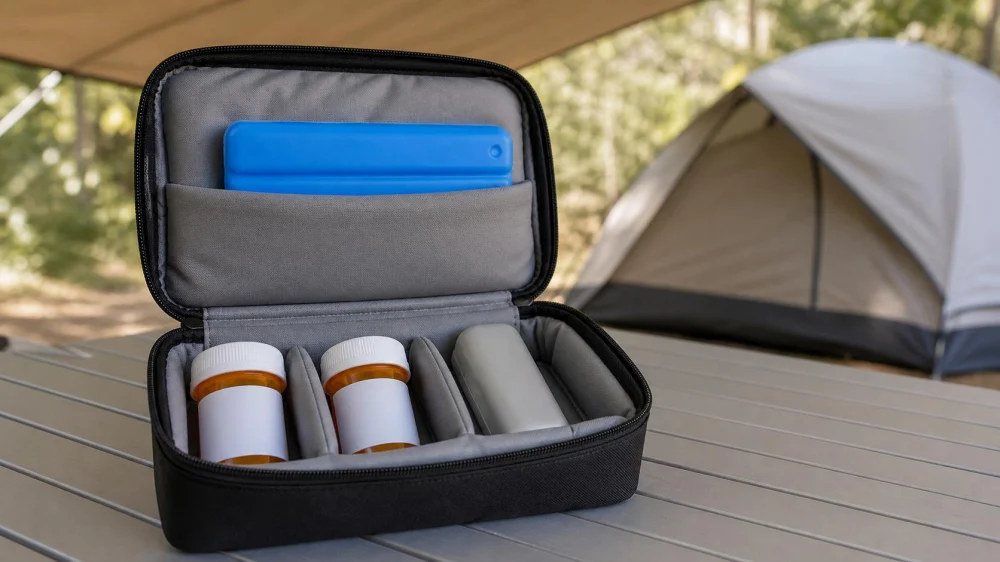
For medicine requiring cooling, use a qualified insulated system recommended for that product and trip length. Separate it from direct contact with ice or frozen packs unless the instructions specifically allow contact. Protect it from meltwater, condensation and food contamination.
Confirm how long the system maintains the required range, how temperature will be checked, where supplies can be re-cooled, and what happens during a failed power source. Do not rely on a campground office refrigerator without explicit permission and a secure handover plan.
Keep the dosing schedule reliable
Use a written schedule, watch or offline alarm and mark each dose only after taking it. Keep morning and evening doses organised without combining different medicines into an unlabelled container. If a weekly organiser is authorised, retain a copy of all labels and protect it from moisture.
Do not double a missed dose unless the label or clinician instructs you to. For vomiting, diarrhoea, dehydration, a missed dose or inability to eat, use the product-specific sick-day plan or contact a clinician.
Secure medicine but keep it accessible
Store medicine out of sight and reach of children and away from anyone for whom it is not prescribed. Use a locked container for controlled or high-risk products when appropriate, but ensure the person who may need a rescue medicine can reach it immediately.
Wildlife and campground storage rules can affect scented medical supplies, sharps and packaging. Ask park staff how to comply without making emergency medicine inaccessible. Never leave critical medicine unattended at a public charging or wash area.
Protect devices, batteries, and sharps
Pack device manuals, spare batteries, charging cables, power banks rated for the equipment, and a non-electric backup when prescribed. Keep electronics within their operating temperature and moisture limits. Test the complete setup before leaving.
Carry enough needles, lancets, infusion sets and other consumables plus a puncture-resistant sharps container. Do not put loose sharps in rubbish or recycling. Plan lawful disposal after the trip.
If medicine gets hot, wet, frozen, or damaged
Do not guess from appearance alone. Mark the product so it is not used accidentally, note the temperature, duration and event, keep the original packaging, and contact a pharmacist or manufacturer. Replace it as soon as advised.
FDA emergency insulin guidance warns that extreme temperatures can reduce effectiveness and that insulin should not be frozen. Product instructions differ, so do not apply one insulin rule or emergency exception to another medicine.
Carry a medical backup plan
Give a trusted companion the relevant emergency steps, medicine location and signs that require help. Carry clinician, pharmacy, manufacturer, poison-control and emergency numbers on paper as well as in the phone. Know the campsite address, coordinates, gate access and nearest staffed facility.
Bring the prescribed rescue medicine and know how to use it. Call 911 for severe breathing difficulty, loss of consciousness, seizure, signs of anaphylaxis, severe low blood sugar that cannot be treated safely, or another medical emergency.
Medication packing checklist
- Pharmacist reviewed trip conditions and storage.
- Original labelled containers and current medicine list packed.
- Enough supply and authorised backup available.
- Temperature-control system tested.
- Offline dose reminders and missed-dose instructions saved.
- Medicines secured from children, moisture and theft.
- Device power, consumables, sharps container and emergency contacts packed.
Important limitations
This is general U.S. trip-planning information, not medical, pharmacy or product advice. Storage limits, stability, dosing, device requirements and emergency steps vary by medicine and patient. Follow the current label and personalised advice from a pharmacist, prescriber or manufacturer; call 911 for a medical emergency.
Evidence notes
FDA guidance advises following medicine-specific storage labels, keeping most medicines cool and dry, and protecting products that need refrigeration from temperature excursions. FDA insulin information emphasises keeping insulin away from direct heat and sunlight and avoiding freezing. CDC heat guidance recommends a plan for refrigerated medicines and powered medical devices and warns against changing medicines without clinician advice.
FAQ
Can I keep medicine in the car?
A parked vehicle can become extremely hot or cold; use the product-specific storage plan instead.
Can refrigerated medicine touch ice?
Not unless its instructions allow it; direct contact can freeze some products.
Should I use a pill organiser?
Ask your pharmacist and retain complete labels and identification for every medicine.
What if I miss a dose?
Follow the label or clinician's missed-dose instructions; do not automatically double it.
Can heat change how my medicine affects me?
Yes for some medicines; make a personalised hot-day plan with your clinician.
What if the medicine looks normal after overheating?
Appearance cannot prove potency; contact a pharmacist or manufacturer.
Next steps
Take the campsite forecast and full medicine list to your pharmacist. Confirm storage, dosing, missed-dose and backup instructions for each item, test the cooling and power setup, and give one trusted camper the emergency plan.
More
How to Choose the Right Tent Size for Your Group
Jul 15, 2026Learn how to choose the right tent size for your group with practical camping tips covering capacity, comfort, weather conditions, gear storage, and group camping needs.
How to Camp Comfortably in a Small Car Without Feeling Cramped or Disorganized
Jul 05, 2026Learn how to camp comfortably in a small car without feeling cramped or disorganized, with smart space-saving tips, gear strategies, real camping stories, and practical setup advice.
18 Camping Tips to Pack Light and Travel More Efficiently
Jul 02, 2026Discover 18 camping tips that help you pack light and travel more efficiently, with real camping stories, gear strategies, and practical outdoor packing advice.

25 Best Campgrounds in the US for Every Outdoor Experience
Jun 29, 2026Discover 25 Best Campgrounds in the US That Offer the Perfect Outdoor Experience for All Levels, from beginner-friendly sites to advanced wilderness escapes, with tips, stories, and planning advice for unforgettable camping trips.
How to Camp Comfortably Without Electricity: Practical Off-Grid Guide
Jun 27, 2026Learn how to camp comfortably without electricity using practical off-grid strategies, gear choices, and real camping experiences. Discover how Camping With Kayla helps you enjoy modern comfort in nature.
22 Camping Hacks That Will Change Your Outdoor Experience
Jun 24, 2026Discover 22 camping hacks that will completely change your outdoor experience with practical tips, real-life camping stories, and expert advice for comfort, safety, and efficiency.