
Nighttime Camp Toilet Trips: Light the Route and Stay Oriented
Plan nighttime camp toilet trips by checking the route in daylight, preparing shoes and backup light, staying oriented, and following local sanitation rules.
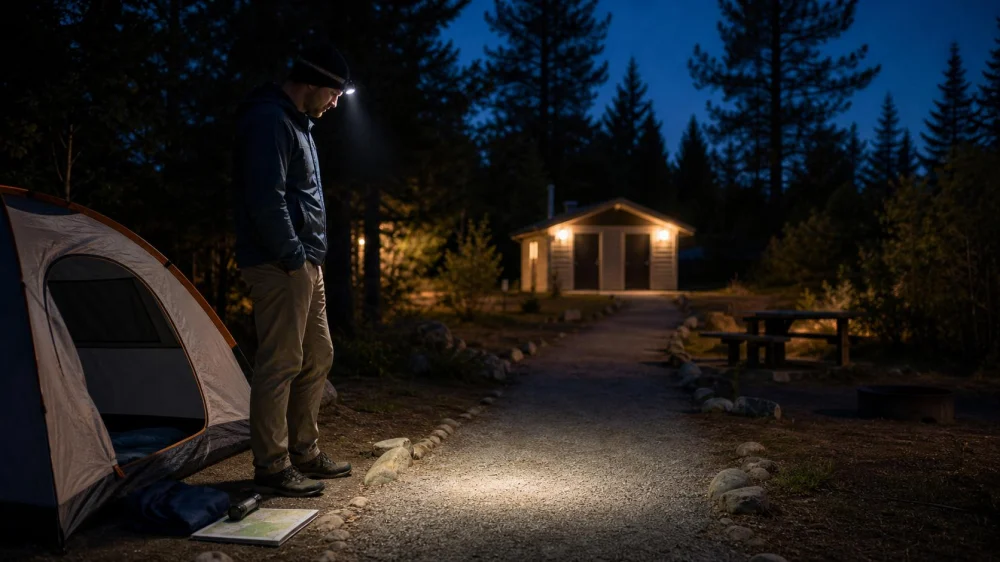
Nighttime Camp Toilet Trips: Light the Route and Stay Oriented
On this page
Quick answer
Before dark, identify the approved toilet, safest route, hazards, and campsite marker. Keep shoes, a headlamp, spare light, toilet supplies, and site information together. At night, wake fully, tell a companion when appropriate, stay on the designated path, protect night vision, and follow the campground or land manager’s sanitation rules.
Plan the route in daylight
Walk from the sleeping area to the toilet while it is light. Note the site number, loop name, turns, landmarks, surface changes, steps, roots, curbs, water, traffic, and places where the path branches. Find the accessible route if anyone needs a firm surface, handrails, more space, or a shorter distance.
Ask the host or ranger which toilets remain open overnight and whether a code, key, light switch, or special instruction applies. A map icon may not show a seasonal closure or construction detour. Do not create a shortcut through another campsite, sensitive plants, a drainage, steep ground, or wildlife habitat.
Keep essentials ready
Place closed-toe shoes where they can be reached without stepping outside barefoot. Keep a working headlamp or flashlight, spare batteries or backup light, toilet paper when facilities do not supply it, hand-cleaning supplies, and required medication in a consistent location. Protect electronics and paper from rain.
Do not leave lights, shoes, or scented toiletries loose outside where weather or animals can reach them. Store attractants as the land manager requires. Keep vehicle keys separate from toilet supplies so they are not dropped or locked away. Test each person’s light and adjust the head strap before bedtime.
Walk without losing the site
Sit up slowly, become fully alert, put on shoes and suitable layers, and take the light in hand before opening the shelter. Scan the ground and doorway for obstacles or animals. Use a low, downward beam that illuminates the next few steps without shining into tents, faces, roads, or wildlife.
Stay on the known route. Do not rely only on identical tents, vehicles, or darkness-altered landmarks. Carry the campground map or a note with the site and loop. If disoriented, stop, stay in a safe visible place, and contact a companion, host, or ranger rather than wandering farther. Use emergency services for an actual emergency.
Use facilities cleanly
Check the floor and seat before use, close the door without trapping fingers, and keep the light secure. Follow signs about toilet paper, waste, water, and handwashing. Never put wipes, menstrual products, nappies, rubbish, food, or chemicals into a vault or flush toilet unless the facility explicitly permits it.
Use the provided bin or pack waste according to local rules. Wash hands with soap and safe water where available; otherwise use an appropriate hand-cleaning method and wash properly when possible. Leave the space usable for the next camper. Report an overflowing, damaged, unlit, or unsafe facility instead of attempting a repair.
Follow backcountry rules
Where no toilet exists, sanitation rules vary by park, ecosystem, season, altitude, water proximity, and permit. Some places allow properly located catholes; others require every solid-waste item to be packed out in an approved system. Desert, alpine, canyon, river, snow, and heavily visited areas can have special requirements.
Read the current land manager’s instructions before the trip and carry the required supplies. Do not guess distances in darkness, approach a cliff or river edge, or dig where prohibited. Pack out toilet paper and hygiene products when required, and never leave bags at a trailhead, fire ring, or campsite.
Support children and companions
Decide who accompanies children and anyone who may be unsteady, unfamiliar with the site, or affected by medication, fatigue, vision, mobility, or cognition. Use the route suited to that person, not the shortest route. Keep pets leashed where required and do not tie them unattended outside a toilet.
For privacy, establish a simple check-in plan without announcing personal details across camp. A companion can wait at a respectful distance with a backup light. Never send a child alone into an unfamiliar campground at night. If someone does not return at the agreed time, check the known route and alert the host promptly.
Frequently asked questions
Should I leave a lantern on all night?
Usually not. Constant bright light disturbs other campers and wildlife. Keep a light immediately accessible and use it when needed.
Can I use my phone as the only light?
A phone can help, but battery, weather, or a drop can disable it. A tested headlamp plus backup is more dependable.
What if the campground toilet is closed?
Contact the host or land manager and follow the approved alternative. Do not improvise beside the campsite or path.
Evidence and limitations
This guide reflects common campground, Leave No Trace, and land-manager practice: plan routes in daylight, carry dependable light, stay on paths, dispose of waste as directed, and adapt for the group. Sanitation rules and wildlife precautions differ by location. Current posted and permit instructions override general guidance.
Conclusion and next steps
At check-in, locate the open toilet and walk the route before sunset. Prepare shoes, two light sources, supplies, layers, and site details beside the bed. At night, move slowly on the known path and keep the campground quiet. Good preparation turns a routine trip into a short, predictable task.
More
How to Choose the Right Tent Size for Your Group
Jul 15, 2026Learn how to choose the right tent size for your group with practical camping tips covering capacity, comfort, weather conditions, gear storage, and group camping needs.
How to Camp Comfortably in a Small Car Without Feeling Cramped or Disorganized
Jul 05, 2026Learn how to camp comfortably in a small car without feeling cramped or disorganized, with smart space-saving tips, gear strategies, real camping stories, and practical setup advice.
18 Camping Tips to Pack Light and Travel More Efficiently
Jul 02, 2026Discover 18 camping tips that help you pack light and travel more efficiently, with real camping stories, gear strategies, and practical outdoor packing advice.

25 Best Campgrounds in the US for Every Outdoor Experience
Jun 29, 2026Discover 25 Best Campgrounds in the US That Offer the Perfect Outdoor Experience for All Levels, from beginner-friendly sites to advanced wilderness escapes, with tips, stories, and planning advice for unforgettable camping trips.
How to Camp Comfortably Without Electricity: Practical Off-Grid Guide
Jun 27, 2026Learn how to camp comfortably without electricity using practical off-grid strategies, gear choices, and real camping experiences. Discover how Camping With Kayla helps you enjoy modern comfort in nature.
22 Camping Hacks That Will Change Your Outdoor Experience
Jun 24, 2026Discover 22 camping hacks that will completely change your outdoor experience with practical tips, real-life camping stories, and expert advice for comfort, safety, and efficiency.