
No Signal at Camp? Build a Backup Communication Plan
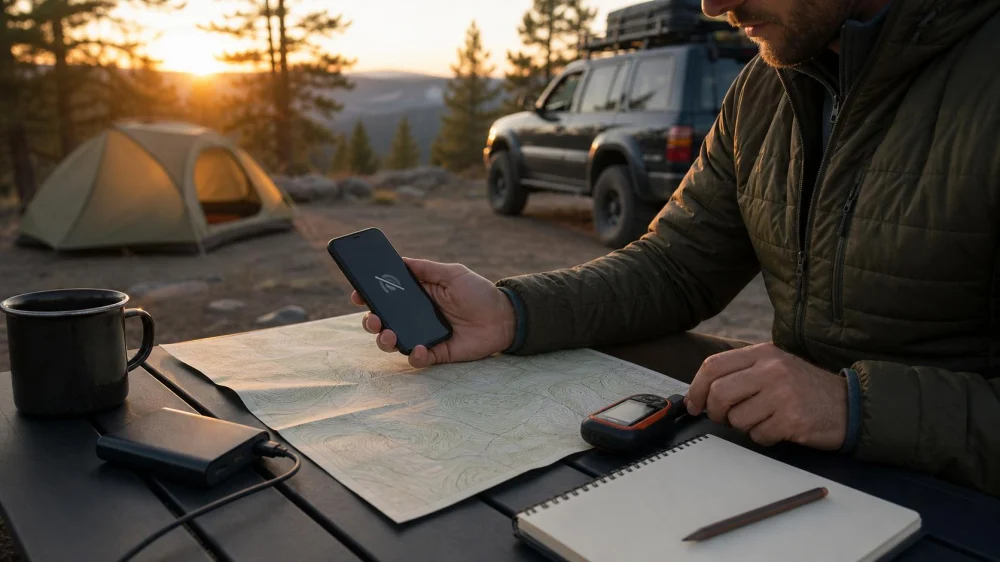
Prepare for camping without mobile service. Build a trip contact plan, compare backup devices, define check-ins and know what a missed update means.
No Signal at Camp? Build a Backup Communication Plan
On this page
- Quick answer
- Why phone coverage is not a plan
- Create a trip contact system
- Compare backup communication tools
- Decide what each message means
- Pre-departure communication checklist
- What to do after a missed check-in
- Limitations and safety notes
- Sources and evidence notes
- Frequently asked questions
- Conclusion and next steps
Quick answer
Before camping outside reliable mobile coverage, give a trusted contact your route, campsite, vehicle details, group information and return deadline. Agree on check-in times and exactly what the contact should do if you miss one. Carry a suitable backup device when risk and remoteness justify it, test it before departure, and never treat an unconfirmed message as delivered.
A camping communication plan is a shared set of locations, times, tools and actions that helps campers and a home contact respond to changes or an emergency. It works only when both sides understand the same plan and know the difference between a delayed routine update and a request for urgent help.
Why phone coverage is not a plan
Coverage maps, app indicators and past experience cannot guarantee service at a specific campsite. Terrain, vegetation, distance, network maintenance, congestion, weather and device condition can affect connection. A phone may also fail because of a depleted battery, damage, heat, cold or water.
Before the trip, review information from the land manager, campground and your mobile provider, but plan for no service if the location is remote or coverage is uncertain. Downloading maps can support navigation, yet an offline map does not send a message or summon help.
Do not climb unstable ground, enter restricted areas or drive while handling a phone merely to find a signal. Moving away from the planned route can make a search harder and may create a second problem.
Create a trip contact system
Choose a responsible person who will not be on the trip and who is available around the agreed return window. Give that person useful, current information:
- Names and reliable descriptions of group members.
- Vehicle make, colour, licence plate and planned parking location.
- Campground, site number when known, route and intended side trips.
- Departure, check-in and expected return times with the correct time zone.
- Equipment, vehicle and communication devices being carried.
- Relevant medical or mobility information the group authorises them to share.
- Official land-manager and local emergency contact information.
Tell the contact how much schedule flexibility is normal. A missed casual evening update should not automatically mean the same thing as passing a firm overdue deadline after a remote trip.
Compare backup communication tools
A backup tool should match the terrain, trip risk, group skills and local service availability. Options may include a satellite messenger, personal locator beacon, satellite phone, two-way radio or a staffed campground check-in process. These tools have different networks, functions and emergency procedures.
- Satellite messenger: May support preset or two-way messages and an SOS function, depending on the device and active service. It needs a suitable view of the sky and correct setup.
- Personal locator beacon: Intended for distress alerting rather than routine conversation. Registration and legal requirements apply.
- Satellite phone: Can allow voice contact where its network and sky view work, but power, subscription and operating limits still matter.
- Two-way radio: Useful within a compatible group and range; it does not automatically connect to emergency services.
- Campground contact: A host or ranger process may help at an established site, but staffing and hours must be confirmed.
Read official instructions, register devices when required, keep service active, update software before leaving and practise outdoors in a permitted setting. Carrying a device without understanding its indicators and message status creates false confidence.
Decide what each message means
Create a small message protocol before departure. Keep routine messages simple and include the location and status when possible.
- “At camp, all well”: Confirms arrival at the planned location.
- “Delayed, all well”: Gives a new check-in or return time without requesting assistance.
- “Plan changed”: Identifies the new route or campsite and timing.
- “Need non-emergency help”: States the problem and requested action when communication allows.
- Emergency alert: Used only according to the device instructions and circumstances requiring urgent assistance.
These labels are planning concepts, not universal device commands. Configure only the messages supported by your tool. Both sender and contact should know that “sent” may not mean “delivered”; confirm how the device displays successful transmission.
Pre-departure communication checklist
- Route and campsite details shared with the home contact.
- Firm overdue deadline and escalation steps agreed.
- Current weather, closures and alerts reviewed through official sources.
- Primary phone charged and protected from conditions.
- Backup device registered, subscribed, updated and tested.
- Emergency contacts stored offline and written on paper.
- Spare power suitable for the devices and trip conditions packed.
- Every camper knows where the device is and who can operate it.
- Plan update sent before any deliberate route change.
- Home contact notified immediately after safe return.
Protect sensitive trip and medical details. Share them with the trusted contact rather than posting an empty-home schedule publicly.
What to do after a missed check-in
The home contact should follow the agreed steps, not improvise a risky search. A plan might include checking for a delayed message, attempting the agreed contact methods, confirming known travel disruptions and then calling the appropriate authority when the overdue threshold or circumstances warrant it.
When contacting authorities, provide facts: the last confirmed location and time, intended route, group and vehicle details, equipment, medical concerns and devices carried. Do not send untrained friends into remote terrain unless authorities direct them.
Campers who become delayed but are safe should send an update through the best available method. If leaving the planned route is necessary, record the change and avoid scattering the group. In an emergency, follow local guidance and the device's official SOS procedure.
Limitations and safety notes
This article provides general planning guidance for camping in the United States. Communication coverage, emergency numbers, device rules and rescue processes vary by location, land manager and technology.
- No consumer communication tool guarantees connection or rescue within a particular time.
- Do not activate an SOS feature for testing unless the manufacturer and responsible service explicitly provide a test mode.
- False alerts can endanger responders; accidental activations should be handled according to official instructions.
- Battery performance can change in heat and cold. Follow manufacturer storage and operating limits.
- Communication equipment does not replace navigation, first aid, weather judgment or an appropriate turnaround decision.
Sources and evidence notes
This guide reflects broad outdoor-safety practice: leave a trip plan, define an overdue threshold, use equipment within its documented limits, confirm message delivery and provide responders with precise last-known information. Verify local procedures with the relevant land manager and public-safety authority, and follow the device manufacturer and service provider for registration, testing, coverage and emergency use.
Frequently asked questions
Is an offline map enough when there is no signal?
No. It can support navigation if the device works, but it cannot provide communication by itself. Carry the navigation and communication tools appropriate to the route and know how to use both.
Should I buy a satellite messenger for every camping trip?
Not necessarily. Consider remoteness, terrain, group needs, trip duration and available staffed services. When choosing a device, compare functions, network coverage, subscription, battery, registration and operating requirements.
Who should be my home contact?
Choose a reliable adult who understands the plan, will be reachable near the overdue time and can communicate clearly with authorities. Give them the information and permission needed for that role.
Can I test an SOS button before leaving?
Use only the approved test function and process described by the manufacturer or response service. Never trigger a live distress alert merely to see whether it works.
What if I change campsites during the trip?
Update your contact before the change whenever communication is available. Include the new location, route and expected check-in. If you cannot send the update, recognise that the original trip plan is what a search may use.
Conclusion and next steps
A strong communication plan gives both campers and the home contact clear facts, deadlines and actions. Before your next trip, write a one-page route and contact plan, choose an overdue time, test your devices using approved methods and brief the whole group. If the backup cannot match the trip's risk, change the location, route or schedule.
More
How to Choose the Right Tent Size for Your Group
Jul 15, 2026Learn how to choose the right tent size for your group with practical camping tips covering capacity, comfort, weather conditions, gear storage, and group camping needs.
How to Camp Comfortably in a Small Car Without Feeling Cramped or Disorganized
Jul 05, 2026Learn how to camp comfortably in a small car without feeling cramped or disorganized, with smart space-saving tips, gear strategies, real camping stories, and practical setup advice.
18 Camping Tips to Pack Light and Travel More Efficiently
Jul 02, 2026Discover 18 camping tips that help you pack light and travel more efficiently, with real camping stories, gear strategies, and practical outdoor packing advice.

25 Best Campgrounds in the US for Every Outdoor Experience
Jun 29, 2026Discover 25 Best Campgrounds in the US That Offer the Perfect Outdoor Experience for All Levels, from beginner-friendly sites to advanced wilderness escapes, with tips, stories, and planning advice for unforgettable camping trips.
How to Camp Comfortably Without Electricity: Practical Off-Grid Guide
Jun 27, 2026Learn how to camp comfortably without electricity using practical off-grid strategies, gear choices, and real camping experiences. Discover how Camping With Kayla helps you enjoy modern comfort in nature.
22 Camping Hacks That Will Change Your Outdoor Experience
Jun 24, 2026Discover 22 camping hacks that will completely change your outdoor experience with practical tips, real-life camping stories, and expert advice for comfort, safety, and efficiency.