
How to Pack Wet Camping Gear for the Drive Home
Separate and transport wet camping gear without soaking dry items, then unpack, clean and dry everything promptly at home before long-term storage.
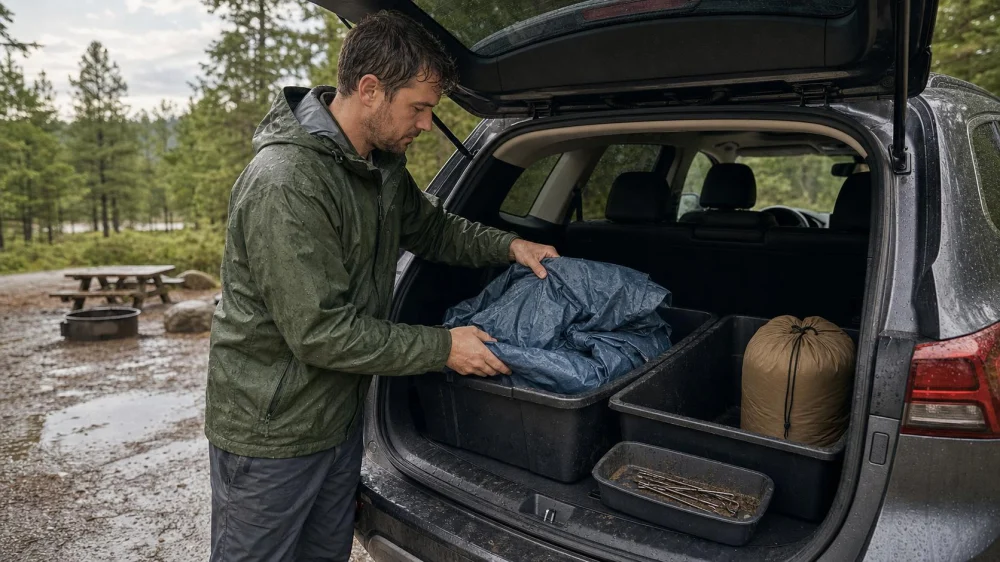
How to Pack Wet Camping Gear for the Drive Home
On this page
Quick answer
Shake off loose water and mud, separate wet shelter from dry sleep gear, and place damp items in a waterproof tub or temporary bag for the journey. Keep loads secure and away from vehicle controls. The container is transport protection, not storage: unpack as soon as you reach home, spread every layer to dry fully, then clean, inspect and store it loosely.
This guide is for ordinary US camping gear after rain or morning dew. Manufacturer care instructions and campground checkout rules take priority.
Sort before packing
Create separate zones before folding anything:
- Dry and clean: sleeping bags, clothes, electronics, paper maps and food that never became damp.
- Wet but cleanable: tent fly, tent body, footprint, tarp, guy lines and rain jackets.
- Muddy: stakes, boots, mats, ground sheets and tools.
- Food-contact items: cookware, coolers and utensils that need normal cleaning and food-safety handling.
- Potentially contaminated: anything exposed to fuel, sewage, animal waste, floodwater, chemicals or heavy smoke.
Do not roll wet fabric around a dry sleeping bag or insulated pad. Keep fuel and chemicals in their approved containers and never inside a bag with textiles or food.
Take down wet shelter safely
- Pack the dry interior first. Move bedding and electronics to shelter or the vehicle before opening the tent to more rain.
- Remove loose dirt. Sweep or wipe the floor without grinding grit into coatings.
- Take a reference photo. If the setup is unfamiliar, photograph pole and fly orientation for drying and reassembly.
- Release tension gradually. Remove gear from vestibules, then loosen guylines and poles without letting fabric blow away.
- Shake carefully. Two people can hold the shelter away from faces and other campsites while shedding loose water.
- Bundle components separately. Keep muddy stakes outside the tent fabric and protect poles from bending.
Do not take down a shelter during lightning, dangerous wind, flash flooding or falling-tree conditions. Follow campground and emergency guidance, even if checkout is delayed.
Contain water without trapping it long term
A lidded plastic tub, lined cargo tray or heavy temporary bag can keep the vehicle dry. Choose a container large enough that coated fabric is not forced into sharp folds. A mesh bag can work for damp ropes or small items when water will not drip onto the vehicle.
Mark the wet container in a way your household understands and keep it separate from the normal storage sack. Do not compress a wet tent into its tight original bag simply because it fits.
For a long drive, a closed waterproof container protects the car but also traps humidity. Open it only at a safe stop where water will not damage belongings or violate site rules. The real solution is prompt unpacking at the destination.
Load the vehicle securely
Place heavy tubs low and forward in the cargo area, within vehicle load limits. Use cargo anchors or barriers designed for the vehicle so a hard container cannot slide or strike passengers during braking.
Keep wet items away from pedals, airbags, seat-belt latches, electrical equipment and visibility through windows. Do not hang damp fabric where it blocks mirrors or driver movement.
Roof loads must use an approved rack and weather-secure attachment. A loose tarp is not a safe substitute. Never place fuel in the passenger compartment; follow fuel-container and vehicle guidance.
Ventilate the cabin as conditions safely allow. Strong fuel, exhaust, chemical or sewage odour requires stopping and addressing the source, not simply opening a window.
Unpack and dry at home
- Unload wet gear first. Do not leave the vehicle packed overnight or in sun.
- Choose a suitable drying area. Use a covered outdoor line, garage with safe ventilation, or indoor space protected from dripping.
- Open every layer. Separate fly, tent body, footprint, stuff sacks, pole bags and stake bags.
- Support fabric broadly. Avoid one sharp hook or line that stretches coatings. Keep fabric away from heaters and open flame.
- Turn and inspect. Hidden seams, pockets and folded corners hold water longer than broad panels.
- Dry poles and stakes. Wipe dirt and water, extend telescoping sections when appropriate, and follow care instructions.
Do not use high heat, a clothes dryer or direct heater unless the manufacturer explicitly allows it. Heat can damage coatings, seam tape, elastic and fabric.
Clean and inspect before storage
Once the urgent drying is under control, clean mud with the method recommended for the material. Mild water and a soft cloth may be enough; household detergents, bleach, solvents and pressure washing can damage waterproof coatings.
Inspect seams, zips, mesh, poles, guylines, stakes and coatings. Note repairs before storing. If mildew, persistent odour, delamination or contamination remains, contact the manufacturer or a gear-repair professional before using the shelter again.
Store only when every component is fully dry. Use a cool, dry location away from pests and sunlight. Loose storage can reduce long-term creasing and compression, while the compact stuff sack remains useful for transport.
Wet-gear checklist
- Dry sleep gear and electronics are separated first.
- Muddy stakes and boots do not touch tent fabric.
- Wet textiles go into a temporary waterproof transport container.
- Fuel, chemicals and contaminated items remain separate.
- Vehicle loads are low, secured and within limits.
- Windows, mirrors, pedals, airbags and seat belts remain clear.
- Wet gear is unloaded immediately at home.
- Every fabric layer, pole, line and sack dries fully.
- Damage and odour are addressed before storage.
Limitations and safety notes
Fabric coatings, down or synthetic insulation, pole materials and cleaners have different care requirements. Use the product label and manufacturer instructions for washing, heat, reproofing and repairs.
Gear exposed to sewage, floodwater, fuel, chemicals, animal waste or wildfire residue may need specialist cleaning or disposal. Avoid bringing contaminated items into living areas until the risk is assessed.
Frequently asked questions
Can I fold a wet tent?
For transport, make a loose temporary bundle if necessary. Avoid sharp repeated folds and unpack it promptly to dry.
Is a bin better than a plastic bag?
A rigid bin can contain water and protect fabric from cargo, while a bag packs smaller. Either is temporary; both trap moisture when closed.
Can I dry a tent in direct sun?
Short exposure may help, but prolonged ultraviolet light can damage fabrics and coatings. Follow the manufacturer's guidance and move it to shade once dry.
What if I cannot unpack immediately?
Unpack at the first safe opportunity. Until then, keep the container cool, out of direct sun and separate from dry gear, but do not treat that as storage.
Should I wash the tent after every wet trip?
Not automatically. Dry it fully and remove dirt using the least aggressive approved method. Unnecessary washing can wear coatings.
Sources and evidence notes
The guidance follows broad outdoor-equipment care and vehicle-loading practice: separate wet from dry, avoid long-term compression while damp, secure cargo, avoid high heat and dry every layer before storage.
No universal cleaner, drying time, storage bag or decontamination method is assumed. Product materials, exposure and manufacturer instructions control the process.
Next steps
Before the trip, put one lidded cargo tub, two heavy temporary bags and a few absorbent cloths in the vehicle. If camp is wet at checkout, use them to isolate shelter and mud. At home, set a reminder to unload the wet container first and spread every component before unpacking anything else.
More
How to Choose the Right Tent Size for Your Group
Jul 15, 2026Learn how to choose the right tent size for your group with practical camping tips covering capacity, comfort, weather conditions, gear storage, and group camping needs.
How to Camp Comfortably in a Small Car Without Feeling Cramped or Disorganized
Jul 05, 2026Learn how to camp comfortably in a small car without feeling cramped or disorganized, with smart space-saving tips, gear strategies, real camping stories, and practical setup advice.
18 Camping Tips to Pack Light and Travel More Efficiently
Jul 02, 2026Discover 18 camping tips that help you pack light and travel more efficiently, with real camping stories, gear strategies, and practical outdoor packing advice.

25 Best Campgrounds in the US for Every Outdoor Experience
Jun 29, 2026Discover 25 Best Campgrounds in the US That Offer the Perfect Outdoor Experience for All Levels, from beginner-friendly sites to advanced wilderness escapes, with tips, stories, and planning advice for unforgettable camping trips.
How to Camp Comfortably Without Electricity: Practical Off-Grid Guide
Jun 27, 2026Learn how to camp comfortably without electricity using practical off-grid strategies, gear choices, and real camping experiences. Discover how Camping With Kayla helps you enjoy modern comfort in nature.
22 Camping Hacks That Will Change Your Outdoor Experience
Jun 24, 2026Discover 22 camping hacks that will completely change your outdoor experience with practical tips, real-life camping stories, and expert advice for comfort, safety, and efficiency.