
Tent Condensation: Ventilate, Separate Gear, and Dry Out
Reduce tent condensation with better site choice, safe ventilation, dry gear separation, protected bedding, morning drying, and proper home storage.
Tent Condensation: Ventilate, Separate Gear, and Dry Out
Table of contents
- Why condensation forms inside a tent
- Choose a site that supports airflow
- Use vents, doors, and fly spacing
- Reduce moisture brought inside
- Protect the sleep system and gear
- Dry the tent safely in the morning
- Manage condensation in rain and cold
- Tell condensation from a possible leak
- Dry and store the tent at home
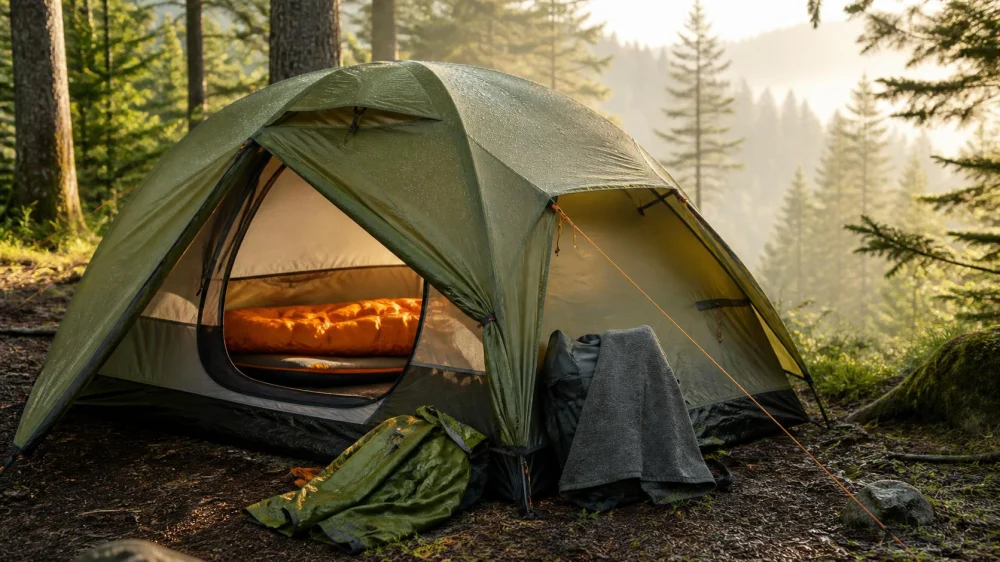
Tent condensation is water vapour turning into droplets on a cool fabric surface. It can occur even when the tent is waterproof and no rain enters. People breathe out moisture, damp ground releases moisture, and wet clothes add more. When warm humid air meets a cold fly or tent wall, droplets form and may fall or transfer to sleeping bags and clothing.
No tent setup eliminates condensation in every condition. Clear humid nights, still air, wet vegetation, cold temperatures, and multiple occupants can all increase it. The practical goal is to improve airflow, keep wet gear separated, prevent contact with damp walls, and dry the shelter as soon as conditions allow. Always preserve weather protection and personal warmth while ventilating.
Why condensation forms inside a tent
Every sleeper adds moisture through breathing and perspiration. Cooking, boiling water, drying clothes, and storing wet equipment inside add much more. Moist air rises and reaches the cold inner surface of a single-wall tent or the underside of a rainfly. If that surface is below the dew point, water condenses.
In a double-wall tent, the breathable inner body helps separate occupants from the wet fly. Droplets can still form on the fly and may transfer if the inner tent touches it. A single-wall shelter combines weather protection and living space in one fabric, so effective vent use and careful gear placement can be especially important.
Condensation is not proof of a failed waterproof coating. However, water may also enter through damaged fabric, unsealed seams, an open vent, pooling, or splashback. Observe when and where moisture appears before deciding on a repair.
Choose a site that supports airflow
Use the designated tent pad or established durable surface. Within that area, avoid the lowest depression where cold air and water collect. A spot very close to a lake, marsh, or saturated meadow may be more humid than a slightly higher permitted site. Follow all setback rules and do not create a new clearing for better airflow.
Look for natural ventilation without exposing the tent to dangerous wind. Dense shrubs can block airflow, while a fully exposed ridge may experience strong gusts and severe weather. Check the forecast and local guidance. Position the shelter according to the manufacturer’s instructions, using the prevailing breeze to support vents when conditions are mild.
Keep the floor on ground that drains rather than in a channel. Use an appropriately sized footprint if recommended. A footprint should not protrude beyond the tent floor, because exposed edges can collect rain and direct it underneath.
Use vents, doors, and fly spacing
Open high and low vents to encourage moist air to escape, provided rain and blowing snow cannot enter. Prop rainfly vents fully with their designed supports. In calm, dry weather, opening part of opposing doors can create cross-ventilation. Use mesh panels to limit insects rather than closing every solid panel automatically.
Stake and tension the fly so it remains separated from the inner tent. Follow the pitch sequence and use all necessary attachment points for the conditions. A sagging fly can touch the inner wall and transfer moisture. Re-tension fabric after it becomes wet or after temperatures change, but do not over-tighten it or stress seams and poles.
Balance airflow with warmth and weather. Ventilation exchanges humid air; it does not act like a heater. In severe wind, rain, snow, or blowing dust, adjust openings to prevent hazardous exposure and follow the shelter instructions. Never seal a tent and then use combustion to warm it.
Reduce moisture brought inside
Remove wet outer layers at the entrance or in a protected vestibule when the design permits. Keep damp boots, rainwear, towels, and packs away from bedding. Store them in breathable or water-resistant containers suited to the conditions without blocking exits or vents. Food and scented items must still follow local wildlife-storage rules; a tent is generally not an appropriate food locker in bear country.
Do not cook inside a tent or enclosed vestibule. Stoves, heaters, lanterns, grills, and other fuel-burning devices can cause fire, burns, oxygen depletion, and deadly carbon monoxide exposure. They also release water vapour. Cook outdoors in an approved location with ventilation and required clearances, following fire restrictions and manufacturer guidance.
Avoid breathing into the sleeping bag. Pulling the bag over the face adds moisture to insulation, which can reduce warmth. Use appropriate sleep clothing and a bag suited to the conditions. If clothing is wet, prioritise changing into dry layers over trying to dry everything with body heat inside the bag.
Protect the sleep system and gear
Leave space between sleeping bags and tent walls. In a crowded shelter, organise pads so no one presses the inner against the fly. Keep spare clothing and sensitive equipment in dry bags or other suitable protection. Waterproof storage should not trap already-wet items indefinitely; separate those for drying when possible.
Use an absorbent cloth to wipe droplets from accessible fabric. Work gently and avoid rubbing dirt into coatings. Do not use paper products that leave fragments or household chemicals that could damage the tent. Wring the cloth outside away from water sources and according to local grey-water practices.
If a sleeping bag becomes damp, prevent further contact with the wall and air it when weather permits. Insulation type, temperature, and degree of wetness determine how serious the problem is. If the bag can no longer keep a person warm, change the plan: use dry backup insulation, reach a heated safe location, or end the trip before cold stress develops.
Dry the tent safely in the morning
When rain stops, open doors and vents and let moving air reach the shelter. Remove the fly if the tent design and weather make that practical, then shake off water away from other campsites. Hang it over a line or clean support only where permitted, avoiding fragile vegetation and shared paths.
Turn sleeping bags and pads to expose damp surfaces. Sun can speed drying, but intense ultraviolet exposure can degrade tent fabric, so do not leave gear in strong sun longer than necessary. Secure every light item against wind. Never spread gear on roads, parking areas, or helipads.
If you must pack while wet, keep the wet fly separate from the dry inner body and sleep system. Use a temporary waterproof bag, then unpack and dry everything at the earliest safe opportunity. A wet pack is a transport state, not a storage solution.
Manage condensation in rain and cold
During rain, maintain covered ventilation and proper fly tension. Avoid touching the walls, and keep door openings facing away from driven rain when possible. Enter and exit deliberately so water does not pour onto bedding. A small towel near the door can capture drips from clothing, but store it separately once saturated.
In cold weather, frost may form on the interior. Brush or shake loose frost outside before it melts, if this can be done without damaging fabric. Keep vents functioning and clear of snow. Monitor weather accumulation and structural load; a standard three-season tent may not be designed for heavy snow or severe winter wind.
Watch for signs of hypothermia, including persistent shivering, confusion, poor coordination, or unusual drowsiness. Replace wet clothing, add dry insulation, seek shelter, and obtain emergency help as appropriate. Moisture management supports warmth, but it is not a substitute for an adequate cold-weather system.
Tell condensation from a possible leak
Condensation often appears broadly on cool surfaces, including areas not directly exposed to rain. A leak may track from a seam, puncture, zipper, vent, or point where water pools. Splashback can wet lower walls, and groundwater can enter when the floor or site drainage is compromised.
Document the location and weather, then inspect the clean dry tent at home. Follow the manufacturer’s instructions for checking seams, coatings, zippers, and fabric. Use compatible repair products only. Applying a random sealant can damage coatings or make a warranty evaluation harder.
If a new tent repeatedly leaks under conditions it is rated to handle, contact the seller or manufacturer with photographs and product details. Do not conduct a hose test in a way that floods the interior or forces water through vents at unrealistic pressure.
Dry and store the tent at home
Unpack the tent immediately after the trip, even if it felt dry at camp. Separate the fly, inner, footprint, poles, stakes, and stuff sack. Air-dry fabric completely in a shaded, ventilated place. Check seams and remove loose dirt using the approved care method.
Never store a damp tent. Prolonged moisture can cause odour, mildew, staining, coating breakdown, and fabric damage that may be difficult or impossible to reverse. Store the clean, dry shelter loosely in a cool location away from direct sunlight, pests, fuel, and harsh chemicals.
Condensation is a normal physical process, but it does not have to soak the trip. Select a sensible site, pitch for airflow, keep wet items out of the sleep area, wipe and dry surfaces, and adjust the plan when insulation becomes compromised. Those habits protect both comfort in camp and the life of the tent.
More
How to Choose the Right Tent Size for Your Group
Jul 15, 2026Learn how to choose the right tent size for your group with practical camping tips covering capacity, comfort, weather conditions, gear storage, and group camping needs.
How to Camp Comfortably in a Small Car Without Feeling Cramped or Disorganized
Jul 05, 2026Learn how to camp comfortably in a small car without feeling cramped or disorganized, with smart space-saving tips, gear strategies, real camping stories, and practical setup advice.
18 Camping Tips to Pack Light and Travel More Efficiently
Jul 02, 2026Discover 18 camping tips that help you pack light and travel more efficiently, with real camping stories, gear strategies, and practical outdoor packing advice.

25 Best Campgrounds in the US for Every Outdoor Experience
Jun 29, 2026Discover 25 Best Campgrounds in the US That Offer the Perfect Outdoor Experience for All Levels, from beginner-friendly sites to advanced wilderness escapes, with tips, stories, and planning advice for unforgettable camping trips.
How to Camp Comfortably Without Electricity: Practical Off-Grid Guide
Jun 27, 2026Learn how to camp comfortably without electricity using practical off-grid strategies, gear choices, and real camping experiences. Discover how Camping With Kayla helps you enjoy modern comfort in nature.
22 Camping Hacks That Will Change Your Outdoor Experience
Jun 24, 2026Discover 22 camping hacks that will completely change your outdoor experience with practical tips, real-life camping stories, and expert advice for comfort, safety, and efficiency.