Tent Guyline Visibility: Reduce Trips Without Bright Lights
Route and mark tent guylines to reduce campsite trips without flooding the area with light. Use reflective contrast, clear paths, and regular checks.
Tent Guyline Visibility: Reduce Trips Without Bright Lights
On this page
Quick answer
Reduce guyline trips by routing tent lines away from the normal path between the door, vehicle, toilet, water, and cooking area. Use the tent’s required anchor points, bright or reflective cord, visible stake markers, and low downward-facing light where permitted. Walk the route before dark, teach everyone where the lines are, and recheck tension after wind, rain, or ground movement. Never remove structural lines just for convenience.
A tent guyline is a cord that runs from the tent or rainfly to an anchor, helping shape and stabilise the shelter. Its low angle and thin profile can make it hard to see, especially in shadow, rain, fog, or uneven terrain.
Why guylines are easy to miss
Campers often look toward the tent door or carry gear rather than scan the ground. A guyline can blend with soil, grass, leaves, snow, or another tent. Headlamps may flatten depth or create harsh shadows, while very bright area lights can reduce night vision outside the lit zone.
Trip risk increases when:
- Lines cross a shortcut between high-use parts of the campsite.
- Dark cord or low stakes disappear against the ground.
- Children, guests, or neighbouring campers do not know the layout.
- Rain loosens soil, wind changes tension, or a stake tilts.
- Coolers, chairs, shoes, firewood, or bags hide the line and anchor.
- A vehicle, picnic table, or campsite boundary forces people into a narrow passage.
The goal is not to make every cord glow brightly. It is to create predictable walking routes and enough contrast to recognise the line before a foot reaches it.
Set up a lower-risk guyline layout
- Read the tent instructions. Identify which guylines are required for shape, ventilation, rain management, and wind stability.
- Survey the whole footprint. Include the full guyline area, not just the tent floor. Check roots, rocks, drainage, campground boundaries, and neighbouring space.
- Map the walking routes. Plan how people will reach the entrance, vehicle, toilet, food area, and water without stepping over cords.
- Orient the door deliberately. Face the entrance toward a stable, clear approach when site rules and weather exposure allow.
- Use the intended anchor direction. Stake lines according to the manufacturer’s geometry rather than pulling them sideways merely to clear a path.
- Keep anchors within the assigned site. Do not extend lines across public paths, roads, neighbouring pads, or vegetation that regulations protect.
- Tension without creating a wire-like hazard. Follow the shelter instructions. An excessively tight, poorly placed line can be harder to yield around and may stress the tent.
- Walk the perimeter. View each line from adult and child height, then adjust the traffic plan before unloading all gear.
If the site cannot fit the tent plus required guylines safely, choose a smaller shelter, another approved pitch, or ask campground staff about options. Do not leave essential support lines slack or unused to force a poor fit.
Make guylines visible after dark
Reflective or high-contrast cord
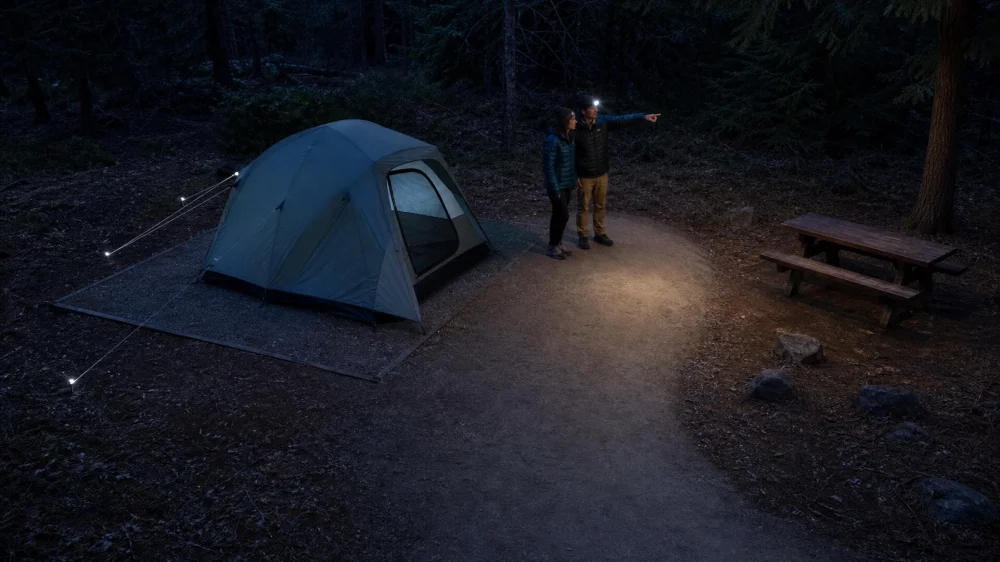
Use replacement cord only when the tent manufacturer permits it and the diameter, strength, stretch, and adjuster compatibility are suitable. Reflective strands can return headlamp light without continuously illuminating the campsite.
Visible stake markers
A purpose-made reflective pull, bright loop, or marker near the anchor can highlight the lowest point. Attach nothing that interferes with stake holding, creates litter, tangles wildlife, or becomes a sharper hazard.
Low, shielded lighting
Where campground rules allow, place a low-output light so it shines downward on the main entrance route rather than into other sites, tents, wildlife habitat, or the sky. Keep electrical and battery equipment protected from rain and away from a line where it could be kicked.
Consistent visual pattern
Mark similar hazards in the same way. One colour or reflector position at each anchor is easier to learn than a mix of blinking decorations. Avoid red, green, or flashing signals that could be confused with vehicles, bikes, or emergency markers.
Daylight contrast
Visibility matters in daytime too. Bright cord or markers can help in shade, brush, or crowded sites. Remove temporary marking material completely when breaking camp.
Create a safe nighttime routine
- Walk the entrance-to-toilet route with each camper before sunset.
- Keep a headlamp or handheld light in a consistent accessible place; avoid walking while looking at a phone screen.
- Use the planned path rather than stepping over a line as a shortcut.
- Keep shoes, bags, chairs, toys, and firewood away from anchors and walking space.
- Close tent doors and secure loose fabric so it does not hide a cord.
- Supervise children and explain that stakes, tensioners, and guylines are not toys.
- Guide visitors from the edge of the site instead of calling them to walk straight toward a tent light.
- Dim or turn off nonessential light after movement ends, following campground quiet and lighting rules.
For a camper with low vision, limited mobility, balance concerns, or another access need, choose a site and shelter arrangement that provides a wider, flatter, better-defined route. Ask the campground about accessible sites rather than relying only on brighter cord.
Recheck after weather or campsite changes
Inspect the perimeter after strong wind, rain, snow, freeze-thaw conditions, or someone contacting a line. From the safe side of the shelter, check for a pulled stake, loose tensioner, frayed cord, torn attachment, pooled water, unstable soil, or a route that has become muddy.
Also recheck when:
- A vehicle moves or arrives after dark.
- Another tent, awning, shade shelter, or camp kitchen is added.
- A table, cooler, chair, or mobility aid changes the traffic pattern.
- Campground staff identify a boundary, drainage, or wildlife issue.
- More guests join and do not know the layout.
Do not adjust guylines during lightning, dangerous wind, wildfire conditions, flooding, or another active hazard. Follow official shelter or evacuation instructions first.
Limitations and important notes
- Guyline needs differ by tent, rainfly, season, terrain, wind exposure, and manufacturer design.
- Reflective cord improves visibility only when light reaches it; it does not replace a clear route.
- Glow products, lights, and markers must comply with campground rules and should not attract, entangle, or disturb wildlife.
- Never hammer a stake where underground utilities, irrigation, cultural resources, or campground restrictions may apply.
- If a fall causes severe pain, inability to bear weight, head injury signs, heavy bleeding, or another urgent concern, use the appropriate emergency plan and seek medical help.
Sources and evidence notes
The recommendations reflect broad camping and trip-prevention practice: route foot traffic deliberately, preserve the shelter’s designed anchors, add contrast without glare, keep hazards unobstructed, and inspect after conditions change. Exact staking and line-tension instructions should come from the tent manufacturer.
Useful references include the tent manual, campground site rules, fire and lighting restrictions, accessible-site information, and current weather alerts. Staff can help clarify campsite boundaries and whether marking or lighting methods are permitted.
Frequently asked questions
Can I remove a guyline that crosses the best path?
Do not remove a required line. Review the tent instructions and change the shelter orientation, path, or campsite when possible. Ask the manufacturer if an attachment is optional.
Are glow sticks a good guyline marker?
They create single-use waste, can leak, and may conflict with campground or wildlife rules. Reusable reflective cord or approved low-output markers are often easier to manage.
Should I put lights on every stake?
Not necessarily. Too much light can disturb others and reduce night adaptation. Prioritise route planning, reflective contrast, and the minimum shielded light needed.
Can I use flagging tape?
Only if rules allow, it is secured without creating a new snag or wildlife hazard, and every piece is removed. A purpose-made reusable marker may work better.
What if a neighbour’s guyline crosses my path?
Do not move it yourself. Speak calmly with the camper or campground staff and use another safe route until the layout is resolved.
Next steps
Before sunset, walk from the tent door to every high-use destination. Move loose gear, identify any line near the route, add permitted high-contrast or reflective markers, and aim one low shielded light only where needed. Show each camper the path, then recheck anchors and visibility after weather, vehicle movement, or a campsite layout change.
More
How to Choose the Right Tent Size for Your Group
Jul 15, 2026Learn how to choose the right tent size for your group with practical camping tips covering capacity, comfort, weather conditions, gear storage, and group camping needs.
How to Camp Comfortably in a Small Car Without Feeling Cramped or Disorganized
Jul 05, 2026Learn how to camp comfortably in a small car without feeling cramped or disorganized, with smart space-saving tips, gear strategies, real camping stories, and practical setup advice.
18 Camping Tips to Pack Light and Travel More Efficiently
Jul 02, 2026Discover 18 camping tips that help you pack light and travel more efficiently, with real camping stories, gear strategies, and practical outdoor packing advice.

25 Best Campgrounds in the US for Every Outdoor Experience
Jun 29, 2026Discover 25 Best Campgrounds in the US That Offer the Perfect Outdoor Experience for All Levels, from beginner-friendly sites to advanced wilderness escapes, with tips, stories, and planning advice for unforgettable camping trips.
How to Camp Comfortably Without Electricity: Practical Off-Grid Guide
Jun 27, 2026Learn how to camp comfortably without electricity using practical off-grid strategies, gear choices, and real camping experiences. Discover how Camping With Kayla helps you enjoy modern comfort in nature.
22 Camping Hacks That Will Change Your Outdoor Experience
Jun 24, 2026Discover 22 camping hacks that will completely change your outdoor experience with practical tips, real-life camping stories, and expert advice for comfort, safety, and efficiency.