
Tent Zipper Trouble: Clear Debris, Align, and Stop Forcing It
Handle tent zipper trouble by reducing tension, clearing grit, checking alignment and damage, avoiding force and unapproved lubricants, and planning repair.
Tent Zipper Trouble: Clear Debris, Align, and Stop Forcing It
On this page
Quick answer
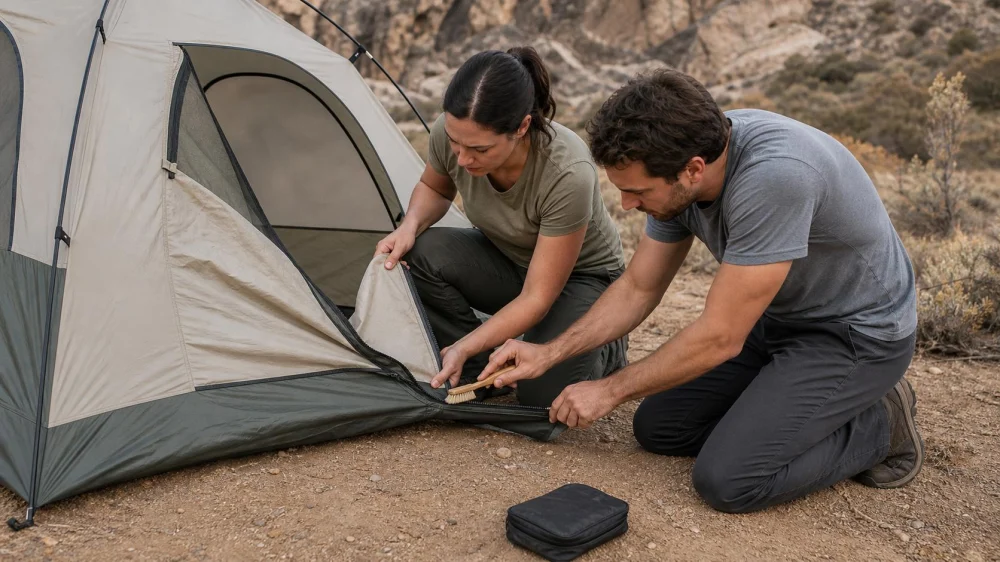
Stop pulling when a tent zipper sticks, separates, catches fabric, or changes shape. Support the door panel, reduce guyline or pitch tension only when conditions allow, and brush away dry grit from the visible track. Back the slider gently to free trapped fabric without tools or lubricant unless the manufacturer approves them. If teeth, coil, slider, stitching, or fabric are damaged, use a safe temporary closure and arrange repair or replacement.
Why the zipper may be reacting to the pitch, not just the slider
A tent door zipper follows flexible fabric under tension. Uneven staking, an over-tensioned fly, wind load, a shifted pole, packed dirt, trapped seam fabric, worn coil, or damaged stitching can pull the two sides out of alignment. Forcing the slider can turn a reversible bind into torn fabric or a failed entrance, so the surrounding shelter needs inspection too.
This guide is for United States recreational campers handling an ordinary tent door zipper. It is not a storm-shelter plan, structural tent inspection, sewing repair specification, or permission to modify warranty equipment. Follow the tent manufacturer's pitch, care, cleaning, lubricant, repair, and replacement instructions.
Practical checklist
- Weather, wind, lightning, darkness, insects, wildlife, temperature, group safety, alternate shelter, vehicle access, and whether troubleshooting can wait.
- Correct poles and sleeves, clips, hubs, stakes, guylines, fly position, vestibule load, ground slope, door shape, and tension around the opening.
- Dry sand, soil, pine needles, hair, thread, fabric, seam tape, ice, mud, food residue, corrosion, sunscreen, or other material on the visible track.
- Slider orientation, pull tab, stops, coil or teeth, missing sections, bent areas, separation behind the slider, stitching, zipper tape, and adjacent fabric tears.
- Manufacturer instructions, approved brush or cloth, water-cleaning limits, approved lubricant if any, repair kit, clips, ties, mesh, rain protection, and warranty.
- Door operation from inside and outside, required emergency exit, child and pet access, ventilation, insect control, privacy, night use, and trip duration.
- Photos, product model, purchase record, field steps, temporary closure, retailer or manufacturer contact, repair shop, and post-trip test.
Step-by-step plan
- First assess weather and shelter safety; move to secure alternative shelter rather than troubleshooting during lightning, severe wind, flooding, or another hazard.
- Support the door and remove weight from pockets or hanging items, then reduce local fabric tension gradually without destabilising the tent or ignoring wind needs.
- Use light to inspect the visible zipper path and gently brush away dry loose grit; do not insert fingers blindly where fabric, sharp parts, or insects may be trapped.
- If fabric is caught, stop forward pulling, support both sides, and back the slider slowly while easing the fabric away without twisting the pull tab.
- Test only a short section with two hands guiding the zipper tape. Stop for repeating separation, missing coil, bent slider, torn tape, failed stitching, or increasing resistance.
- Create a temporary closure only with manufacturer-compatible clips or ties that preserve ventilation and an exit, and add rain or insect protection without sealing people in.
- After the trip, clean and dry the tent under its instructions, document the damage, obtain repair or warranty guidance, and test the full door before the next outing.
Note the tent model, zipper location, pitch and weather, pole and guyline condition, debris, point of binding or separation, visible damage photos, products used, temporary closure, ventilation and exit plan, manufacturer contact, warranty decision, repair parts, completed work, and full opening test before reuse.
Limits and important notes
Do not yank the pull, use pliers to squeeze or bend a slider in the field, cut trapped fabric near occupants, melt teeth, apply oil, wax, soap, graphite, or another lubricant without approval, or loosen a storm-critical guyline unsafely. Do not create a closure that prevents rapid exit or needed airflow.
Move to alternative shelter for severe weather, failed poles, major fabric tears, an entrance that cannot provide safe exit, or loss of required rain, insect, or animal protection. Contact the manufacturer or qualified gear repair service for separated coil, broken teeth, slider replacement, torn zipper tape, structural stitching, or warranty questions.
Frequently asked questions
Can I pull harder if the zipper is almost closed?
No. Stop and inspect tension, debris, and trapped fabric; more force can damage the slider, coil, tape, or tent panel.
Should I lubricate a tent zipper?
Only with a product and method the tent or zipper manufacturer approves, after appropriate cleaning and drying.
Why does the zipper work when the tent is down?
The pitched shelter may be pulling the opening out of alignment, so verify pole, stake, fly, guyline, and ground tension.
Can clips replace the zipper for the trip?
Only as a short-term compatible closure that maintains ventilation, weather protection, and rapid exit, with another shelter available if needed.
Can a separating zipper be fixed by squeezing the slider?
Field squeezing can crack or distort the slider and affect warranty. Obtain manufacturer or qualified repair guidance instead.
Sources and evidence
Use the exact tent manufacturer's pitch, care, cleaning, lubricant, repair, and warranty instructions, zipper-component guidance when identified, campground safety rules, and a qualified outdoor-gear repair service. Those current product-specific sources override a generic zipper checklist.
Conclusion and next steps
Stop forcing the zipper, check weather safety, support the door, reduce only safe local tension, clear loose grit, and gently free trapped fabric. Stop for structural damage or repeating separation, maintain ventilation and exit with any temporary closure, and arrange approved cleaning, repair, warranty service, and a complete pre-trip test.
More
How to Choose the Right Tent Size for Your Group
Jul 15, 2026Learn how to choose the right tent size for your group with practical camping tips covering capacity, comfort, weather conditions, gear storage, and group camping needs.
How to Camp Comfortably in a Small Car Without Feeling Cramped or Disorganized
Jul 05, 2026Learn how to camp comfortably in a small car without feeling cramped or disorganized, with smart space-saving tips, gear strategies, real camping stories, and practical setup advice.
18 Camping Tips to Pack Light and Travel More Efficiently
Jul 02, 2026Discover 18 camping tips that help you pack light and travel more efficiently, with real camping stories, gear strategies, and practical outdoor packing advice.

25 Best Campgrounds in the US for Every Outdoor Experience
Jun 29, 2026Discover 25 Best Campgrounds in the US That Offer the Perfect Outdoor Experience for All Levels, from beginner-friendly sites to advanced wilderness escapes, with tips, stories, and planning advice for unforgettable camping trips.
How to Camp Comfortably Without Electricity: Practical Off-Grid Guide
Jun 27, 2026Learn how to camp comfortably without electricity using practical off-grid strategies, gear choices, and real camping experiences. Discover how Camping With Kayla helps you enjoy modern comfort in nature.

22 Camping Hacks That Will Change Your Outdoor Experience
Jun 24, 2026Discover 22 camping hacks that will completely change your outdoor experience with practical tips, real-life camping stories, and expert advice for comfort, safety, and efficiency.