
Thunder at Camp? Leave the Tent and Find Safe Shelter
Know where to shelter when thunder reaches camp, why tents and pavilions are unsafe, and how to prepare a clear lightning action plan.
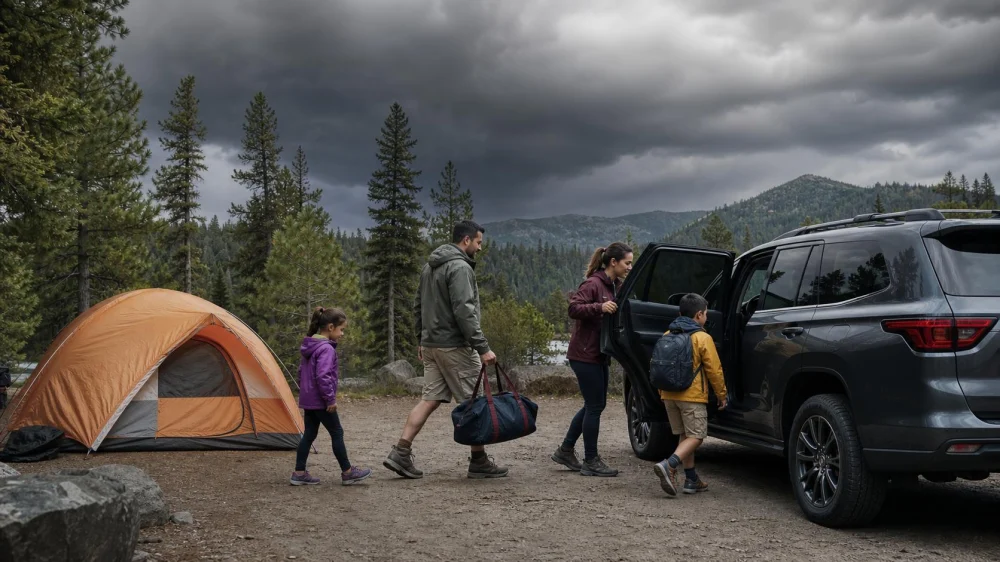
Thunder at Camp? Leave the Tent and Find Safe Shelter
On this page
Quick answer
If you hear thunder at a campground, leave the tent and move immediately to a substantial enclosed building or an enclosed hard-topped vehicle with windows up. A tent, picnic pavilion, porch, small shed, convertible, or isolated tree is not safe lightning shelter. Stay sheltered for at least 30 minutes after the last thunder. Do not wait for rain or visible lightning.
Safe lightning shelter means a substantial enclosed building or an enclosed metal-topped vehicle—not simply a roof that blocks rain.
What counts as safe shelter
Choose: a substantial building with walls, roof, and floor, or a hard-topped enclosed vehicle. Campground staff can identify the nearest designated option.
Avoid: tents, open picnic shelters, gazebos, lean-tos, porches, small sheds, open vehicles, cliff overhangs, and solitary tall trees. These do not provide dependable lightning protection.
Immediate action plan
- At the first thunder, stop cooking, swimming, fishing, hiking, or setting up camp.
- Tell everyone the shelter destination; do not separate without a plan.
- Walk quickly and carefully to the building or vehicle. Do not carry long metal objects.
- Leave gear behind if retrieving it delays shelter.
- Call emergency services if someone is struck, collapses, or is seriously injured.
- Restart the 30-minute clock after every new rumble of thunder.
A person struck by lightning does not retain an electrical charge and can be touched for first aid. Call 911 and follow dispatcher instructions; use CPR/AED if trained and directed.
Inside a hard-topped vehicle
- Close doors and windows.
- Avoid touching metal connected to the exterior.
- Stay inside until 30 minutes after the last thunder.
- Do not shelter in a convertible, open utility vehicle, tent trailer, or vehicle with an open cabin.
- Keep the vehicle away from flood-prone dips, unstable trees, and rising water when possible.
If no safe shelter is reachable
There is no safe place outdoors in a thunderstorm. Last-resort steps only reduce some risk: leave ridges, peaks, open fields, water, shorelines, fences, power lines, and isolated tall objects. Do not lie flat. Spread group members apart so one strike is less likely to injure everyone.
Follow current National Weather Service, park, and ranger guidance for the terrain. The priority is reaching a substantial building or hard-topped vehicle before the storm arrives.
Prepare before the storm
- Check the National Weather Service forecast and campground alerts before departure and each day.
- Identify the nearest safe building and vehicle route before pitching the tent.
- Keep keys, shoes, headlamps, rain layers, and essential medication accessible.
- Download or carry weather information for areas without mobile service.
- Schedule exposed hikes, boating, and ridge travel around forecast risk.
- Set a clear group trigger: hearing thunder means leaving immediately.
Limitations and important notes
Lightning may occur beyond the rain area and before a storm appears overhead. Flash flooding, hail, high wind, falling branches, wildfire, and cold exposure may accompany thunderstorms; follow evacuation orders and local instructions.
This guide addresses frontcountry decision-making. Remote backcountry travel requires terrain-specific planning, communication, and current ranger or land-manager advice.
Frequently asked questions
Is a tent with fibreglass poles safe?
No. Pole material does not turn a tent into lightning-safe shelter.
Can I wait under a picnic shelter?
No. An open-sided shelter protects from rain but is not safe from lightning.
Should I unplug campsite electrical equipment?
Do not delay evacuation to handle equipment once thunder begins. Disconnect and secure items earlier if storms are forecast and it is safe.
Why wait 30 minutes after the last thunder?
Lightning risk continues after the apparent storm passes. National safety guidance uses at least 30 minutes after the last thunder.
Sources and evidence notes
This guidance follows the U.S. National Weather Service and National Park Service: thunder means lightning is close enough to strike, tents and picnic shelters are unsafe, substantial buildings and enclosed hard-topped vehicles are preferred, and activity should resume only after at least 30 thunder-free minutes.
Next steps
Before camping, locate safe shelter and agree on the trigger. At the first thunder, leave the tent, enter the building or hard-topped vehicle, and wait the full 30 minutes after the final rumble.
More
How to Choose the Right Tent Size for Your Group
Jul 15, 2026Learn how to choose the right tent size for your group with practical camping tips covering capacity, comfort, weather conditions, gear storage, and group camping needs.
How to Camp Comfortably in a Small Car Without Feeling Cramped or Disorganized
Jul 05, 2026Learn how to camp comfortably in a small car without feeling cramped or disorganized, with smart space-saving tips, gear strategies, real camping stories, and practical setup advice.
18 Camping Tips to Pack Light and Travel More Efficiently
Jul 02, 2026Discover 18 camping tips that help you pack light and travel more efficiently, with real camping stories, gear strategies, and practical outdoor packing advice.

25 Best Campgrounds in the US for Every Outdoor Experience
Jun 29, 2026Discover 25 Best Campgrounds in the US That Offer the Perfect Outdoor Experience for All Levels, from beginner-friendly sites to advanced wilderness escapes, with tips, stories, and planning advice for unforgettable camping trips.
How to Camp Comfortably Without Electricity: Practical Off-Grid Guide
Jun 27, 2026Learn how to camp comfortably without electricity using practical off-grid strategies, gear choices, and real camping experiences. Discover how Camping With Kayla helps you enjoy modern comfort in nature.

22 Camping Hacks That Will Change Your Outdoor Experience
Jun 24, 2026Discover 22 camping hacks that will completely change your outdoor experience with practical tips, real-life camping stories, and expert advice for comfort, safety, and efficiency.