
Thunderstorm at Camp: Shelter, Timing, and a Safer Exit
Build a camping lightning plan with safer shelter, fast timing, vehicle access, official alerts, and a clear rule for returning outdoors after thunder.
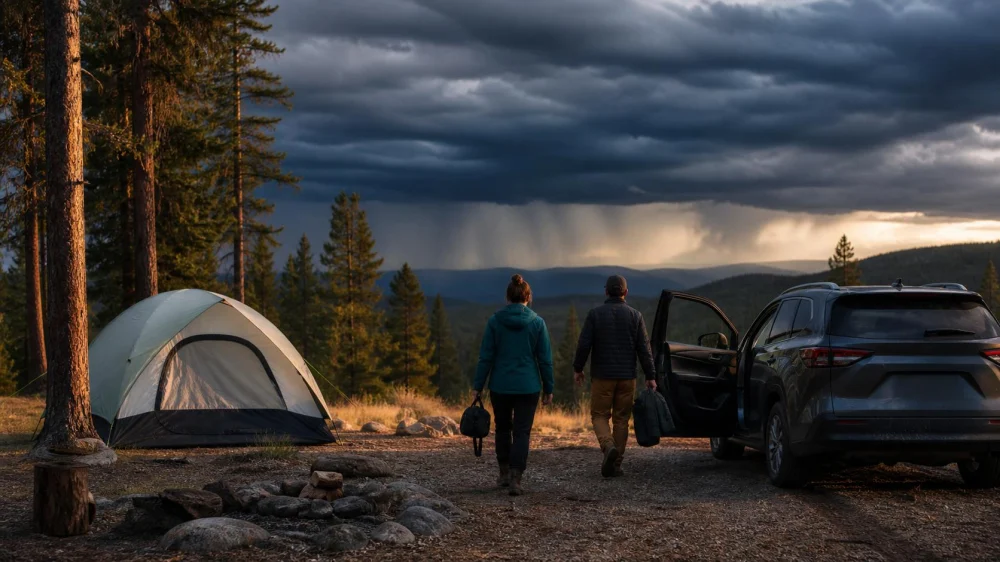
Thunderstorm at Camp: Shelter, Timing, and a Safer Exit
Article guide
Quick answer
If you hear thunder at camp, move immediately to a substantial enclosed building or a hard-topped enclosed vehicle with the windows closed. A tent, picnic shelter, open-sided structure, or isolated tree is not safe lightning shelter. Plan the route before storms arrive, keep the vehicle accessible, and wait at least 30 minutes after the last thunder before returning outdoors, following current official warnings and campground directions.
Plan before the trip
Lightning safety begins before the tent is pitched. Check the official forecast for the campground, trail, and travel route. Note the expected timing of storms, but remember that forecasts can change and lightning can occur away from the heaviest rain.
Ask the campground which buildings are available after hours and whether they are substantial, fully enclosed structures. A restroom with plumbing may qualify depending on its construction, while a roofed picnic pavilion, small open shelter, lean-to, or basic shed does not. Identify a hard-topped enclosed vehicle as the backup and estimate how long every camper needs to reach it.
Keep vehicle keys with a responsible adult, not buried in a tent or locked in a distant car. Park only where permitted, face the likely exit when practical, and do not block roads. Download forecasts and maps, enable emergency alerts where service exists, and bring a battery-powered weather radio when appropriate.
When thunder starts
Thunder means lightning is close enough to be dangerous. Do not wait for rain, a visible flash overhead, or a particular flash-to-bang count. Stop setting up camp, cooking, fishing, swimming, climbing, or gathering gear and move to the planned shelter immediately.
Use the shortest safe route. Leave nonessential equipment in place; tents and cookware can be replaced. Help children and people who need assistance without clustering around tall objects, wire fences, power lines, or isolated trees. Get off ridges, peaks, open water, and exposed high ground.
Inside an enclosed vehicle, close the windows and avoid contact with conductive paths connected to the exterior. Do not shelter in a convertible, motorcycle, golf cart, open-cab vehicle, or beneath a vehicle. Inside a substantial building, follow posted guidance and avoid plumbing, corded electrical devices, and windows during the storm.
Recognise safer shelter
The National Weather Service describes safe shelter as a substantial enclosed building or a hard-topped enclosed vehicle. The metal body and enclosed design of a typical car—not the rubber tyres—help route current around occupants. Keep doors and windows closed.
Common camping structures that are not safe lightning shelter include:
- tents of any fabric or pole material;
- picnic pavilions and open-sided rain shelters;
- awnings, tarps, canopies, and screen rooms;
- small sheds, carports, and open garages;
- isolated trees, towers, fences, and power-line areas;
- boats without a properly designed enclosed cabin.
Do not assume a metal-roofed shelter is safe merely because it contains metal. Enclosure and construction matter. When uncertain, ask campground management in advance and use the hard-topped vehicle plan.
If safe shelter is not nearby
There is no safe place outdoors during a thunderstorm. Outdoor actions can only reduce some exposure while you continue seeking the safest available option; they do not make the situation safe. Immediately leave elevated areas, open fields, water, isolated tall objects, wire fences, and other prominent or conductive features.
If a group cannot reach shelter, spread out enough that one event is less likely to injure everyone, while maintaining communication and supervision. Move toward a lower area without entering a flash-flood channel, steep drainage, or terrain threatened by falling trees or rocks. Do not lie flat on the ground.
Remote trips require conservative go/no-go decisions. If storms are forecast and safe shelter cannot be reached promptly, change the route, timing, or campsite rather than relying on an outdoor last resort.
Camp lightning checklist
- Check official forecasts before leaving and again near arrival.
- Identify a substantial enclosed building and a vehicle backup.
- Time the route from the campsite to shelter.
- Keep keys, shoes, lights, and essential medication accessible.
- Brief every camper on the signal and meeting point.
- Move at the first thunder; do not wait for rain.
- Leave gear and avoid exposed high ground, water, and isolated trees.
- Close vehicle windows and follow indoor lightning precautions.
- Monitor official alerts and campground instructions.
- Wait 30 minutes after the last thunder before returning outside.
Limitations and emergencies
This guide summarises general U.S. National Weather Service lightning guidance. Terrain, flash flooding, wildfire, wind, hail, falling trees, road closures, and campground evacuation orders may create additional hazards. Follow current official alerts and directions from emergency personnel or site managers.
Call emergency services for a lightning injury when possible and follow dispatcher instructions. A person struck by lightning does not retain an electrical charge and can be touched to provide aid. Begin first aid or CPR only within your training and when the scene is safe. Do not expose additional people to lightning while attempting a rescue.
Frequently asked questions
Is a tent safe if it has fibreglass poles?
No. Pole material does not turn a tent into safe lightning shelter. Move to a substantial enclosed building or hard-topped enclosed vehicle.
Can I shelter under a dense group of trees?
Trees are not safe shelter. If no safe structure or vehicle is reachable, avoid isolated tall trees and elevated ground while continuing to seek a safer location, recognising that no outdoor option is safe.
Should I wait until lightning is close?
No. If you can hear thunder, act immediately. The safest plan accounts for travel time before the storm reaches camp.
When can I leave the vehicle?
National Weather Service guidance uses 30 minutes after the last thunder before resuming outdoor activity. Restart the clock if thunder occurs again and continue monitoring warnings.
Is an RV safe?
Construction varies. A fully enclosed metal vehicle may provide protection, but canvas-sided units, pop-ups, and isolated plumbing or electrical systems require specific evaluation. Ask the manufacturer and campground, and use a known substantial building when available.
Evidence notes
The National Weather Service outdoor lightning guidance says the only completely safe action is to enter a safe building or vehicle and specifically states that tents and picnic shelters are not safe.
NWS outdoor activity guidance recommends checking forecasts, moving when thunder is heard, leaving elevated areas, and avoiding isolated trees and other tall objects. NWS lightning education also advises waiting 30 minutes after the last thunder before returning outdoors.
Conclusion
A tent keeps out weather; it does not provide lightning protection. The reliable camping plan is to know the forecast, identify substantial shelter or a hard-topped enclosed vehicle, keep access ready, and move at the first thunder. Leave equipment behind, monitor official warnings, and give the storm a full 30-minute quiet period before anyone returns to camp.
More
How to Choose the Right Tent Size for Your Group
Jul 15, 2026Learn how to choose the right tent size for your group with practical camping tips covering capacity, comfort, weather conditions, gear storage, and group camping needs.
How to Camp Comfortably in a Small Car Without Feeling Cramped or Disorganized
Jul 05, 2026Learn how to camp comfortably in a small car without feeling cramped or disorganized, with smart space-saving tips, gear strategies, real camping stories, and practical setup advice.
18 Camping Tips to Pack Light and Travel More Efficiently
Jul 02, 2026Discover 18 camping tips that help you pack light and travel more efficiently, with real camping stories, gear strategies, and practical outdoor packing advice.

25 Best Campgrounds in the US for Every Outdoor Experience
Jun 29, 2026Discover 25 Best Campgrounds in the US That Offer the Perfect Outdoor Experience for All Levels, from beginner-friendly sites to advanced wilderness escapes, with tips, stories, and planning advice for unforgettable camping trips.
How to Camp Comfortably Without Electricity: Practical Off-Grid Guide
Jun 27, 2026Learn how to camp comfortably without electricity using practical off-grid strategies, gear choices, and real camping experiences. Discover how Camping With Kayla helps you enjoy modern comfort in nature.

22 Camping Hacks That Will Change Your Outdoor Experience
Jun 24, 2026Discover 22 camping hacks that will completely change your outdoor experience with practical tips, real-life camping stories, and expert advice for comfort, safety, and efficiency.